What is a free VPN?
A free VPN is a virtual private network (VPN) service that doesn’t charge a monthly or yearly subscription fee. At a minimum, a free VPN should offer encrypted connections, the ability to change your IP address, and access to reliable servers, though the quality of these features may vary significantly between providers.
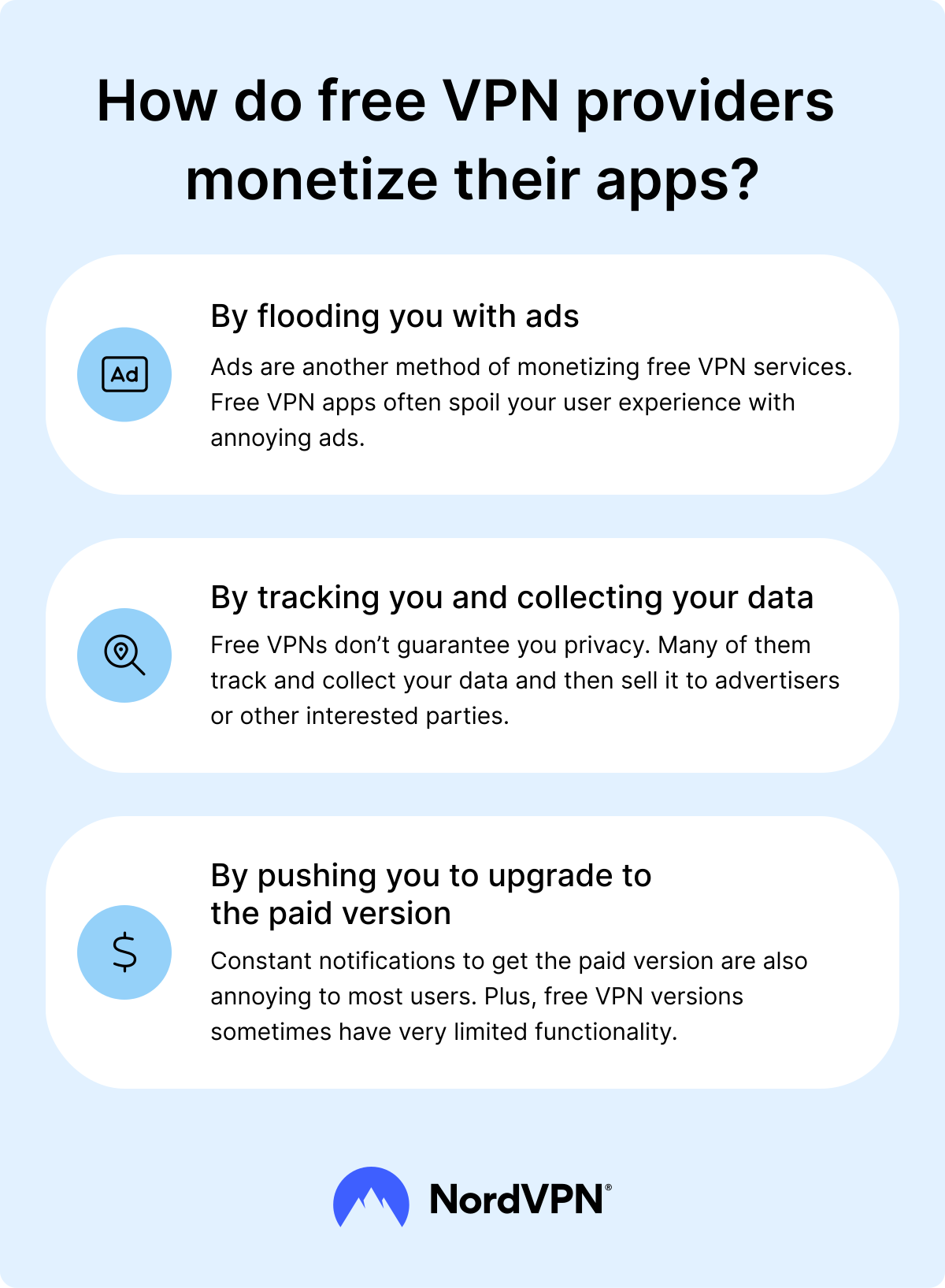
Whether a VPN is free or paid, it relies on a network of servers that requires ongoing maintenance. Maintaining this infrastructure demands significant investment in servers, encryption, and technical support. So if a VPN provider doesn’t charge a subscription fee, it needs to find other ways to monetize, such as selling collected data or flooding users with ads.
Types of free VPNs
When exploring free VPN options, you’ll encounter various types, each with its unique features and limitations.
- 1.Freemium VPNs offer a basic service for free, with the option to upgrade to a premium version for additional features — for a charge, of course. These VPNs typically provide essential privacy protections but may have limitations, such as data caps, fewer server locations, and reduced speeds. Freemiums may also require registration.
- 2.Ad-supported VPNs generate revenue by displaying advertisements to users. While they provide free access to VPN services, the presence of ads can feel intrusive and may raise privacy concerns.
- 3.Data-limited VPNs restrict the amount of data you can use each month. These VPNs are enough for light browsing and occasional use but may not be ideal for activities like streaming or large downloads.
- 4.Open-source VPNs use publicly available source code. Transparency allows anyone to inspect the code and encourages community contributions. You can self-host these VPNs or use them through third-party services.
- 5.Browser-based VPNs operate within your web browser, functioning more like proxies by securing only your browser traffic. They are convenient for quick privacy needs but don’t protect other internet activity on your device, such as app usage or background processes.
How do free VPNs make money?
VPN providers, like any company, need to make money to stay in business. If users aren’t paying for the service, the VPN company has to find other ways to profit. So how do free VPNs make money?
1. Selling your data and bandwidth
Many free VPN providers make money by tracking your online activity. While you might not view your browsing history as valuable, some companies pay for insights into your shopping preferences, device usage, and website visits. Providers collect this data and sell it to data brokers, who then sell it to advertisers to create targeted ad campaigns.
2. Bombarding you with ads
Free VPNs may also make money by bombarding you with ads. Showing ads is a common way to earn revenue from free services. Every time you click an ad, the VPN provider earns money. With millions of users, this strategy can bring in enough cash to keep the business running.
However, constant ads are not only annoying but can also be hard to close. Even worse, some ads may contain malware that can infect your device and put your online security at risk.
3. Pushing you to upgrade to paid plans or make in-app purchases
Free services often make money by pushing users to upgrade to premium plans or buy in-app features. To encourage sales, providers deliberately limit the free version, making it difficult to rely on.
Free VPN providers often impose data limits, restrict bandwidth, and offer access to only a few overcrowded, slow servers. These limitations can frustrate users enough to make them switch to the paid version.
For instance, some free VPNs provide only 500 MB or 1 GB of data per month. This amount is barely enough for light browsing and is insufficient for data-intensive activities.
Many free VPNs also push in-app purchases to access faster speeds, additional server locations, or unlimited bandwidth. Although the basic service is free, these costs add up if you use the app regularly.
Are free VPNs safe?
Many free VPNs aren’t truly safe. A growing list of free VPN data breaches reveals a history of critical flaws. Independent security reports consistently expose privacy violations.
For example, one research found that 88% of free Android VPN apps leaked data, and 71% shared user data with third parties.1 These findings raised ownership concerns because many popular free VPN apps have links to mainland China.
Another report revealed that the US Apple App Store hosted 20 free VPN apps with evidence of Chinese ownership. None of these apps disclosed their ties, and some obscured their origins behind shell companies.2
What are the drawbacks of free VPNs?
When it comes to performance, privacy, and security, the downsides of free VPNs far outweigh the savings. The drawbacks include:
Weak security. A VPN, by definition, is a tool designed to improve your digital security. A free VPN, however, can do the exact opposite. Many free VPNs lack proper server infrastructure and strong encryption, which could make your personal information an easy target for hackers.
Slow or limited performance. Slower speeds and outdated features can make free VPNs unreliable. With limited bandwidth, data caps, and overcrowded servers, you’ll struggle to stream, play online, or even browse smoothly. It’s frustrating and far behind what a paid version can offer.
Lack of privacy. A VPN is supposed to mask your virtual location and keep your online activity more private. But free services often do the exact opposite. Instead of protecting your privacy, many sell your data to third parties.
Poor user experience. Free VPN users often encounter slow speeds, constant buffering, and unexpected disconnects. These flaws make basic browsing difficult. One report found that over 50% of free VPN users experience slow connections.3
Hidden ownership. Many popular free apps belong to companies in mainland China or jurisdictions with weak data protection laws. Developers often hide their true ownership to appear independent.
Why are paid VPNs better than free alternatives?
Paid service providers earn money by charging users subscription fees, which they use to improve their services. They reinvest part of their earnings to strengthen server infrastructure, improve security features, and ensure reliable performance.
In contrast, free VPNs simply don’t have the resources to match the security, speed, or reliability of paid options. The biggest advantage of a free VPN service is, unsurprisingly, that it’s free. But when a service is free, you typically can’t expect top-tier quality.
Paid providers also have little room for error. Users are paying for a service, so these companies are obligated to deliver what they promise. Free VPNs, on the other hand, operate under no such pressure.
What are the benefits of paid VPNs?
Paid VPN services come with several critical security, privacy, and performance benefits that free alternatives can’t match. Below, we’ve outlined the most important advantages for paid VPN users.
1. An extensive server network
Premium VPNs operate thousands of servers across dozens of countries, delivering fast and reliable connections worldwide. A wide server infrastructure helps maintain excellent speeds, reduce congestion, and provide stable performance no matter where you connect from.
NordVPN offers both standard and specialty servers tailored to specific needs. Speciality servers include:
- Obfuscated servers — to connect in countries with severe internet restrictions.
- Onion Over VPN servers — to securely access .onion websites.
- Double VPN servers — to redirect your traffic through two servers instead of one for even more security and privacy.
- P2P servers — to support peer-to-peer connections.
2. Strong privacy protections
Unlike some free VPNs, premium services don’t log your online activity, sell your browsing data to third parties, or collect it for advertising. Reputable providers undergo independent audits to verify their no-logs claims and overall security stance as well as use RAM-only servers that automatically wipe user data.
You can safely keep your VPN on at all times when using a premium service. Paid VPN services often place no limits on how much data you can use and actively recommend keeping your VPN connected 24/7.
3. Top-notch encryption
Paid VPNs use AES-256 encryption, which is the same standard trusted by governments and militaries worldwide. This level of protection scrambles your internet traffic, making it unreadable to hackers, internet service providers (ISPs), or anyone trying to spy on your online activity.
Strong VPN encryption is particularly important when connecting to public Wi-Fi networks, which are common targets for cybercriminals. Paid VPNs use top-grade encryption to ensure that even on unsecured networks, your sensitive data — like passwords, credit card information, or work documents — stays safe.
4. Additional features
Paid VPNs come with extra security features designed to improve your online safety. For example, NordVPN offers:
- A VPN kill switch feature, which makes sure your data doesn’t get exposed, even if your VPN connection drops.
- A DNS leak test tool, which checks for domain name system (DNS) leaks and shows whether your internet traffic is routed through your chosen DNS or going elsewhere.
- Private DNS, which shields your DNS requests from third parties so no one can spy on you or secretly redirect you to a malicious site.
- Dark Web Monitor, which will notify you if someone leaks your credentials to the dark web.
- Threat Protection Pro™, which blocks third-party trackers and malicious ads, prevents you from accessing malware-ridden websites, and scans files for malware as you download them.
- Split tunneling, which divides your network traffic into two separate connections. VPN split tunneling lets you route some of your data traffic through an encrypted VPN while other apps keep direct internet access.
5. Secure access to restricted services
Countries with strict internet censorship often restrict access to social media and some news outlets. Free VPNs often fail to connect to these services securely and might not offer the privacy you need.
Premium VPNs provide reliable access to the open internet. They enable you to reach independent news and open communication platforms.
Disclaimer: Please note that using NordVPN to bypass any regulatory or judicial measures, or for any other illegal activity, is strictly prohibited and violates our Terms of Service. Make sure you use NordVPN in compliance with all applicable laws and regulations as well as the terms of any websites or services you access using NordVPN.
Do free VPNs have weaker encryption than paid VPNs?
Free VPNs do not necessarily use weaker encryption than paid alternatives. Both free and paid VPN services can use the same encryption standards, but free apps may implement them inconsistently.
A Zimperium review of 800 free mobile VPN apps identified several risks. The study found outdated code, excessive device permissions, and communication misconfigurations. These flaws can enable man-in-the-middle attacks, where hackers intercept your data.
The report also noted that 25% of the tested iOS apps lacked proper privacy documentation. Because of these weaknesses, free VPN apps can expose your traffic even if they advertise standard encryption.4
What are the factors to consider when buying a VPN service?
Choosing the right VPN is important to improve your online privacy, ensure access to restricted media, and enjoy a secure browsing experience. So how do you choose a VPN that fits your needs? Below are the most important factors to consider when buying a VPN service:
- 1.Security and encryption protocols. The best VPNs use strong encryption to keep your connection more private. Also, look for advanced protocols like OpenVPN or WireGuard, which add an extra layer of protection against hackers and third parties.
- 2.A no-logs policy. Choose a provider that doesn’t collect, store, and sell your browsing data. To verify these claims, select a service that undergoes independent security audits.
- 3.Server locations and coverage. Premium VPNs offer thousands of servers around the globe, giving you more options for fast and reliable connections. An extensive server network is particularly useful for accessing foreign websites or working remotely from different locations.
- 4.Connection speed and performance. Speed matters, especially if you make video calls or play games. While congested servers often make free VPNs slow, paid VPNs invest in high-performance servers that deliver fast and stable connections. Look for reviews or performance statistics to pick the fastest option.
- 5.Device compatibility. Verify that the service supports all your devices.
- 6.Simultaneous connections. If you share your account with family or use multiple devices yourself, simultaneous connections are a must. Many free VPNs limit you to just one or two active sessions. In contrast, paid providers offer significantly more connection slots.
- 7.A kill switch and DNS leak protection. A kill switch ensures your data isn’t exposed if the VPN connection drops. On top of that, DNS and IP leak safeguards keep your IP address and DNS requests protected, ensuring nobody can track your activity or identify your location.
- 8.Customer support availability. Even the best VPN services sometimes have issues. That’s why 24/7 customer support is an important factor. Choose a VPN provider that offers live chat, email support, or an extensive help center so you can get quick solutions whenever you need them.
What is the average cost of a paid VPN?
The average cost of a paid VPN is between $2.19 and $17.99* per month. The exact price depends on the provider and your chosen plan.
Most paid VPN providers offer substantial discounts for long-term subscriptions, which can significantly reduce the monthly cost. For example, with NordVPN, opting for an annual plan or a two-year plan often brings the price down to as low as $3-5 per month.
If you’re considering NordVPN, you can choose from several pricing options.
- A monthly plan: A monthly plan is the most flexible option and is ideal if you want to avoid a long-term commitment. However, it usually costs more per month.
- A yearly plan: You pay for a full year upfront, which lowers the overall cost compared to paying month-to-month. A yearly plan is a great option for saving money while still keeping a shorter commitment.
- A two-year plan: This plan offers the best value. You pay once every two years, which gives you the lowest monthly cost overall.
NordVPN frequently offers special VPN deals, especially during holidays or promotional events. For example, during sales, you can save up to 68% on a two-year subscription or bundle your plan with extras like a password manager.
*These price ranges are based on our review of the top 10 VPN services, but keep in mind that the VPN market is highly competitive, and prices may change.
Why is NordVPN one of the best paid VPN service providers?
Several reasons place NordVPN among the best paid VPN service providers:
- 1.Top-grade security. NordVPN delivers next-level security with AES-256 encryption as well as features like Double VPN and Threat Protection Pro™.
- 2.A VPN without logs. NordVPN has a strict no-logs policy, which means it doesn’t track your internet activity. Independent audits have verified this claim six times.
- 3.A massive server network. With more than 9,100 servers in 130 countries, NordVPN offers fast, reliable connections for everyday browsing, remote work, and accessing home content while traveling.
- 4.Lightning-fast speeds. Powered by the NordLynx protocol, NordVPN delivers smooth, lag-free performance for UHD streaming, online gaming, and video calls.
- 5.The ability to connect multiple devices. NordVPN lets you connect and protect up to 10 devices at once, including your smartphone, laptop, tablet, or even your router, all with one account.
According to PCWorld, NordVPN ranks among the best VPN services.5
Online security starts with a click.
Stay safe with the world’s leading VPN
A free VPN vs. a paid VPN: Privacy and security
| | A free VPN | A paid VPN |
|---|---|---|
| Many servers globally | | |
| Changed IP address | | |
| Stable and fast VPN connection | | |
| Strong data encryption | | |
| Unlimited bandwidth | | |
| Dedicated IP address | | |
| Specialty servers | | |
| Multiple simultaneous connections | | |
| 24/7 customer support | | |
Is a free VPN service better than having no VPN at all?
A free VPN service isn’t necessarily better than having no VPN at all. While a VPN is designed to improve your online privacy and security, a free VPN often fails to deliver on its promises. Many free providers track your activity, collect your data, and sell it to third parties.
Without a VPN, your internet activity may be exposed to your ISP or hackers, but using a shady free VPN isn’t much better. Instead, it may trade one risk for another, offering the illusion of privacy while compromising your security behind the scenes.
Are firewalls safer than most free VPNs?
Firewalls are generally safer than most free VPNs when it comes to protecting your device from malicious threats. However, a comparison between a firewall and a VPN shows that these tools serve different purposes.
A firewall blocks unauthorized access to and from your device and acts as a shield against cyber threats, such as hackers and malware. On the other hand, a VPN encrypts your internet connection and changes your IP address.
While paid providers offer advanced protection, free services often contain critical security gaps. Because of these flaws, a reliable firewall protects your device better than an unsafe free VPN.
However, keep in mind that a firewall doesn’t protect your online privacy. To maximize your security, you need both tools working together — a trusted VPN to protect your personal data and a firewall to protect your device from malicious attacks.
A free vs. a paid VPN: Which type of VPN is right for you? (TL;DR)
A free VPN might seem like a great deal — it’s free, after all. But that free service often comes at the cost of your security, privacy, and overall user experience. Unlike paid VPNs, free VPN providers need other ways to make money, and that can put your data and safety at risk.
Free options often come with limitations that leave you vulnerable. For example, they might cap your bandwidth, slow down your connection, or restrict VPN server access. Worse, some free VPNs sell your browsing activity to advertisers or data brokers to generate income, sacrificing the very privacy they claim to protect.
Paid VPNs charge money to protect your data, invest in their technology, and ensure their servers are fast and secure. With a premium VPN like NordVPN, you get advanced features like top-grade encryption, access to servers worldwide, round-the-clock customer support, and the peace of mind that your online activity is protected.
So which VPN is right for you? If online security, privacy, and performance are important to you, a paid service is the clear choice. While free VPNs might be tempting, the risks they pose can end up costing you far more than you save.
References
1 Migliano, S. (2024, June 5). The Dangers of Free VPNs. Top10VPN. https://www.top10vpn.com/research/free-vpn-investigations/
2 Tech Transparency Project. (2025, April 1). Apple Offers Apps With Ties to Chinese Military. https://www.techtransparencyproject.org/articles/apple-offers-apps-with-ties-to-chinese-military
3 Petrino, G. (2025, July 31). VPN Use in 2025: Trends, Statistics, and Consumer Sentiment. Security.org. https://www.security.org/resources/vpn-consumer-report-annual/
4 Montamat, I. (2024, October 15). Insecure mobile VPNs: The hidden danger. Zimperium. https://zimperium.com/blog/insecure-mobile-vpns-the-hidden-danger
5 Singleton, S. (2026, February 16). Best VPN services: 7 top picks for every VPN need. PCWorld. https://www.pcworld.com/article/406870/best-vpn-services-2.html
Online security starts with a click.
Stay safe with the world’s leading VPN