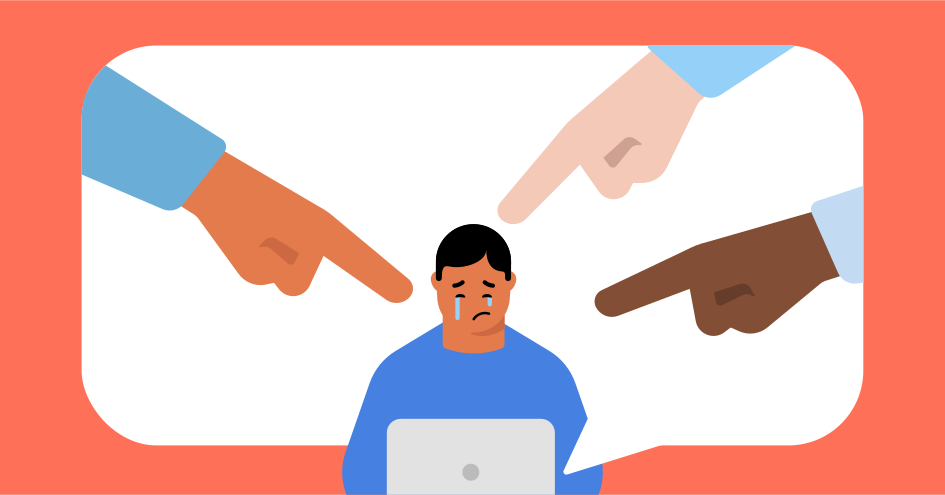
What is cyberbullying?
A simple cyberbullying definition is online behavior that repeatedly targets someone to embarrass, scare, humiliate, or threaten them.
Cyberbullying can happen on social media, forums, gaming platforms, messaging apps, email, and group chats. It can include cruel comments, threats, rumors, fake accounts, edited images, private information shared without consent, or repeated messages that make someone feel unsafe.
Online bullying has a few traits that make it different from in-person bullying. Online bullying can be persistent and hard for others to notice, and the content can be difficult to remove. It can reach someone at home, at school, or at work, at any hour of the day. A post, screenshot, or video can spread quickly and remain online after the original poster deletes it. Cyberbullying can also be hard for parents, teachers, and caregivers to spot because it often happens on private accounts, disappearing-message apps, or inside group chats.
Adults can experience online abuse too. People often use terms like cyber harassment or cyberstalking for adult cases, especially when the behavior involves repeated threats, unwanted contact, or monitoring.

What’s the difference between teasing and cyberbullying?
Teasing is usually playful and mutual, and it stops once someone says they’re uncomfortable. Cyberbullying is repeated, intentional, and harmful.
UNICEF suggests a simple test: If you feel hurt, others laugh at you rather than with you, and the behavior continues after you ask them to stop, it has crossed into bullying.1 Online jokes can become cyberbullying when people keep posting, tagging, messaging, or sharing content after they know it upsets someone.
Types of cyberbullying
Cyberbullying can take many forms. Some tactics rely on public posts. Others happen through private messages, group chats, fake accounts, or coordinated abuse.
- Harassment and flaming involve repeated insults, name-calling, aggressive comments, or angry online arguments directed at one person.
- Denigration and rumor spreading happen when someone shares lies, edited screenshots, embarrassing photos, or videos to damage another person’s reputation.
- Impersonation involves fake accounts or account takeovers used to post harmful content, message others, or damage someone’s relationships.
- Doxxing and outing happen when someone shares another person’s private information without consent.
- Exclusion means someone deliberately leaves another person out of group chats, gaming groups, private stories, or online communities.
- Cyberstalking involves persistent monitoring, repeated unwanted contact, threats, or attempts to track someone online.
- Trolling uses posts or comments to provoke a reaction.
- Sextortion and cyberextortion involve threats to share intimate images, real or fake, unless the target sends money, more images, or sexual content.
- False mass reporting and brigading use coordinated reports, comments, direct messages, or negative reviews to silence or intimidate someone.
- Deepfakes use fake images, videos, or voices to humiliate, threaten, impersonate, or extort someone.
Fake AI-generated images, videos, or voice clips can become cyberbullying when someone uses them to hurt another person. The Internet Watch Foundation reported that, in 2025, it assessed 8,029 AI-generated images and videos as realistic child sexual abuse material.2 That figure doesn’t measure cyberbullying as a whole, but it shows how synthetic images can cause serious harm when people use them to threaten, shame, or exploit minors.
Cyberbullying vs. traditional bullying vs. trolling
Cyberbullying can overlap with traditional bullying and trolling, but each behavior works differently. The table below compares their intent, repetition, anonymity, reach, record, and response.
| Trait | Cyberbullying | Traditional bullying | Trolling |
|---|---|---|---|
Intent | To harm, humiliate, threaten, or control a target | To harm, intimidate, or control a target | To provoke, annoy, or get attention |
Repetition | Often repeated through posts, messages, tags, or shares | Often repeated in person or within a shared social setting | May be one-off or repeated |
Anonymity | Common because people can use fake accounts | Less common because the target often knows the bully | Common |
Reach | Can spread to large audiences quickly | Usually limited to a school, workplace, community, or other shared setting | Can spread widely if others engage |
Record | Screenshots, posts, and messages can remain online | May leave less visible evidence | Posts and comments may remain online |
Response | Save evidence, block, report, and seek help | Tell a trusted adult, school, employer, or authority | Ignore or mute, then block and report repeated abuse |
Examples of cyberbullying
Common examples of cyberbullying include:
- Someone creates a fake Instagram account with another person’s name and photo, then posts offensive comments to damage their reputation.
- Classmates start a group chat without one student and share screenshots that mock the student’s clothes, body, or family.
- A gamer receives repeated threats through voice chat and direct messages after winning a match.
- Someone posts another person’s home address, phone number, school name, or workplace online to encourage harassment.
- A person shares a private photo, secret, or message that someone sent in confidence.
- Someone uses AI to create a fake sexual image of a classmate and sends it through Snapchat or Discord.
- A group falsely reports a creator’s account to get it suspended because they disagree with the creator’s opinion.
Cyberbullying statistics and facts
Different studies report different cyberbullying rates because they measure different age groups, time periods, and types of online abuse. The following are key recent cyberbullying statistics:
- Pew Research Center reported in 2026 that about three-quarters of teen TikTok, Instagram, and Snapchat users saw harassment and bullying on those platforms as a problem for people their age.3
- Pew Research Center also found that about three in ten teen Snapchat users had experienced at least one of three harassment behaviors on the platform: being called an offensive name, having a rumor spread about them, or being physically threatened.3
- A 2025 study published in BMC Public Health found a strong link between cyberbullying and PTSD symptoms among youth. Exclusion, rejection, gossip, and malicious comments were associated with trauma at levels similar to overt threats and identity-based attacks.4
- In the Cyberbullying Research Center’s 2025 US student sample, about 58% of students said they had experienced cyberbullying at some point in their lives. About 33% said they had experienced it in the previous 30 days. The same sample found that 24.5% of students said they had cyberbullied others at some point in their lives.5
The Cyberbullying Research Center’s data also shows which behaviors students reported most often in the previous 30 days:
- 32.5% of students reported exclusion from a text or group chat.5
- Mean or hurtful comments posted online affected 31.6% of students.5
- Online rumors affected 29.2% of students.5
Effects of cyberbullying
Cyberbullying can harm mental health, physical health, school or work performance, and relationships. The harm can feel intense because the abuse can follow someone across devices and into spaces where they should feel safe.
- Emotional distress. Bullying is linked to depression, anxiety, shame, self-esteem issues, and loss of interest in activities the person used to enjoy. Some people may also feel unsafe or helpless when bullying happens around them.6
- Physical symptoms. Kids who are bullied can experience changes in sleep and eating patterns. They can also report health complaints, including headaches, stomachaches, and colds.6
- Behavioral effects. Kids who are bullied often get lower grades and test scores, participate less in class, and miss or skip school more often. Some drop out. StopBullying.gov also links bullying to higher rates of substance use.6
- Social isolation. Kids who are bullied may struggle with friendships and maintaining relationships later in life. Shame, anxiety, or feeling unsafe can make it harder for them to stay connected and ask for support.6
Support can make recovery easier. A trusted adult, school counselor, therapist, doctor, or helpline opens in a new tab can help someone plan next steps and process the emotional impact. Mental health apps offer mood tracking, guided exercises, journaling, and access to therapy, but they shouldn’t replace urgent help during a crisis.
Is cyberbullying illegal in the US?
No federal US law applies specifically to bullying. Cyberbullying is usually addressed through state laws, school policies, and other criminal or civil laws. StopBullying.gov notes that all 50 states, the District of Columbia, and US territories have their own anti-bullying laws and policies. States may cover bullying, cyberbullying, and related behavior in one law or across multiple laws.7
Is cyberbullying a crime? It can be, depending on the state and the behavior. Threats, stalking, harassment, swatting, extortion, defamation, doxxing, and non-consensual intimate image sharing may lead to criminal or civil consequences. Bullying may also overlap with discriminatory harassment when it targets race, ethnicity, color, national origin, sex, disability, or religion.7
Most state laws, policies, and regulations require schools and districts to have procedures to investigate and respond to bullying. Schools can use those policies when online behavior affects students or the school environment.
If the situation involves immediate danger, credible threats, stalking, sextortion, or private images shared without consent, contact law enforcement.
Cyberbullying on social media
Cyberbullying on social media is common because platforms make content easy to post, tag, screenshot, and share. Public comments, private messages, stories, livestream chats, duets, stitches, quote posts, and group chats can all become channels for abuse.
Most platforms offer tools that help you limit contact and control who can interact with you. You can usually:
- Block accounts that harass or threaten you.
- Mute or restrict accounts if you need distance without alerting the person.
- Use comment filters or hidden word filters to limit abusive language.
- Limit who can send you direct messages or tag you.
- Report abusive posts, messages, accounts, or images through the app.
- Make your social media profiles private if you want more control over who can see your posts.
| Platform | Where to block or limit contact | Where to report abuse |
|---|---|---|
Profile menu, message controls, restricted accounts, hidden words, and comment controls | Post, comment, profile, story, or DM report options | |
TikTok | Profile menu, privacy settings, comment filters, and direct message controls | Video, comment, message, livestream, or account report options |
Snapchat | Friendship profile, chat settings, story privacy, and contact controls | Snap, story, message, or account report options |
Profile menu, audience settings, blocking tools, and comment controls | Post, comment, message, group, page, or profile report options | |
X | Profile menu, mute, block, reply controls, and DM settings | Post, message, account, list, or Space report options |
Discord | User settings, privacy and safety settings, server privacy settings, and block user options | Message, user, server, or Trust & Safety report options |
What to do if you’re being cyberbullied
If someone is cyberbullying you, follow these steps:
- 1. Don’t reply or retaliate. A response can escalate the situation and give the person targeting you more comments, screenshots, or reactions to use against you.
- 2. Save evidence. Take screenshots of the abusive posts, texts, direct messages, usernames, profile URLs, timestamps, and web links.
- 3. Report the abuse, then block the account. Use the platform’s reporting tools to report the account, abusive posts, comments, direct messages, images, or videos. Only then block the account that is contacting or targeting you.
- 4. Talk to someone you trust. Tell a parent, school counselor, teacher, friend, manager, or another person who can support you and help you decide what to do next.
- 5. Contact the police if your safety is at risk. Threats, stalking, doxxing, sextortion, and non-consensual intimate image sharing may require law enforcement.
If you see someone else being cyberbullied, support them safely. Don’t share the harmful post or join the comments. Save evidence if you can do so safely, report the content, and check in with the person privately. If the person being targeted is a child or teen, tell a trusted adult.
If you feel at risk of self-harm or suicide, call or text 988 in the US or Canada for immediate crisis support. If you live elsewhere, contact your local crisis line or emergency services.
How to prevent and stop cyberbullying
You can’t prevent every case of cyberbullying, but you can reduce your risk of experiencing it. The steps below can help you protect your accounts, limit what others can find about you, and support safer online spaces:
- 1. Think before you post. Avoid sharing private details, live locations, school names, work locations, travel plans, or personal conflicts in public spaces.
- 2. Tighten your privacy settings. Limit who can see your posts, tag you, comment on your content, message you, or add you to groups.
- 3. Limit who can contact you. Turn off open direct messages where possible. Review friend or follow requests before you accept them.
- 4. Be selective with connections. Add people you know or accounts you trust. Remove or block accounts that make you uncomfortable.
- 5. Secure your accounts. Use strong, unique passwords and turn on two-factor authentication. These steps make it harder for someone to break into your account, impersonate you, or post harmful content in your name.
- 6. Review old posts. Remove content that reveals personal information, such as your address, phone number, school, workplace, or regular locations.
- 7. Teach children and teens how to respond to cyberbullying. Show them how to save evidence, report abuse, block accounts, and ask for help. Parental control apps can help families manage screen time, content access, and online activity.
- 8. Set clear rules in shared online spaces. Report abuse, don’t share posts that target or humiliate someone, and make sure group chats, servers, classrooms, and forums have clear rules against harassment.
Online anti-bullying tools
Online anti-bullying tools can reduce unwanted contact, limit harmful content, and make abuse easier to report. Use the following:
- Filtering and blocking tools. Most platforms let you block accounts, filter comments, hide specific words, and limit who can tag or message you.
- Reporting tools. Reporting tools let you flag harmful posts, messages, profiles, images, or videos to moderators or platform safety teams.
- Privacy and safety settings. Social networks and gaming platforms often include privacy controls, message limits, comment controls, mute features, and parental settings. Use these features to limit who can contact you, see your content, tag you, or interact with your child’s account.
- Device-level and browser tools. Privacy-focused browsers, tracker blockers, and security browser extensions can reduce tracking and unwanted exposure. These tools don’t stop bullying, but they can help protect personal information.
Tools can help, but education and awareness matter too. If you know how to recognize cyberbullying early, you can protect yourself and support the person being targeted. For children and teens, regular conversations with a trusted adult can make it easier to ask for help after they see a harmful message, post, or group chat.
How to protect your personal information online
Personal information can be hard to remove after other people copy, screenshot, or repost it. It’s also nearly impossible to remove yourself from the internet completely. Still, you can reduce the amount of personal information people can find about you.
Start with the prevention steps above: tighten your privacy settings, limit public posts, review connection requests, and remove old posts that reveal personal details. Then take these extra steps to reduce your digital footprint:
- 1. Search for personal information that’s available publicly. Search your name, usernames, email address, and phone number to see what personal information appears publicly.
- 2. Remove exposed information where possible. Delete old accounts you no longer use, request content removals, and remove personal details from public profiles.
- 3. Consider data removal support. Data removal services can help request removals from people search sites and data broker databases. Data brokers are companies that collect and sell personal information, such as addresses, phone numbers, and details about family connections.
- 4. Use a VPN as one privacy layer. What is a VPN? It’s a tool that routes your internet traffic through a secure server and masks your IP address from websites and apps you connect to, which can reduce location tracking based on your IP address. A VPN doesn’t stop cyberbullying, remove harmful posts, or make you fully anonymous. It only helps protect one part of your online privacy.
Privacy is a right. You should be able to use online spaces without people collecting, exposing, or using your personal information against you.
Online security starts with a click.
Stay safe with the world’s leading VPN
Disclaimer: The trademarks referenced are for illustrative purposes only. NordVPN is not affiliated with, sponsored by, or endorsed by the owners of those trademarks.
FAQ
References
1 UNICEF. (n.d.). Cyberbullying: What is it and how to stop it. https://www.unicef.org/end-violence/how-to-stop-cyberbullying opens in a new tab
2 Internet Watch Foundation. (2026). AI-Generated Child Sexual Abuse: 2026 Report on Trends, Data & Human Impact. https://www.iwf.org.uk/about-us/why-we-exist/our-research/how-ai-is-being-abused-to-create-child-sexual-abuse-imagery/ opens in a new tab
3 Faverio, M., Park, E., and Gottfried, J.(2026). Teens’ Experiences on TikTok, Instagram and Snapchat. Pew Research Center. https://www.pewresearch.org/internet/2026/04/15/teens-experiences-on-tiktok-instagram-and-snapchat/ opens in a new tab
4 Hinduja, S., & Patchin, J. W. (2025). Cyberbullying through the lens of trauma: an empirical examination of US youth. BMC Public Health. https://link.springer.com/article/10.1186/s12889-025-22692-6 opens in a new tab
5 Patchin, J. W. (2025). 2025 Cyberbullying Data. Cyberbullying Research Center. https://cyberbullying.org/2025-cyberbullying-data opens in a new tab
6 StopBullying.gov. (2025). Long-Term Effects of Bullying. https://www.stopbullying.gov/bullying/effects opens in a new tab
7 StopBullying.gov. (2023). Laws, Policies & Regulations. https://www.stopbullying.gov/resources/laws opens in a new tab
8 StopBullying.gov. (2024). Report Cyberbullying. https://www.stopbullying.gov/cyberbullying/how-to-report opens in a new tab
