What is OpenVPN?
OpenVPN, or Open Virtual Private Network, is an open-source system that creates a private and secure tunnel between networks. It refers to multiple different but related things:
- The open-source OpenVPN protocol used to create encrypted tunnels between networks and establish a VPN connection.
- The OpenVPN software (VPN client) that uses the OpenVPN protocol.
- The OpenVPN company that supports open-source code and offers its own commercial VPN products.
While the OpenVPN name is attached to both the software and the company, the OpenVPN protocol is used in most modern VPN solutions, including NordVPN. Therefore, this article will focus on OpenVPN as a tunneling protocol.
Is OpenVPN safe?
Yes, OpenVPN is one of the safest VPN protocols. It uses secure sockets layer/transport layer security (SSL/TLS) to ensure data security and has access to the OpenSSL library for further customization, including additional security features.
The OpenVPN protocol includes perfect forward secrecy (PFS), which ensures that past sessions remain protected even if a data breach occurs. It also supports both TCP and UDP connections (we’ll get into that in more detail a few sections down), allowing you to switch to TCP when you want more security or to UDP when you need faster speeds.
Additionally, OpenVPN is an open-source protocol, so its code is transparent. As an open-source VPN, anyone in the OpenVPN community can look up bugs and suggest fixes. However, this also makes it easier for hackers and security researchers to find and exploit its weaknesses.
OpenVPN supports different cryptographic algorithms and settings, so its security is partly dependent on the ciphers and key lengths used. That’s why proper configuration is so crucial, and choosing a VPN service and client is as important as choosing your preferred secure VPN protocol.
How does OpenVPN work?
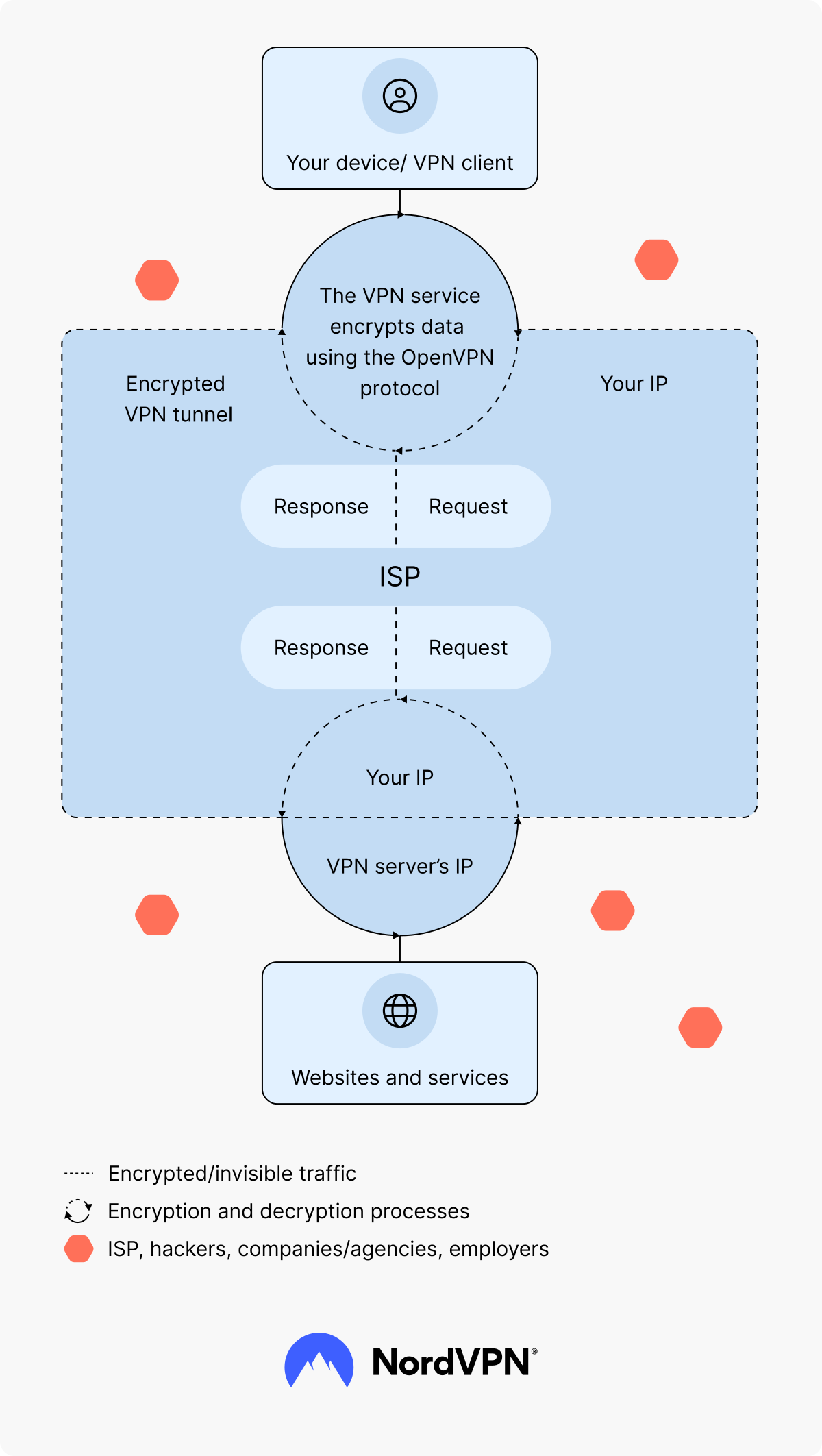
OpenVPN creates a secure tunnel for data traffic to pass between the VPN client and server. This process includes authentication of the VPN client and server, creation of a VPN tunnel, data encapsulation and encryption, and data traffic transmission.
OpenVPN works with different authentication methods and encryption algorithms and can secure both TCP and UDP traffic. All the customization makes it a preferred and secure choice for many VPN setups.
1. Authentication
OpenVPN uses various VPN authentication methods to verify the identity of a VPN client and server. These methods usually include a combination of user credentials, digital certificates, and public key infrastructure (PKI) for key management. PKI manages how encryption keys are created, shared, and revoked so that connections remain properly authenticated.
2. Tunnel setup
Once the identity is verified, OpenVPN creates a VPN tunnel between the VPN client and server. To establish that tunnel, OpenVPN primarily uses SSL/TLS, but other protocols can also be used.
3. Encapsulation and encryption
OpenVPN wraps data packets in additional layers to include routing information, identify the source and destination of the data, and apply security measures such as VPN encryption. Encryption ensures that the data traffic passing through the VPN tunnel is hidden from third parties, including your employer, internet service provider (ISP), hackers, and advertising companies or agencies.
Another advantage of OpenVPN is its versatility. You can set it up to use different cryptographic algorithms and key lengths. Depending on the setup, it can also work with managed DNS to keep your domain lookups inside the tunnel, preventing DNS leaks. In business environments, administrators can enable data audit logs to track connection activity for security and troubleshooting and apply access control rules to limit which users or devices can access specific resources.
4. Data transmission
Encrypted traffic passes through the VPN tunnel to the VPN server, where it is decrypted and routed to its further destination.
Since the traffic passes through an intermediate server, the further destination doesn’t see the source’s IP address – it sees the IP address of the VPN server instead.
Route and policy configuration
OpenVPN controls how traffic moves between the client and the server through what's called VPN routing. When you connect to OpenVPN, the server assigns your device a virtual IP address and creates routing rules that tell your system which data should travel through the encrypted tunnel and which should stay outside it.
Administrators can define routing policies to control this flow. The two main types are full-tunnel and split-tunnel configurations. A full-tunnel policy sends all traffic through the VPN, while a split-tunnel policy only routes specific data through it, allowing you to send part of your online activity through the encrypted VPN tunnel while keeping direct internet access for other apps or services. For example, you can work on VPN-protected files while still reaching your home printer or local websites directly.
What is OpenVPN used for?
OpenVPN is used to create encrypted tunnels for moving traffic between devices and networks over the internet. People and organizations use it to protect data in transit, enable controlled remote access, and connect separate locations.
- Setting up a VPN connection. The primary purpose of OpenVPN is to establish a VPN tunnel for secure data transmission. A VPN tunnel is what separates VPN from a proxy, and protocols like OpenVPN make that tunnel possible. You can use OpenVPN anytime a VPN connection is needed, such as when accessing a virtual server or creating a private network.
- Encrypting data in transit. In addition to creating an encrypted VPN tunnel, OpenVPN uses cryptographic algorithms to encrypt the data that passes through that tunnel. This encryption makes OpenVPN an excellent choice for sending and receiving sensitive data over the internet, securing VoIP and video conferencing, browsing privately, accessing public Wi-Fi securely, and securing the communication of IoT devices.
- Enabling and securing remote access. Establishing a VPN tunnel and encrypting data in transit also makes OpenVPN perfect for enabling and securing remote access to internal networks. Companies, universities, and other institutions can use OpenVPN to enable and manage access to their networks from remote locations.
- Linking sites over the internet. OpenVPN can also connect entire networks (site-to-site). Organizations use it to join offices or data centers so teams can share resources and platforms across different locations.
What is the difference between a VPN and OpenVPN?
A VPN is a service that protects your internet connection, while OpenVPN is one of the tunneling protocols helping VPN services do that.
Anyone can use the OpenVPN open-source code client to set up their VPN connection. Most VPN providers include the OpenVPN protocol in their software. However, while OpenVPN refers to one tunneling protocol, a VPN provider can offer multiple VPN protocols, such as WireGuard® and IKEv2/IPsec.
What protocol does OpenVPN use?
The OpenVPN protocol is an open-source VPN protocol that uses the OpenSSL library to secure internet traffic by creating a virtual tunnel over UDP or TCP. It’s highly configurable, supporting both site-to-site and point-to-point connections, and offers strong encryption and authentication options. OpenVPN can tunnel any IP subnetwork and can be configured to use either pre-shared keys or a PKI for authentication. It also co-exists with other VPN protocols, such as IKEv2/IPSec and WireGuard, giving users and providers more freedom to choose the best setup for their network.
What are the differences between OpenVPN UDP and OpenVPN TCP?
OpenVPN works over both TCP and UDP, and most VPN clients allow you to choose which protocol to use.
The transmission control protocol (TCP) establishes the connection between the sender and receiver, thoroughly authenticating the data packets in transit so they reach their destination intact.
The user datagram protocol (UDP) sends the data packets without establishing the connection between the sender and receiver. It doesn’t guarantee that data packets reach their destination. It makes UDP faster but less reliable than TCP.
| OpenVPN TCP | OpenVPN UDP |
|---|---|
| High reliability | Lower reliability |
| Lower speed | Higher speed |
| Packets are delivered in a sequence | Packets are delivered in a stream |
| Good for static uses (email, web browsing, file transfer) | Good for dynamic uses (streaming, gaming, VoIP) |
Is OpenVPN better than other VPN protocols?
The answer depends on what you need the VPN protocol for.
OpenVPN is better than obsolete VPN protocols, like PPTP. And in terms of security, OpenVPN is better than most VPN protocols. But that’s not the only thing you should consider when choosing a VPN protocol.
IKEv2/IPsec, for example, could be a better choice for mobile devices. And if you care about connection speed, WireGuard® is much faster than other VPN protocols. It has also significantly improved over the last few years, reaching security on par with OpenVPN.
For a more detailed overview, check out our comparison of VPN protocols.
What are the pros and cons of OpenVPN?
OpenVPN is a reliable VPN protocol trusted by many, but as with most tools, it has its downsides. Getting a sense of both the good and the not-so-good helps you figure out if it’s the right fit for your setup.
| OpenVPN pros | OpenVPN cons |
|---|---|
| Stronger security than most alternatives | Generally slower than newer protocols like WireGuard® |
| Open-source code (allows transparency and community-driven improvements) | Manual configuration required |
| Compatible with different devices and encryption protocols | Resource-intensive, especially on older hardware |
| Compatible with both TCP and UDP traffic | |
| Built-in connection monitoring and failover to maintain stable links | |
| Options for logging and auditing for performance tracking and troubleshooting | |
How secure is OpenVPN?
OpenVPN is one of the most secure VPN protocols you can use, provided it is properly configured and maintained. It uses TLS for key exchange and authentication and supports modern cryptography with certificate-based authentication and PFS.
And because OpenVPN is an open-source protocol, the security community can review its code and help keep the protocol secure.
So here’s the bottom line: OpenVPN can provide strong protection against common network threats and remains a trusted option for personal and enterprise use. That said, how secure OpenVPN really is depends on how it's deployed and maintained. Server settings, client software, operating system updates, and credential hygiene all matter and should not be neglected.
Is OpenVPN free?
Yes, the OpenVPN protocol is free in the sense that it’s an open-source solution anyone with enough tech skills can modify and use for their needs. For example, you could use freely available VPN code to create a VPN server from your old computer.
There’s also a free OpenVPN client you can install and configure to establish a connection to your chosen VPN server, be it your own server or VPN servers available to you with your VPN subscription.
Should you choose OpenVPN?
If you use a premium VPN provider, chances are you can choose the VPN protocol you want to use. So, should you choose OpenVPN if you have that option?
Once again, it depends on what you use a VPN for. If it’s mostly for streaming, gaming, or other bandwidth-heavy activities, security may not be your top priority, and no protocol can beat NordLynx protocol for speed. But if you deal with sensitive data and security is crucial, you can opt for OpenVPN. For the same reason, choose OpenVPN TCP over OpenVPN UDP.
Online security starts with a click.
Stay safe with the world’s leading VPN