Why do flight prices vary?
Airlines don't just pick a price and stick to it. They use complex systems that react to what’s happening in the market — and who is doing the searching. Several factors influence the price you see on your screen:
- Popular routes cost more. If a specific destination is trending in your country due to cultural ties or local interest, airlines often increase the fares specifically for your region to capitalize on the demand.
- Routes with less competition are usually more expensive. If only one airline flies a specific route, it has a monopoly and can charge whatever it wants. However, if multiple airlines fly the same path, they must lower flight prices to stay competitive.
- Wealthier markets often face higher standard fares. Airlines segment the world by purchasing power. They may charge higher base fares in wealthier nations where residents can afford to pay more, while offering lower ticket prices for the same flight in markets with lower average incomes.
- Peak travel dates trigger automatic price hikes. Travel during bank holidays, school breaks, or major festivals drives up demand. Airlines anticipate this surge and automatically raise prices for those specific dates.
- Airlines may discount flights from their home hub. Carriers sometimes offer exclusive discounts or lower base rates to customers booking from their home country or operational hub region.
- Currency strength varies by region. Currency values go up and down. If your home currency is strong, you might get a better deal by paying in the weaker currency of the country you are visiting.
- Your own browsing history can signal high intent. If you search for the same flight repeatedly on the same device, airlines may assume you are desperate to book. Some dynamic pricing systems respond to this obvious interest by slightly increasing the price or displaying a warning like "only 2 seats left" to create a false sense of urgency — a tactic suspiciously similar to what scammers use.
How do airlines know your location?
Before you change your virtual location, you first need to understand how websites find you. Airlines and booking sites don't just guess where you are. They use a mix of digital clues to pinpoint your exact spot on the map.
IP addresses
Websites usually determine your location by using your unique IP address, which stores your location information. It tells every website exactly where you are, right down to your city and country. Airlines look at this data and use it to adjust the fares for your region.
Cookies
Cookies are small text files stored on your browser that track your activity, including your search history and preferences. Airline websites use cookies to remember that you have searched for a specific route multiple times.
While clearing your cookies removes your search history, doing so is rarely enough on its own. Since airlines also track your physical location via your IP address, you typically need to combine a clean browser with a VPN to truly reset the price.
Mobile tracking
When you browse on a mobile device, tracking is often more precise than on a desktop. Mobile apps and browsers can access GPS data if you have granted location permissions. Unlike an IP address, which provides your internet location, a GPS pinpoints your exact physical location, which a VPN can’t change.
Browser HTML5 geolocation
Most modern browsers use the HTML5 geolocation API to determine your location with high accuracy. This feature uses a combination of GPS, Wi-Fi signals, and cell tower triangulation to identify where you are, often down to the street level. If you grant a booking site permission to access your location, it can bypass your IP address to see your true whereabouts.
Wi-Fi
Websites and search engines can also determine your location by analyzing the Wi-Fi network you are using. Companies like Google map the SSIDs (network names) of Wi-Fi routers to specific geographic locations. If you connect to a mapped Wi-Fi hotspot, websites can identify your location even without GPS data.
How to use a VPN to get cheaper flights
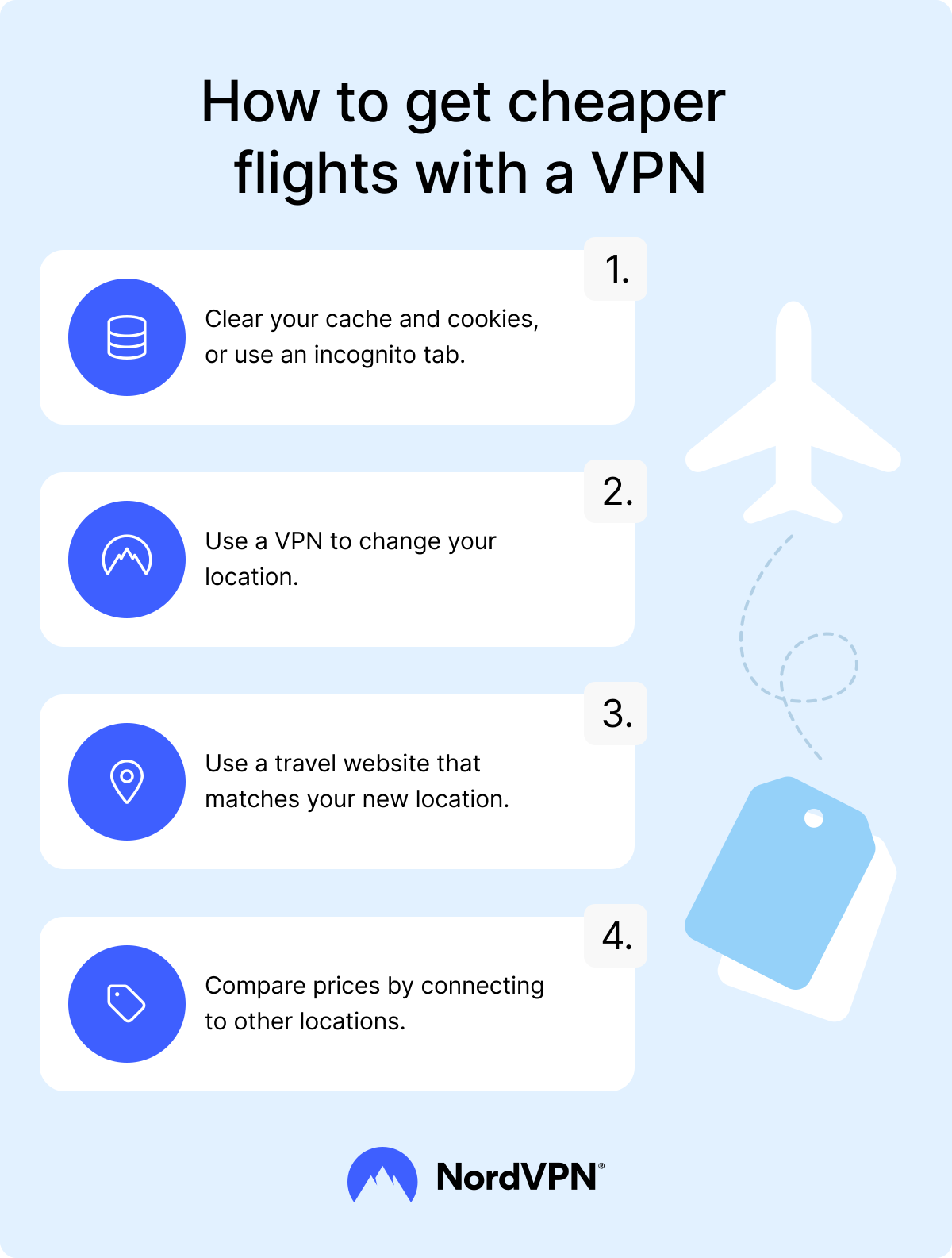
Using a reputable VPN to get cheaper flights is a simple process. By masking your real IP address, you can explore flight prices as if you were browsing from a different part of the world. All you need to do is:
- 1.Choose a reputable VPN provider and get a subscription.
- 2.Download and install the VPN app on your device.
- 3.Open the app, create an account if needed, and sign in using your credentials.
- 4.Connect to a VPN server in the location you want to test (for example, the airline's home country or a lower-income country).
- 5.Open a new incognito window. Make sure to do this after you connect to the VPN to ensure the browser session starts with your new location.
- 6.Go to the flight booking site. Match the URL to your VPN location if a specific regional site is available (for example, if you connected to the UK, type in the “.co.uk” address instead of your usual home version). Doing so can help prevent the site from redirecting you back to your true location.
- 7.Check the price and mark it down.
- 8.Close the incognito mode window to automatically wipe your cookies, session data, and cache.
- 9.Change your VPN server location and open a fresh incognito window to compare a new price.
PRO TIP: This process works for more than just flights. You can apply this same strategy to secure better rates on car rentals, accommodation, and ferry tickets. Even entertainment expenses like theme park passes often use dynamic location-based pricing, meaning a quick check from a different server could save you money on your entire trip.
NordVPN’s research on price differences found significant price drops on sites like Hertz, Agoda, Hotels.com, and Booking.com when users browsed from outside the US. Researchers noted that a US traveler booking a one-week stay at a 5-star hotel in London could save up to $170 simply by using a UK server to make the reservation.
What are other ways to find cheaper flights?
While a VPN is a powerful tool, combining it with other strategies can help maximize your savings. Airlines constantly update their pricing policies, so using multiple methods gives you the best chance of finding a great deal.
- Use flight comparison sites. Platforms like Google Flights, Skyscanner, and Kiwi gather information from multiple airlines to show you the cheapest available options across different dates. Reputable comparison tools often provide price tracking and calendars that highlight the cheapest days to fly.
- Set price alerts. Most booking platforms allow you to set alerts for specific routes. You will receive an email notification if the price drops to make sure you don't miss a temporary sale.
- Book in advance. Airlines use yield management strategies — complex pricing models designed to maximize profit for each seat — which assume that last-minute bookers are business travelers willing to pay a premium. Conversely, booking too early can also be pricey. The "sweet spot" is often 2-3 months before departure.
- Check for seasonal sales. Major shopping events like Black Friday, Cyber Monday, and Boxing Day often feature significant travel discounts. A VPN can be particularly useful during these periods to access sales specific to other regions. You can also find deals on security tools themselves, such as a VPN sale on Boxing Day.
- Use reward programs. Frequent flyer miles and credit card loyalty points can significantly reduce the cost of a plane ticket.
What is the best VPN location to find the cheapest airline tickets?
There is no single "best" or cheapest country that guarantees cheap flight tickets every time, because pricing models are highly complex. However, you can narrow down your search by testing specific locations that logically correlate with lower fares.
A good strategy is to check flight prices by connecting to a server in the destination country. Domestic or local fares are often cheaper than international ones. Additionally, try connecting to the airline's home country because carriers may offer preferential rates to their local market.
Finally, experimenting with servers in countries with a lower cost of living can sometimes reveal better deals due to currency differences or lower average purchasing power. Travelers often report success when connecting to servers in India, Malaysia, Turkey, Mexico, Argentina, Thailand, and Brazil.
What are the downsides of using a VPN to get cheaper flights?
While effective, using a VPN for flights does have potential downsides to consider:
- Some travelers on forums report that booking a local fare without being a resident could lead to issues at the gate, though actual instances of passengers being denied boarding or having tickets cancelled are rare.
- If you try to book a flight priced for a specific country using a credit card from a different region, the airline’s fraud detection system may flag the transaction or block the payment.
- Some airlines use fraud detection systems to look for mismatches between your IP address and your billing details. If they flag a discrepancy, they reserve the right to cancel the ticket for violating their point-of-sale rules. While this is rare, it can theoretically happen at any time, potentially leaving you stranded without a ticket or a refund.
- Booking from a foreign server often means the website will display in a local language and currency. Auto-translation errors could lead to mistakes in your booking details.
What other benefits does a VPN have?
Apart from helping you find the best deals, a VPN is a versatile cybersecurity tool that can:
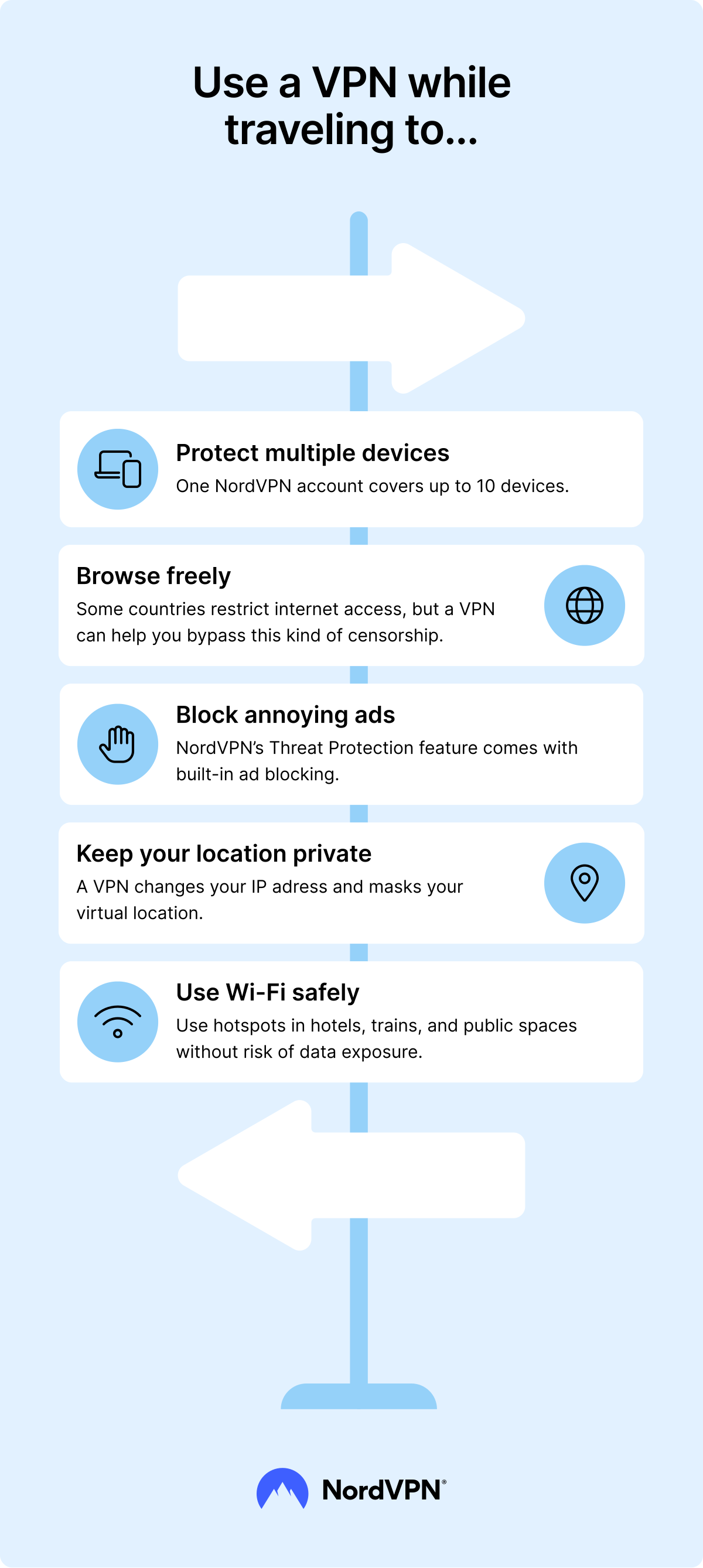
- Improve your digital privacy. A VPN encrypts your internet traffic, which keeps your personal data safe from snoopers, internet service providers (ISPs), and cybercriminals. For added safety, features like the NordVPN Kill Switch ensure your data remains protected even if your connection drops.
- Secure your connection on public Wi-Fi. A VPN protects your connection in high-risk areas like airports and cafes, where public networks are often unsecured.
- Minimize bandwidth throttling. ISPs can sometimes slow down your connection based on your specific activity (like streaming). A VPN hides your traffic type, which stops your ISP from deliberately limiting your speed.
- Boost your device security. Beyond simple encryption, modern VPNs improve your safety with advanced tools. For example, NordVPN’s Threat Protection Pro™ helps identify malicious files, blocks intrusive trackers, and stops you from visiting dangerous websites.
- Help bypass censorship. One of the lesser-discussed benefits of a VPN is that it can help you access websites and services that are blocked or restricted in certain countries or by certain networks. This access is crucial for maintaining internet freedom and staying informed in regions with strict digital regulations.
Access flight prices from any region and protect your data while you travel.
Stay safe with the world’s leading VPN