Most Americans trust antivirus software, but don’t understand what it actually does
When it comes to cybersecurity tools, Americans show a clear preference for the familiar. Antivirus software leads the pack as the most popular choice, with 52% of Americans and the same percentage of New Yorkers using it on their personal devices. Password managers follow at 41% and 40% respectively, while firewalls and VPNs round out the top four cybersecurity tools.
However, there’s a significant knowledge gap that could leave internet users vulnerable. An alarming 73% of Americans and 77% of New Yorkers mistakenly believe antivirus software can do more than just detect viruses on their devices. Many think their antivirus can automatically block phishing attempts, protect against identity theft, or safeguard information on public Wi-Fi, which is simply not true. These misconceptions create a false sense of security, which may leave users exposed to threats their antivirus simply wasn’t designed to handle.
The public Wi-Fi dilemma: Convenience vs. security
Public Wi-Fi remains a popular choice for internet access on the go, with 38% of Americans and 36% of New Yorkers using Wi-Fi in public places. Convenient as it is, public Wi-Fi typically lacks protection, which opens the door to potential security risks.
The good news? About half of public Wi-Fi users are taking some precautions. Up to 53% of Americans stay safe on public Wi-Fi with a VPN or an antivirus, while 55% of New Yorkers take similar measures. However, a significant portion — about one-third of users in both groups — rely solely on “safe behavior” without any additional cybersecurity tools.
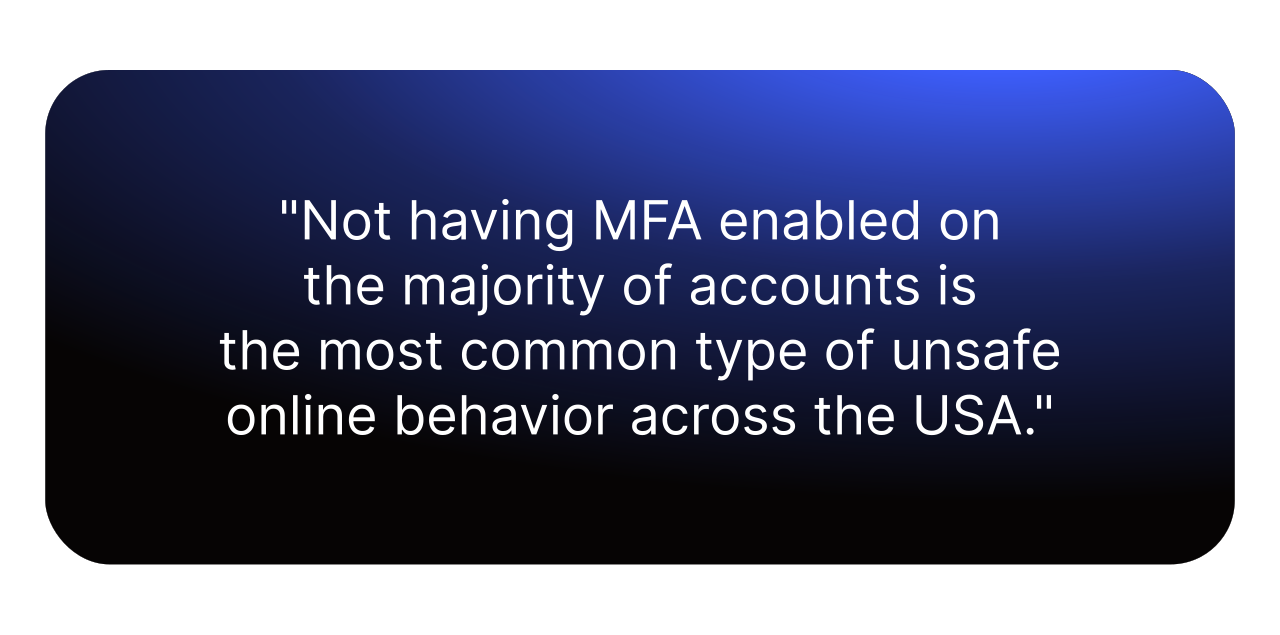
Unfortunately, the “safe behavior” users might not be as protected as they think. Not having multi-factor authentication (MFA) enabled on most accounts is actually the most common risky habit across the US. So while people feel confident about their online safety, they might be missing some basic security steps.
Personal data leaks: A widespread reality for most Americans
The research reveals that personal data leaks have become a sad reality for many internet users in the US. Overall, 48% of Americans have discovered their data has been leaked, with 43% being notified by official parties about data breaches and 21% finding leaked information when they actively checked.
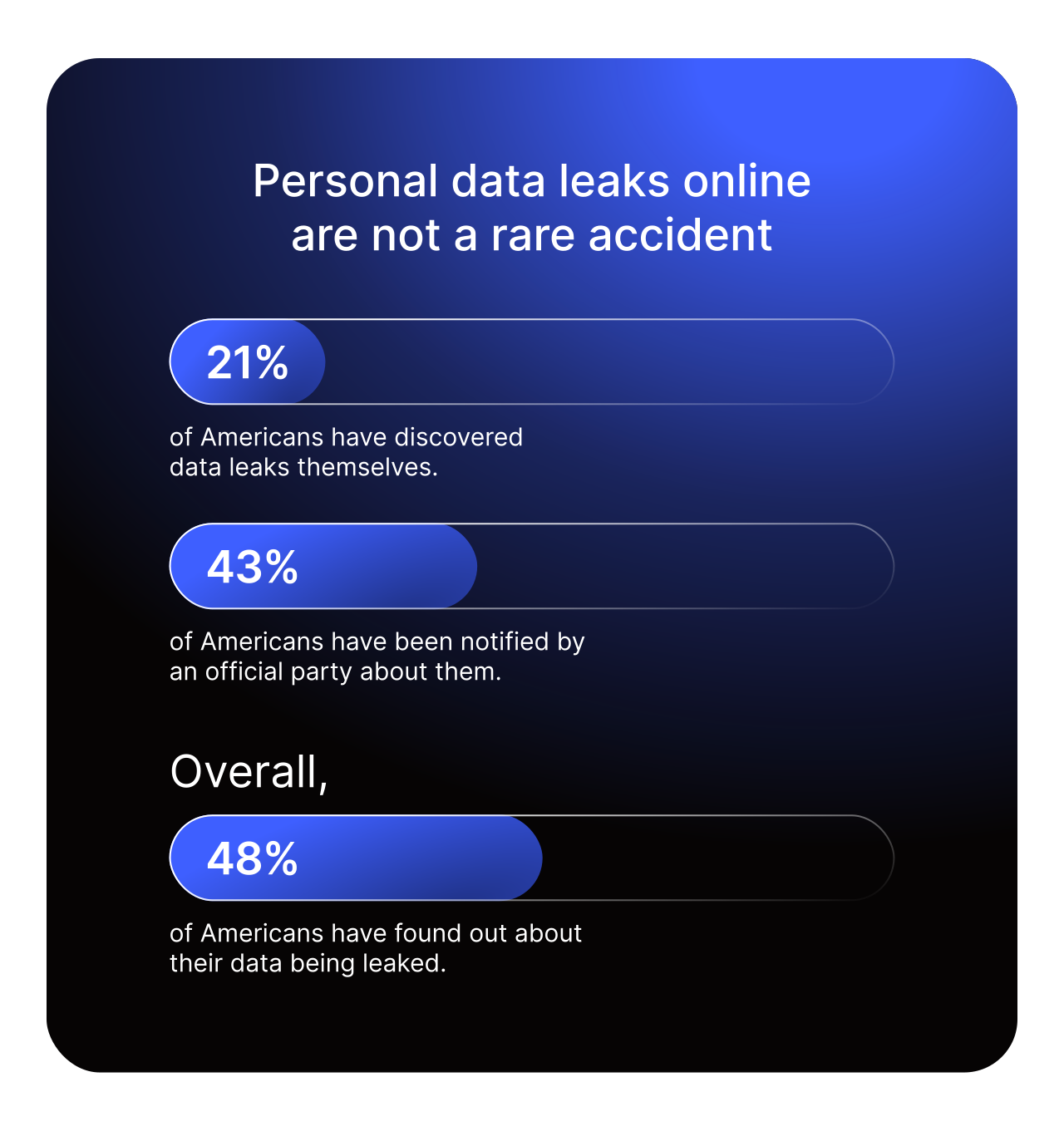
In New York City, the numbers show a similar pattern — 40% people surveyed have found out about data leaks, 35% received official notifications, and 21% discovered leaks through their own investigation.
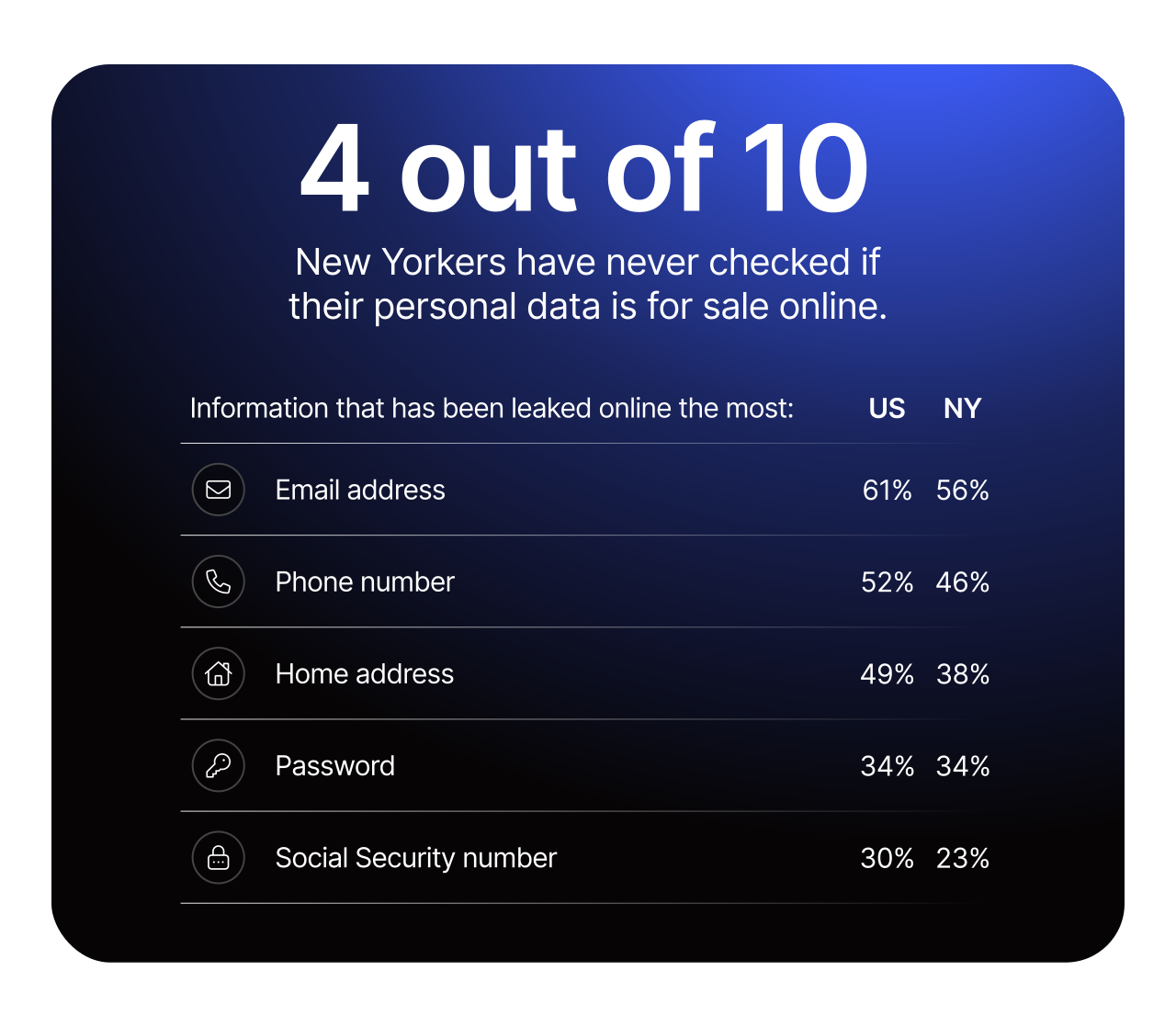
When your data gets leaked, it’s typically your contact information that ends up exposed first. Among Americans who found their data leaked, 61% discovered their email addresses had been compromised and 52% found their phone numbers exposed. New Yorkers experienced similar patterns, with 56% finding their email addresses have been leaked and 46% discovering their phone numbers have been compromised.
Yet despite these risks, many people aren’t actively checking for data leaks. In fact, 4 out of 10 New Yorkers have never checked if their personal information is for sale online — which means they might not even know their data has been compromised until it’s too late.
For people who aren’t actively checking for breaches, NordVPN’s Dark Web Monitor can make a real difference. It continuously scans dark web forums and sites for credentials associated with your email address. Unlike manual checking, Dark Web Monitor runs quietly in the background 24/7, so you don’t have to remember to check — it automatically notifies you the moment your data appears in these hidden corners of the internet. This feature is available as part of NordVPN’s Threat Protection Pro™ suite.
People expect their information is already exposed
Americans suspect their information might already be compromised — and they’re right to do so. As many as 66% of the Americans we surveyed believe their personal data could already be for sale online, while 61% of New Yorkers share the same concern.
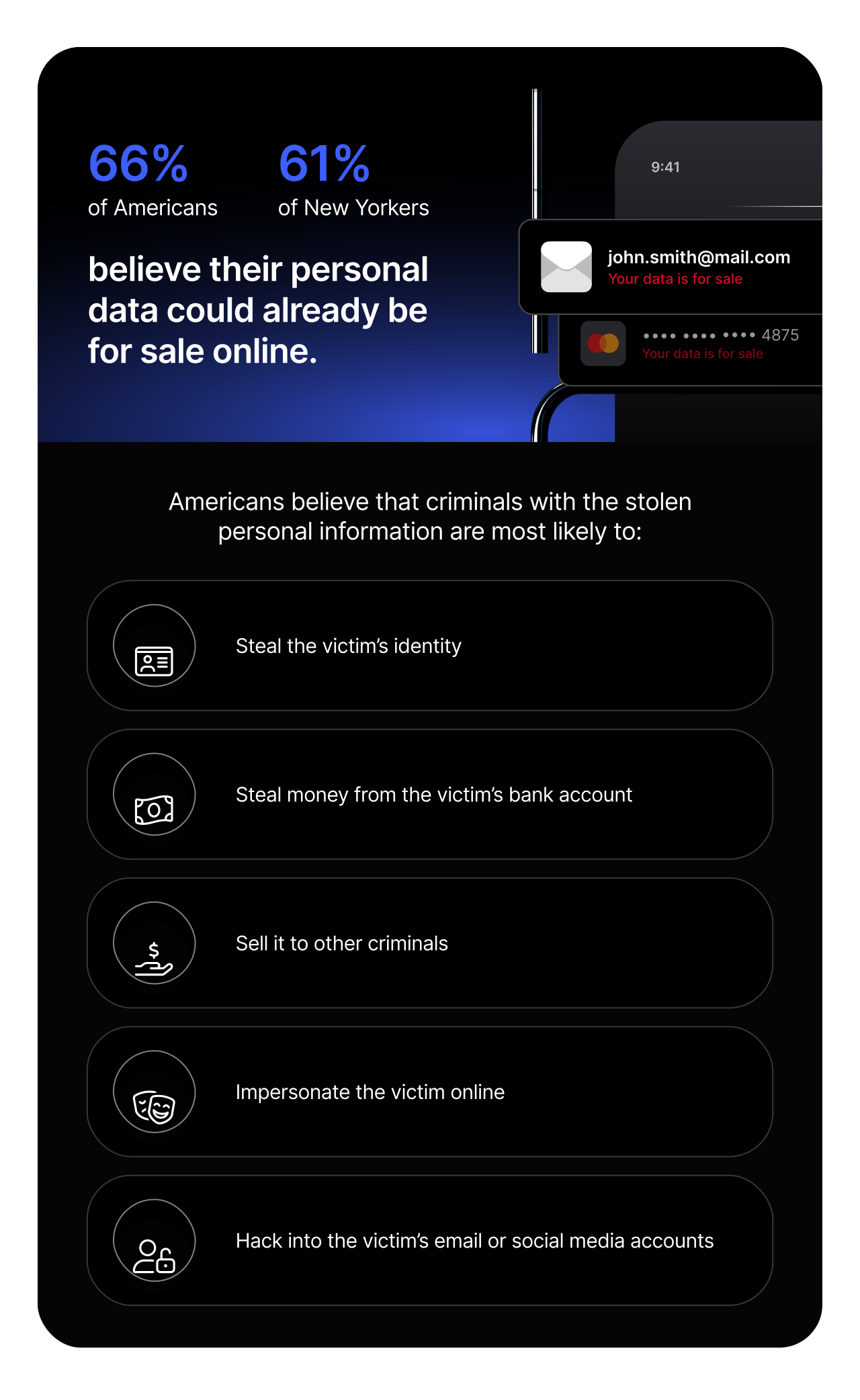
The types of information people expect to find leaked mirror what’s actually being discovered. Among Americans, 47% think their email address could be leaked and 46% worry about their phone number, while New Yorkers show similar concerns at 40% and 36% respectively.
However, when it comes to what worries them most, the stakes get much higher. Social Security numbers top the concern list, with 71% of Americans and 67% of New Yorkers saying they’d be most worried about SSN leaks. Credit card details follow closely behind.
The dark web reality: What’s actually for sale
The concern about personal information being sold online isn’t unfounded. Research into the dark web reveals a disturbing marketplace for New York residents’ personal information. Items commonly found for sale include:
- Personally identifiable information
- Photos and scans of ID cards
- Photos and scans of passport
- Photos and scans of driver’s licenses
- Credit card scans
- Bank routing and account numbers
- Social Security numbers
- Credit card numbers
Some “personal information packages” for sale on the dark web contain frighteningly thorough information, including first and last names of the victim, their date of birth, email addresses, home addresses, primary and secondary phone numbers, city, state, ZIP code, SSN, driver's license information, and even selfies. These packages go for US$1 to US$60, depending on the number of personal information items and photos included.
Cybercriminals can also purchase packages that have financial information, such as the victim’s monthly bills, billing preferences, due payments, and billing status. But individuals aren’t the only ones at risk — cybercriminals can buy packages of leaked business entity information for as little as US$9 on the dark web.
How to protect yourself from data leaks and breaches
Having your sensitive information exposed on a dark web marketplace can become a dire reality for any internet user. To minimize the risk, take the following security steps:
- Enable multi-factor authentication on your accounts. Having MFA on your email, banking, and social media accounts should be your first priority — it’s where your cyberdefence begins.
- Use security tools correctly. Remember that antivirus software only catches viruses — it won’t protect you from all cyber threats or prevent phishing attacks. For an all-round protection, pair your antivirus with a reliable VPN and consider additional security features, such as an ad blocker or a malware scanner.
- Check for breaches regularly. Don’t wait for official notifications about breaches — regularly monitor if your information has been compromised. Or save time and use NordVPN’s Dark Web Monitor to do the work for you.
- Secure your public Wi-Fi usage. Always use a VPN to encrypt your connection on public Wi-Fi so that no one can snoop on what you’re doing online.
- Practice strong password habits. Avoid reusing passwords across multiple accounts and use unique, complex passwords for each service. And since remembering all the passwords for all your accounts is practically impossible, go for a password manager — this way, you’ll only need to remember one master password.
Online security starts with a click.
Stay safe with the world’s leading VPN
About our survey
As creators of a leading VPN service, we wanted to find out how well Americans understand cybersecurity tools and if they’re aware of personal data leak risks. Therefore, our survey examined multiple aspects of cybersecurity awareness and behavior:
Cybersecurity tools
We explored Americans’ and New Yorkers’ understanding and usage of various cybersecurity tools, such as antivirus software, VPN, firewall, tracker blocker, and password manager.
Data leaks
Participants answered questions about their awareness of the dark web, experiences with data breaches, whether they’ve checked for leaked information, and what types of their data they’ve found compromised.
Online safety and behavior
We assessed respondents’ cybersecurity habits, including password reuse, multi-factor authentication usage, update practices, and general online safety behaviors.
Public Wi-Fi usage
The survey examined how Americans and New Yorkers connect to the internet in public places and what security measures they take (if they take them) when using public Wi-Fi.
Methodology
NordVPN conducted the survey from September 2 to September 10, 2025, with 1,005 respondents from the United States and 811 from New York City. The target group included adults aged 18-74 years old, with a nationally representative sample among internet users. Fieldwork was conducted by Cint.
The findings paint a clear picture — while Americans are increasingly aware that their personal information is at risk, many still lack the knowledge and tools necessary to protect themselves well. The real issue is that most people don’t know what these security tools actually do or how to use them properly, which leaves them vulnerable even when they think they’re being careful.
Complete research materials for this study can be found here.