Scammers use January and early February to build trust and establish fake histories, timing their financial demands to strike exactly when daters feel most vulnerable around Valentine’s Day. If you intend to date online this February, understand how romance fraud operates to keep your heart and wallet safe.
January is prime time for romance fraud
January is consistently the busiest month for romance scam discussions on the dark web and in Telegram channels. This timing is no accident — attackers prepare early to exploit the massive spike in dating app usage that occurs at the start of the year.
Data from Tinder confirms this annual “peak dating season.” The platform reports that millions more messages are sent globally between January 1 and February 14 compared to the rest of the year. Activity peaks on the first Sunday of the year, known as Dating Sunday.1
For scammers, this surge provides the perfect cover. Analysis of dark web forums and Telegram channels shows that criminal activity mirrors this legitimate trend, with chatter related to dating reaching its highest levels in January.
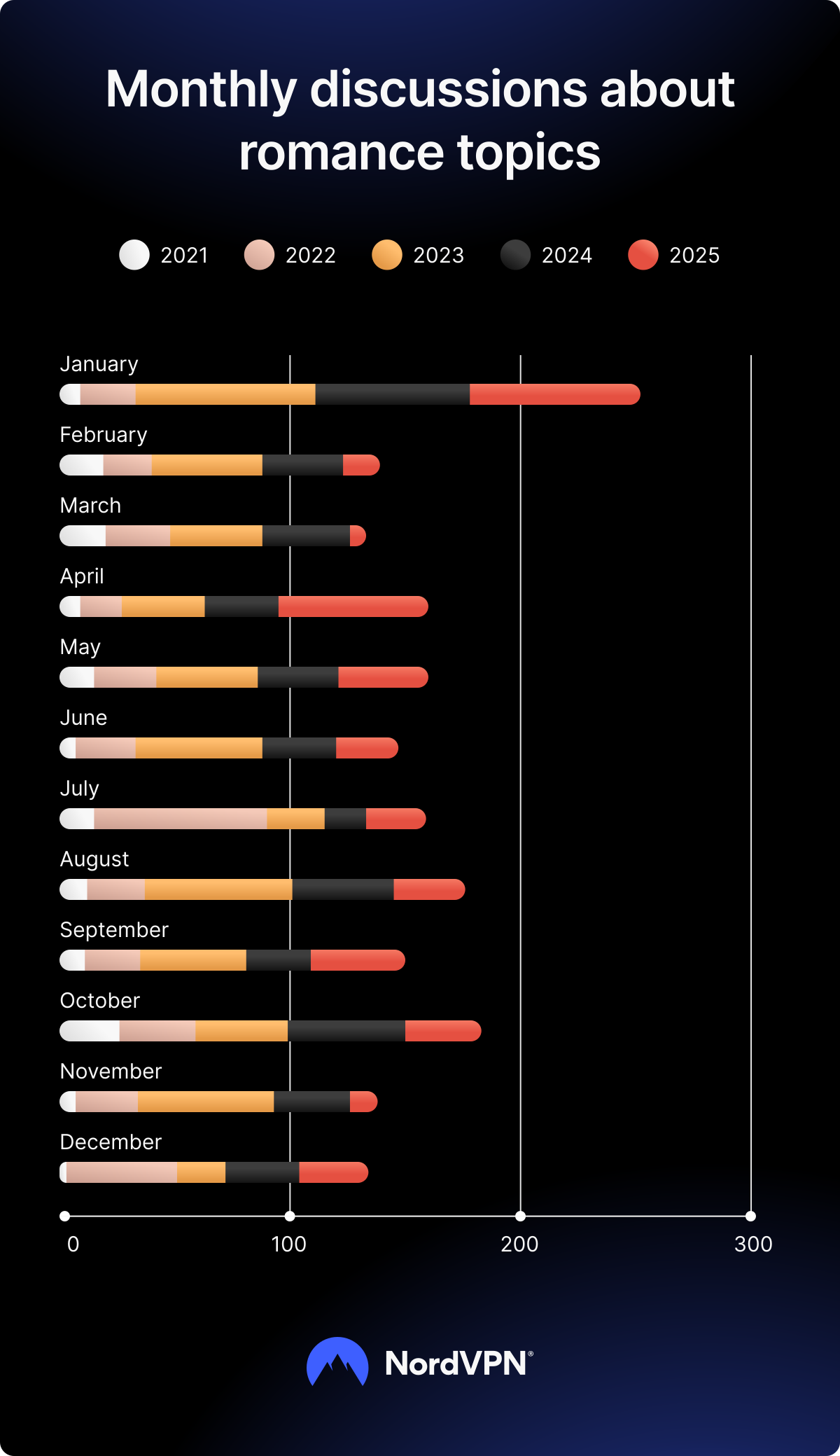
The reason is strategic — building trust takes time. Scammers can’t ask for money immediately. They need weeks to groom a target and fake a connection.
By initiating contact in January, they time their financial demands — such as requests for emergency funds or travel money — to coincide with the emotional pressure of Valentine’s Day.
It’s organized crime, not amateur work
Common perception sees romance fraud as the work of solitary figures, but the data shows highly structured groups. “Romance scams are no longer run only by lone actors with fake profiles — they are increasingly also driven by structured, organized operations,” explains Mantas Sabeckis, a senior threat intelligence researcher at NordVPN.
Think of these scam operations as corporate assembly lines. Instead of one person doing everything, scammers split the work to be more efficient. While one team focuses on finding victims, another builds fake identities, and a separate group handles payments.
Romance scammers lurk on social media, not just dating apps
Romance scammers don’t limit themselves to dating apps — they also operate on popular social networks. But this doesn’t mean these platforms are unsafe. Criminals target them both simply because their popularity offers a vast pool of potential victims.
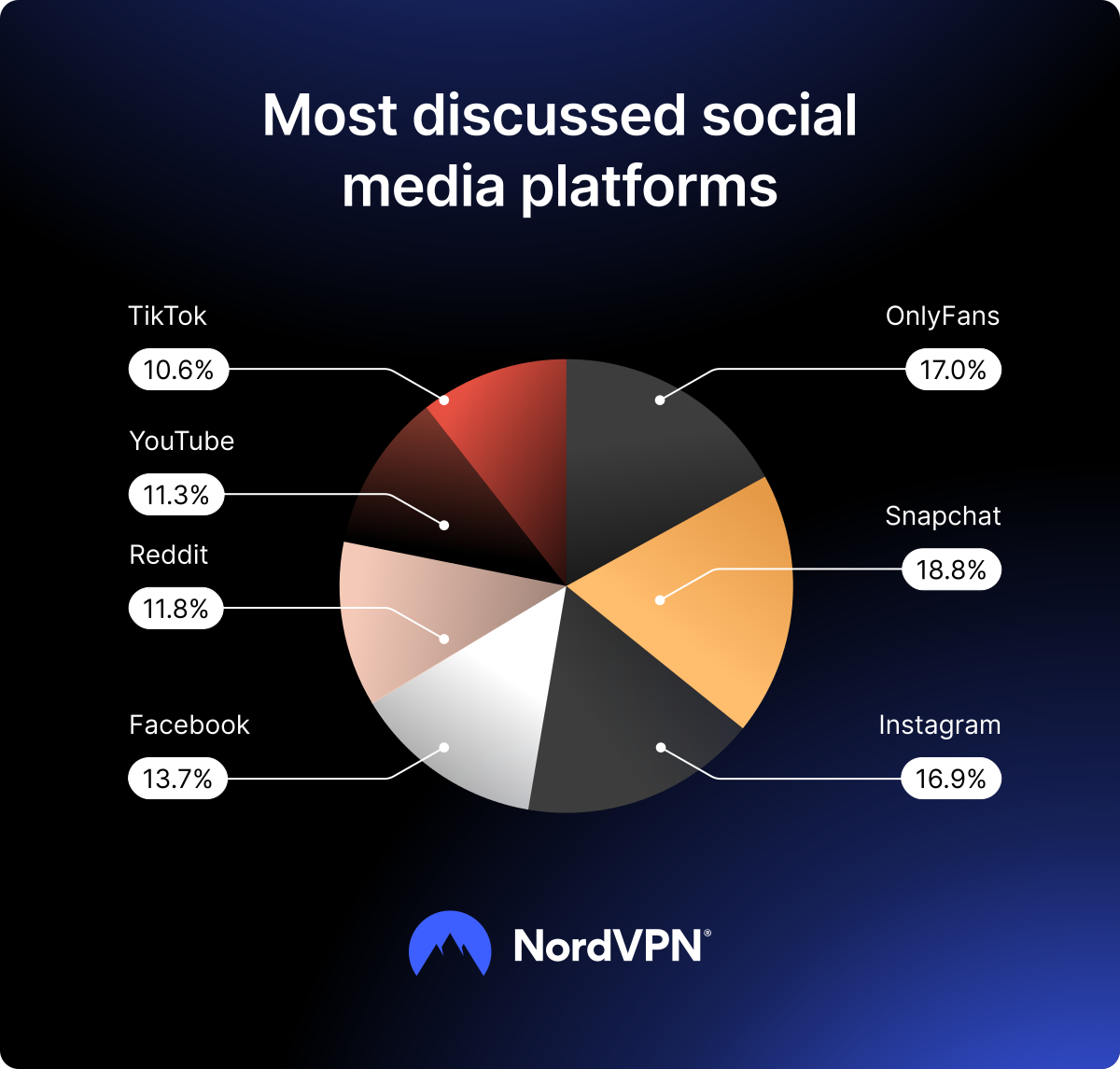
NordVPN findings show that criminals favor Snapchat and Instagram. Private messaging and content-sharing features allow fraudsters to build intimacy, share stolen photos, or send dangerous links in a less monitored environment. Scammers also try to move you to these apps to get away from dating site safety checks.
OnlyFans is also among the top three most discussed platforms in underground communities. Although not a traditional social media network, its direct link to paid adult content makes it a prime target for content resale schemes.
Other platforms play supporting roles. For example, Facebook and Reddit likely offer community access, which allows scammers to hunt for targets within specific interest groups. Similarly, TikTok and YouTube may serve as traffic funnels, where scammers use video content to redirect viewers to malicious websites.
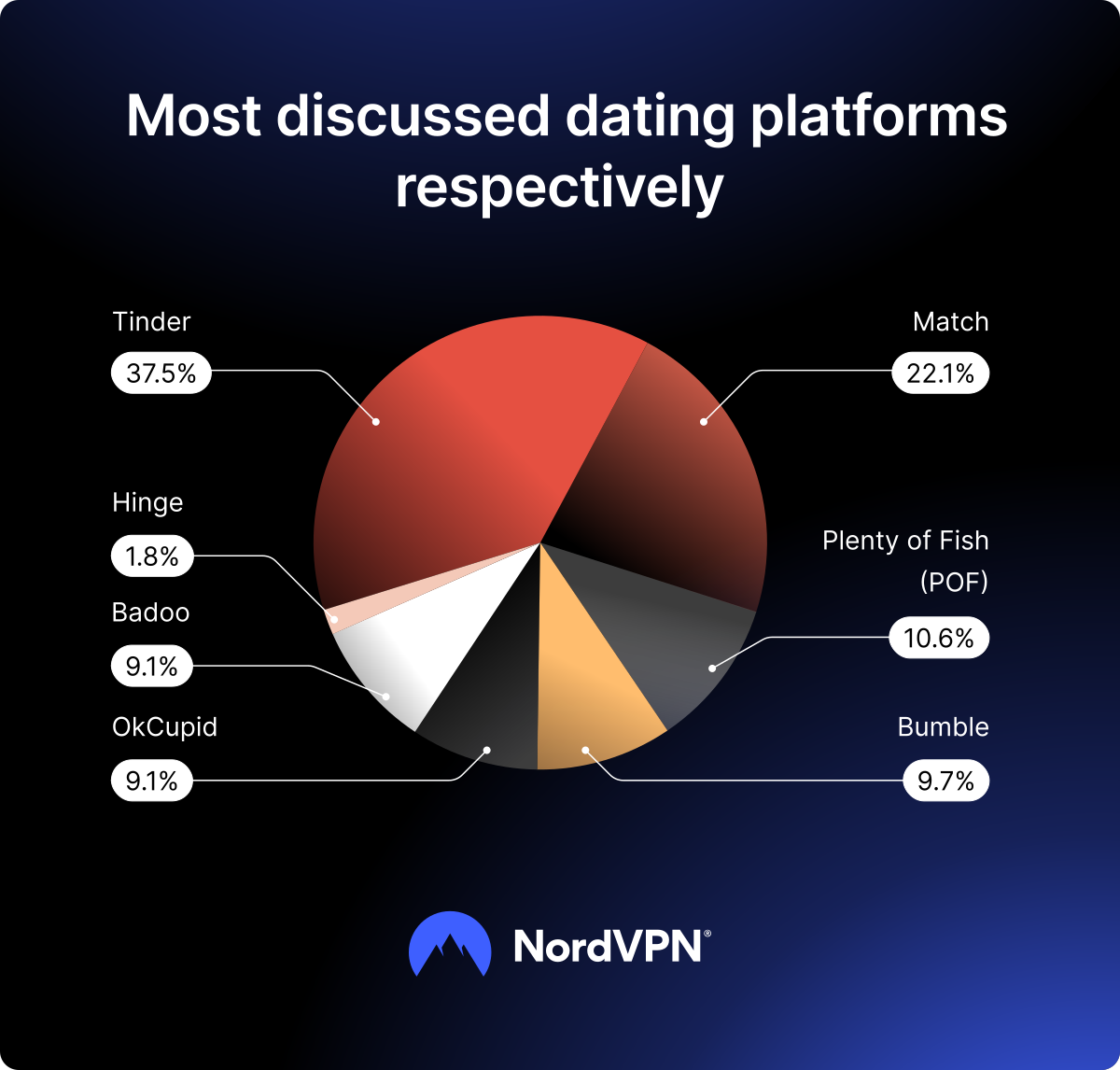
When exploiting dating apps, scammers prioritize scale. Tinder and Match remain top targets because their massive user bases allow criminals to reach new people easily. Smaller apps like Plenty of Fish, Bumble, and OkCupid appear less often in the data, likely because they have fewer users.
The cost of fake love
The financial toll of dating fraud is staggering. In 2025 alone, the Federal Trade Commission (FTC) received 55,604 reports of romance fraud. Total financial loss reached $1.16 billion.2
The problem is also widespread. A survey by content moderation firm Besedo revealed that 72.2% of US dating app users experienced fraud, ranging from fake profiles to monetary theft. Nearly 68% of users reported encountering fake profiles.3
While men (74.4%) encountered fraud slightly more often than women (70.1%), the tactics differed. Women reported catfishing and romance scams more frequently. Men, however, were more likely to face financial scams or fake profiles pushing external links.3
How to spot a scam
Online dating scams rarely start with a demand for cash. They typically follow a calculated process designed to build trust before the trap springs.
- 1.Platform pivot. Scammers try to move you off the dating app to avoid safety algorithms. Be wary if a new match insists on moving to WhatsApp, Google Chat, or Telegram right away. Stay on the original platform to benefit from its built-in protections.
- 2.Fake “wrong number” text. A common scammer tactic involves a text message that appears to be a mistake, followed by a polite conversation that evolves into a friendship. If you receive a text from a stranger claiming to have the “wrong number,” ignore it. It’s likely a script designed to hook you.
- 3.Financial emergency. Once trust is established, the requests begin. Classic tactics include medical emergencies, crypto investment tips, or blackmail using intimate photos. While scammers try to find new methods, these traditional schemes remain effective and widely used.
- 4.Technical manipulation. Don’t trust what you see on the screen. Scammers can manipulate their location data on apps like Tinder to match a fake story about being in your city. Just because their distance profile looks accurate doesn’t mean they are real.
- 5.Innocent invitation. Scammers are adapting, so even tech-savvy people can be fooled. There might be no direct request for money. Instead, a match might suggest you buy a ticket to an event they are also attending. It sounds reasonable — they aren't asking you to pay for them — but the ticket link leads to a fraudulent site that steals your card details.
How to protect yourself
You don’t need to delete your apps to find love safely, but you must remain vigilant. Follow these steps to protect your data and finances while dating online.
- Use reverse image search. Use Google Images to check if your match’s photo belongs to a model, an influencer, or a stock image site.
- Listen for the robot. Be skeptical of phone calls or voice notes that sound unnatural. Scammers now use AI agents that listen to calls and generate real-time responses in the persona of a specific character or celebrity.
- Keep your wallet closed. Never send money, gift cards, or cryptocurrency to someone you haven’t met in person, no matter how tragic or urgent their story seems.
This Valentine’s Day, keep your heart open, but keep your eyes open too. If a romance seems too good to be true, a fraudster likely scripted it during the January rush.
Methodology
Researchers collected data using a custom script that queried both dark web and Telegram group content gathered by Nordstellar. The study covers the period from 2021 to 2025. Queries targeted romance scam themes and adjacent topics, such as catfishing, dating profiles, and sextortion.
The team de-duplicated results to remove exact matches and filtered for topical relevance using an AI-assisted check. Researchers then reviewed and categorized the remaining items into themes, including tactics, platforms, and payment methods. Quantitative analysis supported charting and trend comparisons.
References
1 Tinder (2023, December 21). Peak dating season is coming, and here’s how you can make the most of it, according to Tinder. Tinder Newsroom. https://uk.tinderpressroom.com/2023-12-21-Peak-dating-season-is-coming,-and-heres-how-you-can-make-the-most-of-it,-according-to-Tinder
2 Federal Trade Commission (2025, December 11). FTC Consumer Sentinel Network. Tableau Public. https://public.tableau.com/app/profile/federal.trade.commission/viz/shared/4WS8HTYQ6
3 Strandell, J. (2025, February 25). Report: How dating app chats are driving users away. Besedo. https://besedo.com/blog/report-how-dating-app-chats-are-driving-users-away/
Disclaimer: NordVPN is not endorsed, maintained, sponsored, or affiliated with any of the brands mentioned. Brand references are included solely to report on platforms most frequently discussed in connection with romance-related scams.