The trademarks displayed are for illustration purposes only. NordVPN does not endorse or encourage purchasing products or services associated with them and is not affiliated with, sponsored by, or endorsed by their owners.
What is Tor?
Tor (short for “The Onion Router”) is an open-source network used for private browsing and communication.
The network is made up of thousands of volunteer-run servers around the world, rather than a single company or centralized operator. Because your traffic jumps through several of these servers before reaching its destination, it becomes much harder for anyone to link your activity back to you.
Tor also lets you access the Onion network, which hosts .onion websites — something you can’t open with a regular browser. This part of the internet is often referred to as the dark web, and Tor is the tool most commonly used to reach it. While such a routing method adds privacy, it also slows down your browsing speed, which is why Tor is better suited for specific use cases rather than everyday browsing.
How does Tor work?
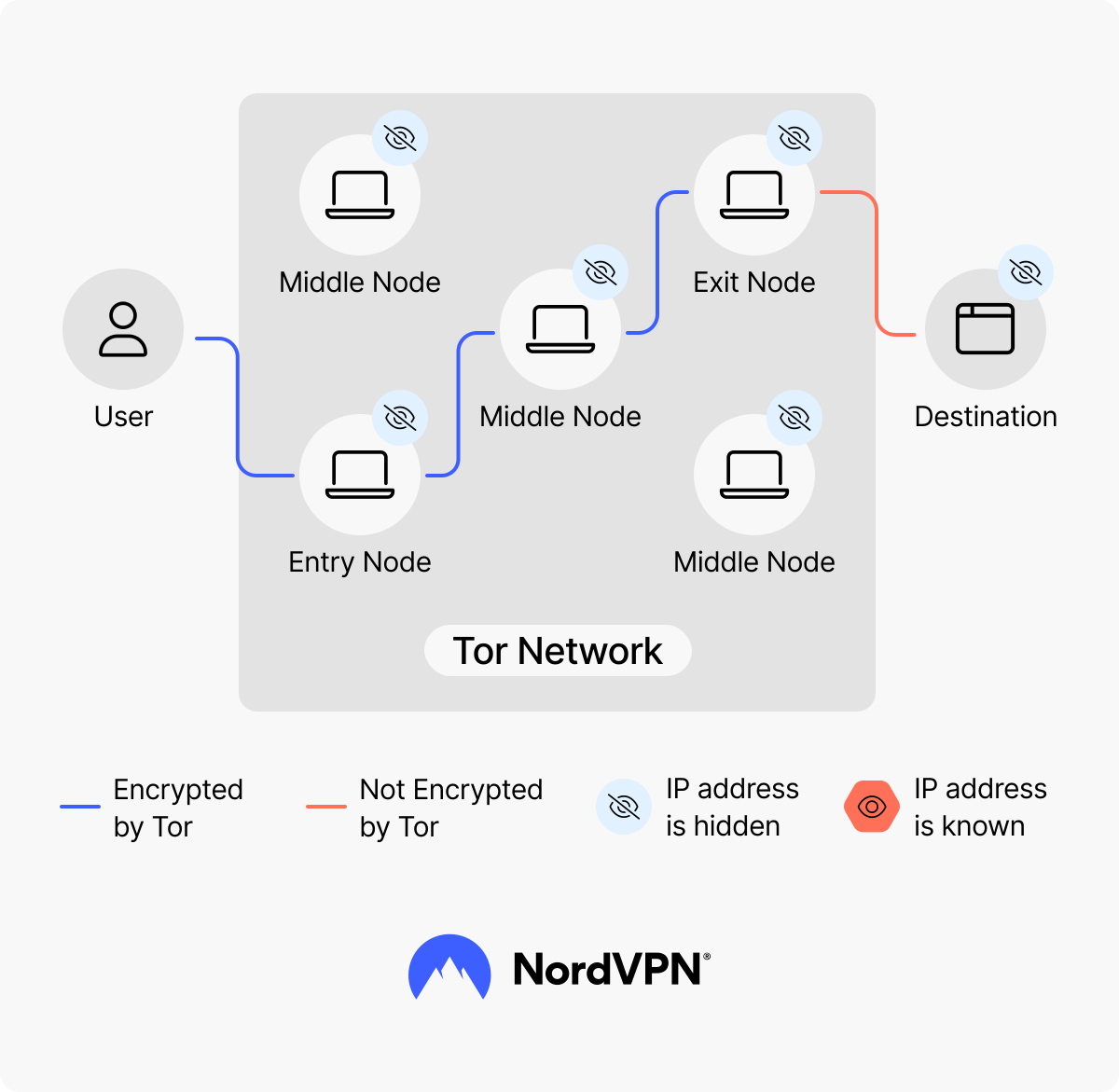
Before your traffic reaches a website, Tor sends it through several volunteer-run servers, each adding a layer of protection. This routing makes it hard for anyone to trace your activity back to you:
- 1.When you enter a request, Tor software encrypts it three times for three different nodes — a guard node, a middle server, and an exit node.
- 2.The Tor software then sends it to the guard node. It removes one layer of encryption and passes it to the next server. The guard node can see your IP address, but it cannot read the encrypted message.
- 3.The middle node peels the second layer off and passes the message and its final encryption layer to the exit node.
- 4.The exit node removes the final layer and can see your decrypted message, but it cannot identify the sender. This node passes the message on to the recipient.
What are the advantages of Tor?
Tor’s biggest strength is its ability to make it difficult to trace where traffic comes from — something regular browsers can’t offer. Such a multi-layered routing is what makes Tor valuable in specific situations where privacy matters most.
Other advantages include:
Its complex encryption process virtually guarantees full anonymity for Tor users.
Free, easy-to-use software.
Tor is difficult to shut down or intercept as the traffic is spread among a large number of servers maintained by individual volunteers.
What are the disadvantages of Tor?
The main drawback of Tor is that it trades convenience and speed for privacy, which makes it less practical for everyday browsing. Because of how the network works, users may run into several limitations:
Internet connection speed drops significantly due to multiple layers of encryption and routing.
Exit nodes can see unencrypted traffic, which creates potential security risks.
Node operators are volunteers, which raises questions about accountability and transparency.
Choosing a specific country’s IP address is difficult, often requiring manual configuration or repeated reconnections.
Tor isn’t available on all operating systems, limiting where it can be used.
When should you use Tor?
Tor is useful in situations where extra privacy is needed or when accessing places a regular browser can’t reach.
The Tor browser is often used to:
- Access .onion websites. Tor is required to reach the Onion network and view .onion services.
- Keep the origin of traffic private. Multi-node routing makes activity harder to trace.
- Get past local blocks on Tor. In regions where the Tor network is restricted, Tor (sometimes paired with Onion Over VPN) can help reach it.
What is VPN software?
A VPN, or virtual private network, is a tool that creates a secure connection between your device and the internet. Unlike Tor, which routes traffic through a volunteer-run network for specific use cases, VPN software is designed to protect your entire connection at the device level.
VPN service providers operate many servers in different locations and offer different VPN protocols and features, giving you plenty of choices.
VPNs also encrypt your internet traffic, making it invisible to hackers and snoopers. Premium VPN companies tend to offer top-grade 256-bit encryption systems, which are impossible to brute-force using any currently known and available device. With a VPN enabled on your gadget, you can hide your IP address and improve your online privacy.
Protect your online identity with a VPN.
How does a VPN work?
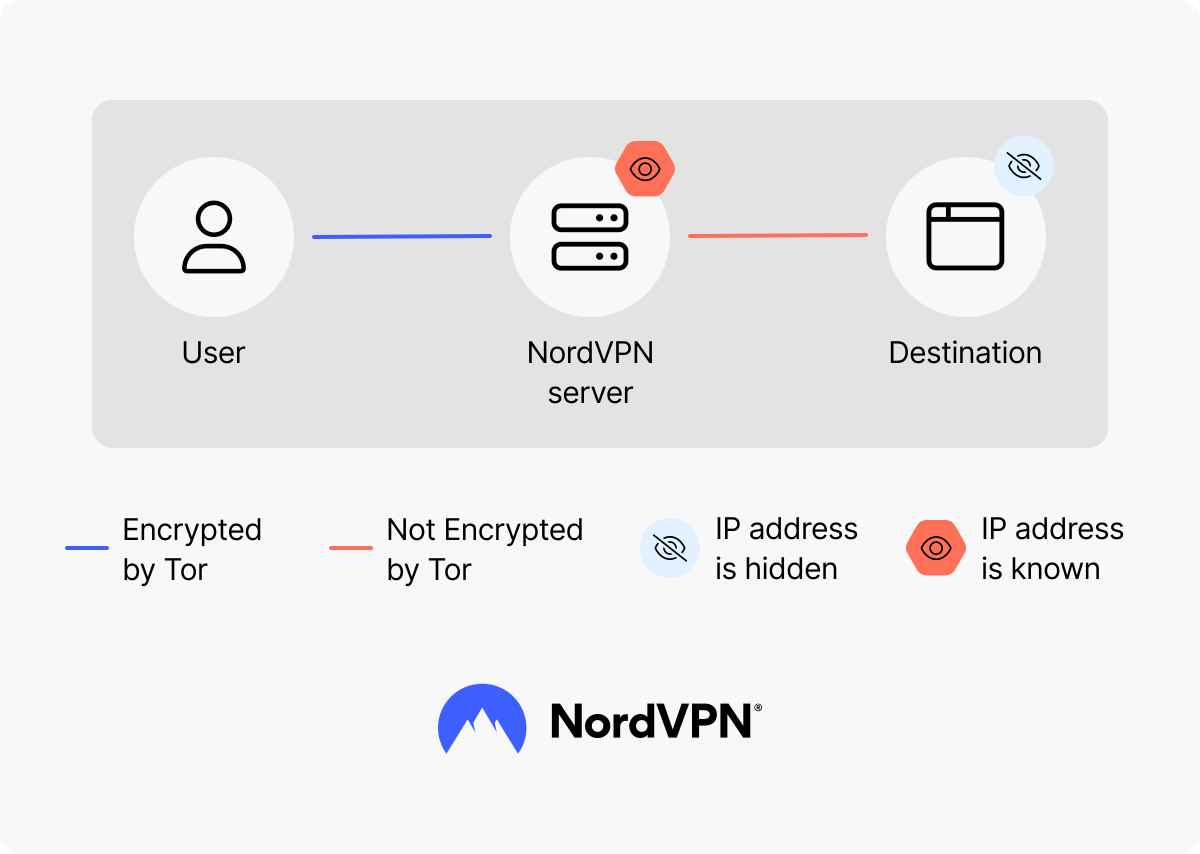
A VPN protects your internet connection by creating a secure tunnel between your device and the wider internet. Unlike Tor, which routes traffic through several volunteer-run nodes, a VPN relies on a single encrypted connection to a remote server. This process involves a few steps:
- 1.VPN software encrypts your internet traffic and sends it to a remote server that changes your IP address (check out our article on the VPN location changer).
- 2.A VPN server decrypts your data before delivering it to your end goal.
- 3.Data arriving at your device from the network undergoes the same process.
What are the advantages of a VPN?
The main advantage of a VPN is that it protects your entire internet connection in a simple, reliable way, making it well suited for everyday use. Apart from that that, VPNs offer several practical benefits:
Accountability. It is easy to identify who owns the server.
Ease of use. Most VPN services are user-friendly and straightforward to set up.
Online privacy. Your data is encrypted, and you receive a new IP address.
Advanced encryption. Premium VPNs use next-generation encryption methods.
Faster speeds. VPNs generally provide faster connections than Tor browsers due to simpler routing schemes.
Additional features. Premium VPNs offer features like specialized P2P servers, double VPN, Kill Switch, and Smart DNS services. NordVPN also offers the Threat Protection Pro™ feature that helps you identify malware-ridden files, stops you from landing on malicious websites, and blocks trackers and intrusive ads on the spot.
Server selection. You can easily choose a specialized server from your VPN provider or select a server from a specific country that you need.
What are the disadvantages of a VPN?
The main limitation of a VPN is that it requires trust in a single provider, since all traffic passes through its servers. Depending on the service and setup, other drawbacks may include:
Cost. Premium VPNs are more expensive.
Logging policies. Some VPNs collect user and connection logs (make sure your provider has a no-logs policy).
Some VPNs collect user and connection logs (make sure your provider has a no-logs policy.
When to use a VPN?
Using a VPN instead of Tor is useful whenever device-level privacy or a safer internet connection is needed. It’s commonly used to:
- Protect data on public Wi-Fi. Encryption helps keep personal information safe on unsecured networks.
- Hide your IP address. A VPN replaces the real IP with the server’s IP, making activity harder to trace.
- Keep browsing private from local networks. Hotels, workplaces, or shared connections can’t easily see what sites are visited.
- Avoid ISP tracking. A VPN makes it harder for internet providers to monitor traffic patterns or build profiles.
What is the difference between Tor and a VPN?
The main difference between Tor and a VPN is how they protect your privacy: Tor routes traffic through several volunteer-run nodes, while a VPN encrypts your entire connection and changes your IP address on any network.
The Tor browser is built for accessing the Onion network and offering strong privacy by design, while a VPN focuses on securing your device and keeping everyday browsing private.
Below is an in-depth comparison of Tor vs VPN.
| | VPN | Tor |
|---|---|---|
| Purpose | Used to secure the whole connection with encryption and provide stable, everyday privacy. | Used to reach the Onion network and hide the origin of traffic. |
| Mechanics | Routes the traffic through a secure server owned by the provider. | Routes traffic through multiple nodes (volunteer servers). |
| Speed | Typically faster than Tor because it usually involves only one extra node. | Generally slower due to the traffic passing through multiple nodes. |
| Encryption | Uses robust encryption protocols to secure all data between your device and the VPN server. | Multi-layer encryption with each node only decrypting enough data to know where to send it next. |
| Privacy | Usually high. However, it depends on the VPN provider’s policies. | Very high due to the traffic passing through several nodes, making it hard to trace the source. |
| Application | User friendly, typically offering simple apps for various devices. | Requires downloading and using the Tor browser. May require technical know-how for further configuration. |
| Use cases | Ensures a secure and private connection when traveling. | Ideal for tasks that require extra privacy. Not recommended for data-intensive tasks due to speed limitations. |
| Cost | Trustworthy VPNs require a subscription. | Free to use. |
Is Tor a VPN?
No — a VPN and Tor are not the same, even though both are used to protect online activity. While they both aim to improve privacy, they serve different goals. A VPN is designed to secure your entire internet connection with encryption and an IP change for everyday use, whereas Tor is built around a volunteer-run network that routes traffic through multiple nodes, mainly to access the Onion network and obscure where traffic comes from.
Tor and a VPN: can they be used simultaneously?
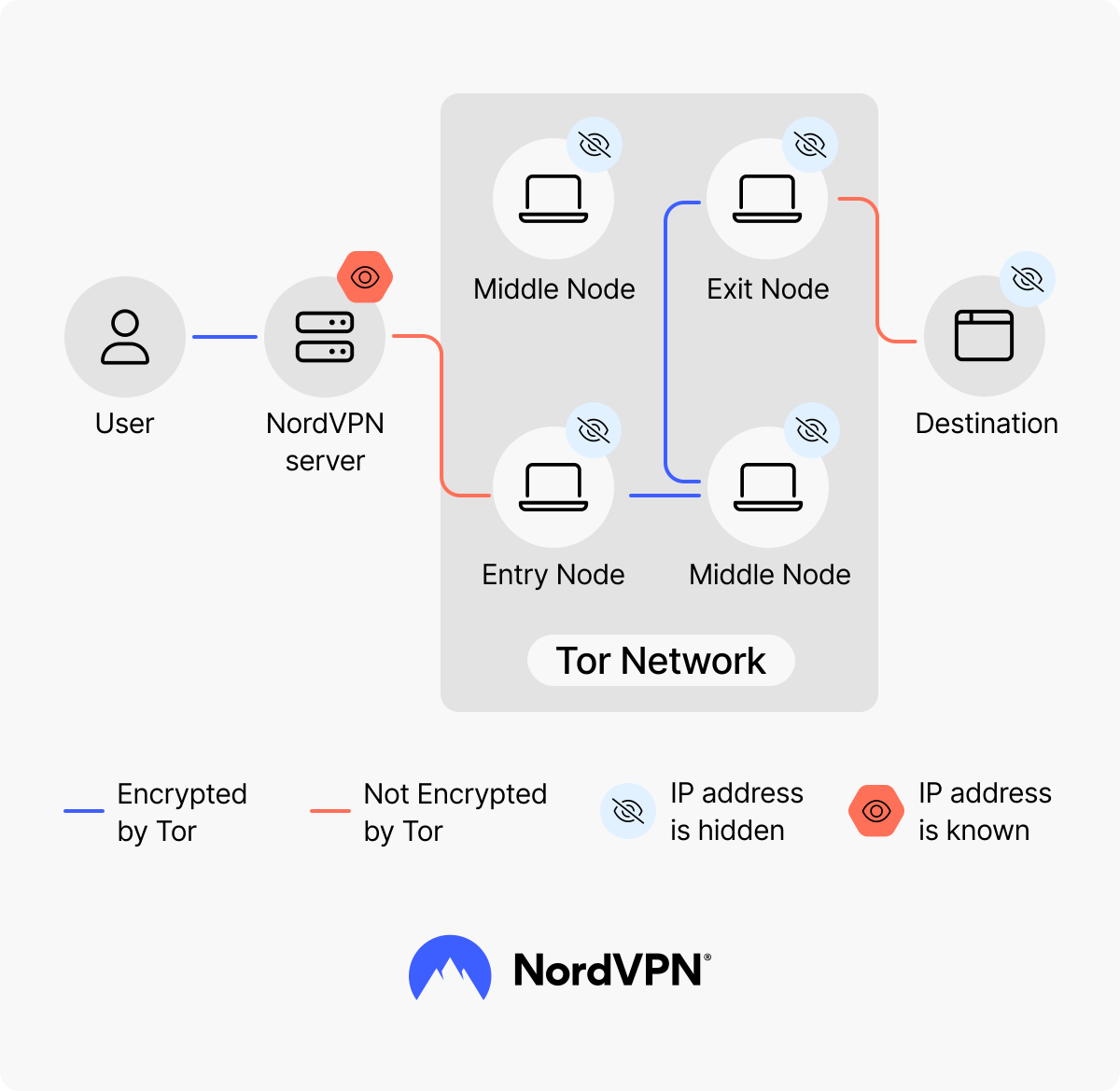
Yes — you can use Tor and a VPN together. There are two ways to do it. Each setup changes how your traffic moves online, so the experience and level of privacy differ.
Tor vs VPN: which is better for you?
Neither Tor nor a VPN is universally better, as both are built for different tasks. Tor is mainly used to access the Onion network and sends your traffic through several nodes, which helps keep your activity private but slows your connection. It’s a good choice when you specifically need to access the Tor network and don’t mind the reduced speed.
A VPN protects your entire device by encrypting your traffic and changing your IP address on any network, making it the more practical option for everyday browsing, streaming, and general online privacy.
Online security starts with a click.
Stay safe with the world’s leading VPN