К сожалению, содержание этой страницы недоступно на выбранном вами языке.

Ваш IP:Нет данных

·

Статус: Нет данных

Перейти к основному содержимому

Is a free VPN really free?

A free VPN doesn’t cost you anything to use, but that doesn’t mean it’s truly free. To keep the service running, these VPNs still need to make money — often in ways other than charging you directly. In this post, we’ll explore why a completely free VPN is as rare as complete anonymity online, whether free VPNs are safe to use, and what you actually sign up for by getting a free VPN access.

13 авг. 2025 г.

21 мин. для прочтения

Is a free VPN really free?

What is a free VPN?

A free VPN is a service that encrypts your internet traffic and shields your IP address without charging a subscription fee. It can also help you access the content you subscribe to at home during your travels.

However, free VPNs often come with limitations, such as data caps, fewer server locations, and slower speeds compared to their paid counterparts. Let’s look at the different types of these VPNs and what they can offer.
Types of free VPNs

When exploring free VPN options, you’ll encounter various types, each with its unique features and limitations.

  1. 1.Freemium VPNs offer a basic service for free, with the option to upgrade to a premium version for additional features — for a fee, of course. These VPNs typically provide essential privacy protections but may have limitations such as data caps, fewer server locations, and reduced speeds. Freemiums may also require registration. 
  2. 2.Ad-supported VPNs generate revenue by displaying advertisements to users. While they provide free access to VPN services, the presence of ads can feel intrusive and may raise privacy concerns.
  3. 3.Data-limited VPNs restrict the amount of data you can use each month. These VPNs are enough for light browsing and occasional use but may not be ideal for activities like streaming or large downloads.
  4. 4.Open-source VPNs, also known as self-hosted VPNs, are developed with publicly available source code, which makes the process transparent and encourages community contributions. These VPNs can be self-hosted or used with third-party services.
  5. 5.Browser-based VPNs operate within your web browser, functioning more like proxies by securing only your browser traffic. They are convenient for quick privacy needs but don’t protect other internet activity on your device, such as app usage or background processes.

Is NordVPN free?

Yes, you can use NordVPN for free for the first three days if you’re a first-time Android customer and install NordVPN from the Google Play Store. But keep in mind that this offer isn’t available in India and South Korea.

If you’re facing serious online censorship, surveillance, or threats of violence, NordVPN provides free emergency VPN access. To request emergency VPN service, simply contact NordVPN directly, and we’ll help you communicate safely without the fear of being watched.

Outside of these cases, NordVPN is a paid service. However, you can try NordVPN for 30 days with no risks to your wallet and get full access to all features. If you’re not satisfied, contact us to request a refund, and we’ll make sure you receive the full amount back.

Why do people use free VPNs?

People mostly use free VPNs to increase their online security and privacy without spending money. It’s perfectly understandable if your financial situation is tight, but if you can afford to spend a few dollars a month, it’s worth investing in a reputable service that offers a full range of security features and avoids the problems of free options.

Free VPNs are especially popular in countries with high mobile internet and social media usage and content restrictions.

Bypassing government censorship 

Iran is known for having one of the world’s most restrictive internet censorship systems. With many popular websites and online services blocked, citizens use VPNs to access blocked websites and censored content.1

Due to the “Great Firewall,” which heavily restricts access to Western social media (Facebook, Twitter, Instagram), Google services, many international news sites, and more, users in China often rely on both free and paid VPNs to bypass these restrictions.1

The government in Indonesia censors content related to pornography, gambling, LGBTQ+ issues, and even blocks apps like Reddit or Tumblr as well as the DuckDuckGo browser.2

Accessing online services on local networks

Local networks at universities, workplaces, or public Wi-Fi often impose bandwidth limits, leading to blocked websites and restricted content. Free VPNs may help users access these. For example, employees in Europe use them to visit personal sites during breaks, and university students in North America for social media.

Boosting online privacy and security

Free VPNs offer a basic way to encrypt and secure your connection on any network. This motivation is strong in regions like Brazil, where cybercrime rates are a concern,3 and in countries with high public Wi-Fi usage like the Philippines,3 where users seek to protect their personal data on the go.

People are increasingly using free VPNs as a way to get online privacy when their budget or location creates roadblocks. For more insights, check out the NordVPN global survey on VPN usage in the USA, UK, CA, and Australia.

How does a free VPN work?

A free VPN operates similarly to paid VPN services but comes with more limitations and risks. Just like a paid VPN, it encrypts your internet traffic and masks your IP address to keep your online activity more private and secure. The main difference is that free VPNs don’t charge for subscriptions, which is why they often come with slower speeds, fewer servers, and potential security risks.

Do free VPNs have weaker encryption?

Some free VPNs use outdated encryption methods, such as PPTP or basic SSL, which are no longer considered secure by today’s standards. Others rely on shorter encryption keys, like 128-bit, instead of the stronger 256-bit keys used by paid services. Additionally, many free VPNs lack perfect forward secrecy, which means that past data could potentially be decrypted if the encryption key is ever compromised.

Free VPNs are often restricted to one basic protocol, limiting their ability to provide excellent security. They rarely offer different VPN protocols like WireGuard, which offer more efficient and secure encryption. Most free VPNs have limited handshake security and offer minimal advanced VPN encryption customization, which leaves users with less control over their privacy and protection. This may lead to DNS leaks.

Do free VPNs work on all devices?

While free VPNs can work across a variety of devices, their performance and availability vary. Here’s a breakdown of how well free VPNs are supported on different platforms:

Device

Support level

Details

Windows PCs

Well-supported

Most free VPNs for Windows PCs offer dedicated Windows applications.

Android phones/tablets

Well-supported

There is a wide availability of free VPN apps for Android.

iPhones/iPads

Well-supported

There are many free VPN for iPhone options, though they’re often more limited than those for Android.

Mac computers

Limited/problematic support

Fewer free VPN options for Mac offer full functionality.

Linux systems

Limited/problematic support

Free VPN support for Linux users is very limited, often available only through command-line interfaces.

Chromebooks

Limited/problematic support

Options are limited, typically available through Android apps.

Smart TVs/streaming services

Rarely supported

Free VPNs are almost never supported on smart TVs or streaming devices.

Gaming consoles

Rarely supported

Gaming consoles don’t have a VPN functionality, so there is no free VPN for Xbox, PS or Nintendo switch support available.

IoT devices

Rarely supported

IoT devices don’t usually support VPNs at all.

Free VPNs often come with several limitations that can impact their overall effectiveness:

  • Free VPNs typically restrict connections to a single device at a time, which makes it difficult to protect different devices simultaneously.
  • Free mobile VPN apps tend to have fewer features compared to their desktop counterparts.

  • Configuration options for more unusual devices are rarely provided.
  • Customer support for setup issues is minimal or even non-existent, so users have to troubleshoot on their own.

What information do free VPNs collect?

Every VPN service, whether free or paid, needs to collect a little bit of information to keep things running — think connection timestamps or data usage (to manage data caps, for example). This kind of technical data helps the service function and isn’t inherently harmful. However, some free VPNs may engage in personal data collection, stepping into territory that could compromise your privacy. Some of the data free VPNs may collect going beyond what’s strictly necessary includes:

  1. 1.Your real IP address.

  2. 2.Websites you visit.

  3. 3.Apps you use.
  4. 4.Content you access.
  5. 5.Browsing patterns.
  6. 6.Search queries.
  7. 7.Device type and model.
  8. 8.Operating system and version.
  9. 9.Unique device identifiers.
  10. 10.Hardware specifications.
  11. 11.Mobile carrier information.

How do free VPNs make money?

If a service doesn’t charge you, it still has to cover its costs for servers, development, and maintenance somehow. For many free VPNs, this often means your data becomes the product. Some of them might sell the information they collect about you to advertisers, data brokers, or other third parties. Some free VPNs also inject ads directly into your browsing experience or partner with third-party advertisers to get paid.

Other free VPNs operate on a freemium model, offering a very basic service for free to entice you to upgrade to a more functional paid version. A few might even sell your unused bandwidth to other users, essentially turning your internet connection into part of their network.

Online security starts with a click.

Stay safe with the world’s leading VPN

What features are missing from free VPNs?

Free VPNs may lack some important VPN features found in paid services:

Security features

When you rely on a VPN for online security, certain features are non-negotiable. Free VPNs often fall short here, leaving your digital defenses exposed.

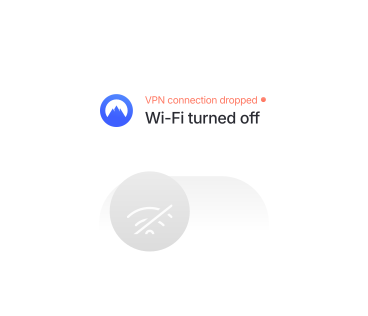
To stay safe while using a VPN, you’ll need kill switch protection. This feature automatically cuts your internet connection if your VPN drops, preventing your real IP address and unencrypted data from being exposed. Without it, even a momentary lapse in your VPN connection could be risky. Knowing how to know if your VPN is safe often comes down to such vital protections.

Free VPNs often lack advanced security options. This includes sophisticated encryption protocols that go beyond basic protection, services like multi-hop or Double VPN that route your traffic through multiple servers for extra anonymity, and split tunneling, which lets you choose which apps use the VPN and which don’t.

Crucial protections like DNS leak protection are also frequently missing, meaning your internet provider could still see what you do online. Additionally, malware protection and ad blocking services are rarely, if ever, found in free VPN services, leaving you vulnerable to malicious sites and intrusive ads. Hackers may also target these vulnerabilities.

Performance features

Beyond security, free VPNs may fall short on the performance front. This means your online experience can be frustrating, especially if you rely on the internet for streaming, gaming, or large downloads. And unlike paid services, they rarely offer unlimited bandwidth. 

Free VPNs often come with strict data caps, which limit how much you can browse, stream, or download each month. Plus, they usually throttle your connection, so you won't get the  high-speed servers you expect from a premium service.

When it comes to server options, free VPNs typically can’t offer a very wide server selection. You might only get a handful of locations instead of access to multiple servers in numerous countries. What if you need access to a VPN server in Japan? Or what if you’re traveling and need to access your home content but the free VPN provider doesn’t have a VPN server in Mexico?

Furthermore, P2P support is often limited on free services. They also rarely provide specialized servers for streaming optimization. 

Privacy features

For many, privacy is the main reason to use a VPN. However, free VPNs often lack the specific features that protect your traffic while you surf the web.

  • An independently audited no-logs policy provides third-party verification that a VPN doesn’t keep records of your online activity, but free services rarely offer this confirmation.
  • Free VPNs may lack perfect forward secrecy, a feature that regularly changes encryption keys to ensure past sessions remain secure even if a future key is compromised.
  • RAM-only servers automatically wipe all user data with every reboot, meaning nothing is permanently stored on hard drives, but free VPNs typically don’t use this technology.
  • Obfuscation technology helps shield the fact that you’re using a VPN — a feature free services often lack. 

Usability features

Beyond security and performance, free VPNs may fall short on everyday usability. This can make the experience frustrating, especially if you rely on your VPN regularly or across multiple devices. Free VPNs often lack:

  • 24/7 customer support. You may find customer support to be limited or even non-existent.
  • Simultaneous device connections. Numerous free services limit you to just one device at a time, which can be inconvenient if you use a phone, laptop, and tablet.
  • Dedicated VPN apps for all platforms. Free VPNs may have limited device compatibility, meaning you might not find an app for your specific operating system or smart device.
  • Router support. They rarely offer router support, so you won’t be able to protect all your home devices at once through your Wi-Fi network.
  • Regular server updates. Free services typically don’t perform regular server updates, which can impact their overall performance.

Are free VPNs illegal?

In most countries, using a VPN is legal, whether it’s a free or paid service. However, the legal landscape for VPNs isn’t uniform worldwide.

When you’re looking at free VPN options, you’ll typically find their servers in several countries. This is often because these nations have legal frameworks that are generally conducive to VPN operations, that’s why they’re preferred by providers:

  • United States
  • United Kingdom
  • Canada
  • Netherlands
  • Germany
  • Singapore
  • Japan

Countries where free VPNs are illegal or restricted

It’s important to know that VPNs, free or paid, face severe restrictions or outright bans in certain countries:

  • China: Highly restricted. Only government-approved VPNs are legal, and unauthorized services are actively blocked.
  • Iran: Restricted/illegal. Using VPNs without state permission is largely illegal, and access is heavily controlled.
  • Russia: Restricted. While using a VPN is not illegal, providers that do not comply with government demands to block specific content are outlawed, and their services are actively blocked.
  • North Korea: Illegal. Internet access is extremely limited and heavily state-controlled, which means unauthorized VPN use is illegal for citizens.
  • Turkey: Restricted. The government frequently blocks access to VPN services, though personal use is often a gray area rather than strictly illegal.
  • United Arab Emirates: Restricted/illegal. Using a VPN for legitimate business purposes is generally allowed, but using it for other purposes is prohibited and may carry heavy penalties.
  • Oman: Restricted. Similar to the UAE, official use may be permitted, but the general use of unapproved VPN services is highly restricted.
  • Bahrain: Restricted/monitored. While not an outright ban, government surveillance is prevalent, and access to VPN services is frequently blocked.
  • Belarus: Restricted/monitored. The use of VPNs is not illegal, but the government monitors and may block unregistered VPN services.

For many of these countries, the situation isn’t always an outright ban — it’s often a gray area where governments work on banning VPNs or making them difficult to use.

No matter where you’re using a VPN, remember — engaging in illegal activity online is always against the law. A VPN is a privacy and security tool, not a shield for criminal behavior, and using it for unlawful purposes is prohibited everywhere.

Risks of using free VPNs

While free VPNs promise online freedom, they may introduce significant risks that undermine your privacy and security. That “free” service can come at a steep price.

Data privacy concerns

Many free VPNs aren’t really free — they often make money by collecting your online data and selling it to advertisers or data brokers. This means the very service you use for privacy might actually be keeping tabs on your online activity and IP address. Instead of protecting your information, they could be actively monetizing it.

Security issues

Using a free VPN can expose you to serious security threats. Many free VPN apps have been found to contain malware or malicious code. For instance, a CSIRO study found 38% of free VPN apps contained malware or other critical vulnerabilities.

Beyond malware, free VPNs typically use weaker encryption protocols, which leaves your internet traffic vulnerable to interception. They often lack essential security features like a kill switch, increasing your risk of accidental data leaks. This inadequate security can make you susceptible to various cyberattacks, including man-in-the-middle attacks, where your data is intercepted by hackers and malicious actors.

Major free VPN security breaches and data leaks

The risks of using free VPNs aren't just theoretical; they come with a history of major security failures and free VPN data breaches, as well as alarming data leaks. Investigations have consistently revealed widespread privacy issues.

For example, research conducted by TOP10VPN on the dangers of free VPNs found that a staggering 88% of free Android VPN apps suffered from data leaks and 71% shared user data with third parties. This research, along with a report by VPNpro.com, also raised concerns about ownership, highlighting that many popular free VPN mobile apps have links to mainland China (check VPNpro’s website on more details on the specific apps). 

Further investigations by the Tech Transparency Project even showed that the Google Play Store and App Store hosted at least 20 VPN applications controlled by the Chinese company Qihoo 360. These articles provide more details on the specific services implicated in these findings.

Performance limitations

Beyond their security and feature gaps, some free VPNs deliver a frustrating and unreliable user experience. You may encounter slow speeds, constant buffering, and unexpected disconnections, which make even basic browsing a chore. According to research, over 60% of free VPN users encounter problems with their connections. This lack of consistent performance means you can't rely on them for daily internet use.

Is there a good alternative to a free VPN?

For genuine online protection, performance, and peace of mind, free VPNs often fall short. Thankfully, reliable alternatives offer a much better experience, and it’s key to know how to choose the best VPN for your needs since many cheap VPNs offer great value.

1. Paid VPN services

Compared to using a limited free version, paid VPN services offer a much more complete and reliable experience. They are designed for strong security and performance, giving you unlimited bandwidth, fast VPN speeds, and a huge network of global servers for a much more secure browsing experience.

Unlike free options, paid VPNs often have a verified no-logs policy, meaning they don’t keep records of your online activity. On top of that, they offer advanced encryption and essential security features like a kill switch. This makes trusted paid VPNs the better choice for real privacy and security, with NordVPN being one of the best and cheapest free VPN service alternatives.

2. Tor network

The Tor network (or The Onion Router) is a free, open-source service that lets you communicate anonymously. It routes your internet traffic through a volunteer overlay network that stretches all around the world, which makes it incredibly difficult to trace your online activity. While excellent for anonymity, Tor is known for being slow and impractical for general browsing, streaming, or large downloads.

3. Proxy services

Proxy services act as an intermediary between your device and the internet, masking your IP address and allowing you to access content. However, they don’t encrypt your traffic like VPNs do.

Can proxy services provide a level of anonymity similar to that of a VPN?

No, proxy services do not provide a level of anonymity similar to a VPN. While a proxy can shield your IP address from websites, it doesn’t encrypt your internet traffic. This means you don’t get a truly encrypted connection. Your internet service provider can still see your online activity, and your data remains vulnerable to interception, especially on unsecured networks.

4. Self-Hosted VPN

A self-hosted VPN means you set up and manage your own VPN server, often on a cloud platform or a dedicated device. This gives you complete control over your privacy and security settings.

What level of technical knowledge is required to manage a self-hosted VPN effectively?

Managing a self-hosted VPN effectively requires a high level of technical knowledge. You’ll need to understand server setup, network configuration, security protocols, and ongoing maintenance. This option is best suited for experienced users with a strong background in IT.

5. Built-in VPN 

Some operating systems (like iOS and Android) and browsers offer basic “VPN” functionality or privacy features. Built-in VPNs are developed by reputable companies such as Apple, Google, Microsoft, and major device manufacturers. 

Can built-in VPNs protect my privacy as effectively as paid VPN services?

While built-in VPNs provide a basic level of privacy protection, they may not offer the same advanced features and comprehensive security as dedicated paid VPN services. They often have fewer server locations, lack advanced encryption options, and may not provide features like a kill switch or a strict no-logs policy, which are standard in premium VPNs.

Final thoughts

A free VPN is a service that allows you to browse the internet with more privacy and security without charging a subscription fee. It typically encrypts your internet connection, shields your IP address, and can help you access the content you subscribe to at home during your travels. However, these services often come with limitations, such as data caps, fewer server locations, and slower speeds compared to their paid counterparts, and may even impose time limits on use.

Running a VPN service is costly — you have to maintain your server network, continuously develop your VPN software to keep it resilient to threats, and provide customer support. To cover their costs, free VPN providers often rely on several monetization strategies, like showing ads, collecting and selling user data, or offering paid upgrades for extra features.

While these methods help keep the service running, they can come with some compromises when it comes to privacy, security, and your overall experience. That’s why it’s important for you to take a closer look at the terms of service and privacy policies of any free VPN you consider, so you know exactly what you’re going to get.


Invest in reliable online protection.

Safeguard your connection with a full set of security features

List of references

1Castro, C. (2024). Indonesia bans DuckDuckGo – Free VPN apps are the next target. TechRadar.

https://www.techradar.com/pro/vpn/indonesia-bans-duckduckgo-free-vpn-apps-are-the-next-target

2Kemp, S. (2024, January 31). Digital 2024: Global overview report. DataReportal.

https://datareportal.com/reports/digital-2024-global-overview-report

3Schaub, S. (2023). VPNs and the fight against government censorship. TechRadar.

https://www.techradar.com/features/vpns-and-the-fight-against-government-censorship

Также доступно в: Dansk,Deutsch,English,Русский,简体中文.

Irma Šlekytė | NordVPN

Irma Šlekytė

An online privacy enthusiast, Irma approaches her writing about cybersecurity with an "I can help!" attitude. With particular interest in cyber hygiene, she strives to share practical insights with NordVPN readers.