Does a VPN make me anonymous?
A VPN does not make you anonymous. In fact, no internet privacy tool can completely hide your online presence or identity. The same goes for browsing the internet anonymously.
When we refer to an anonymous VPN, we really mean a VPN that does everything it can to maintain your privacy. If you only need an anonymous VPN to protect you from snoopers who are trying to find out what you are doing online, then yes, your online identity will be protected. However, that protection only goes so far.
With or without a VPN, being 100% anonymous online is impossible. No matter how many steps you take, you could still be unwittingly sharing and revealing your identity and location right now.
What’s the difference between online anonymity and online privacy?
A common misinterpretation is mistaking privacy for anonymity. Online privacy means that no one can spy on your activity. But that doesn't mean you're invisible. Website cookies will still store basic information from your last visit. And while tools like VPNs help, they’re not magic cloaks. A VPN will encrypt your traffic, but it’s a privacy tool designed to make you safer online.
Online anonymity, however, means leaving absolutely no trace of your presence. In reality, this feat is virtually impossible, partially due to the sheer number of online trackers.
Top online anonymity threats
Online snoopers can uncover your identity in all kinds of ways. On top of that, some services require you to reveal your online identity just to use them. Let’s take a look at who (or what) might be snooping on your activity behind the scenes.
1. Wi-Fi networks
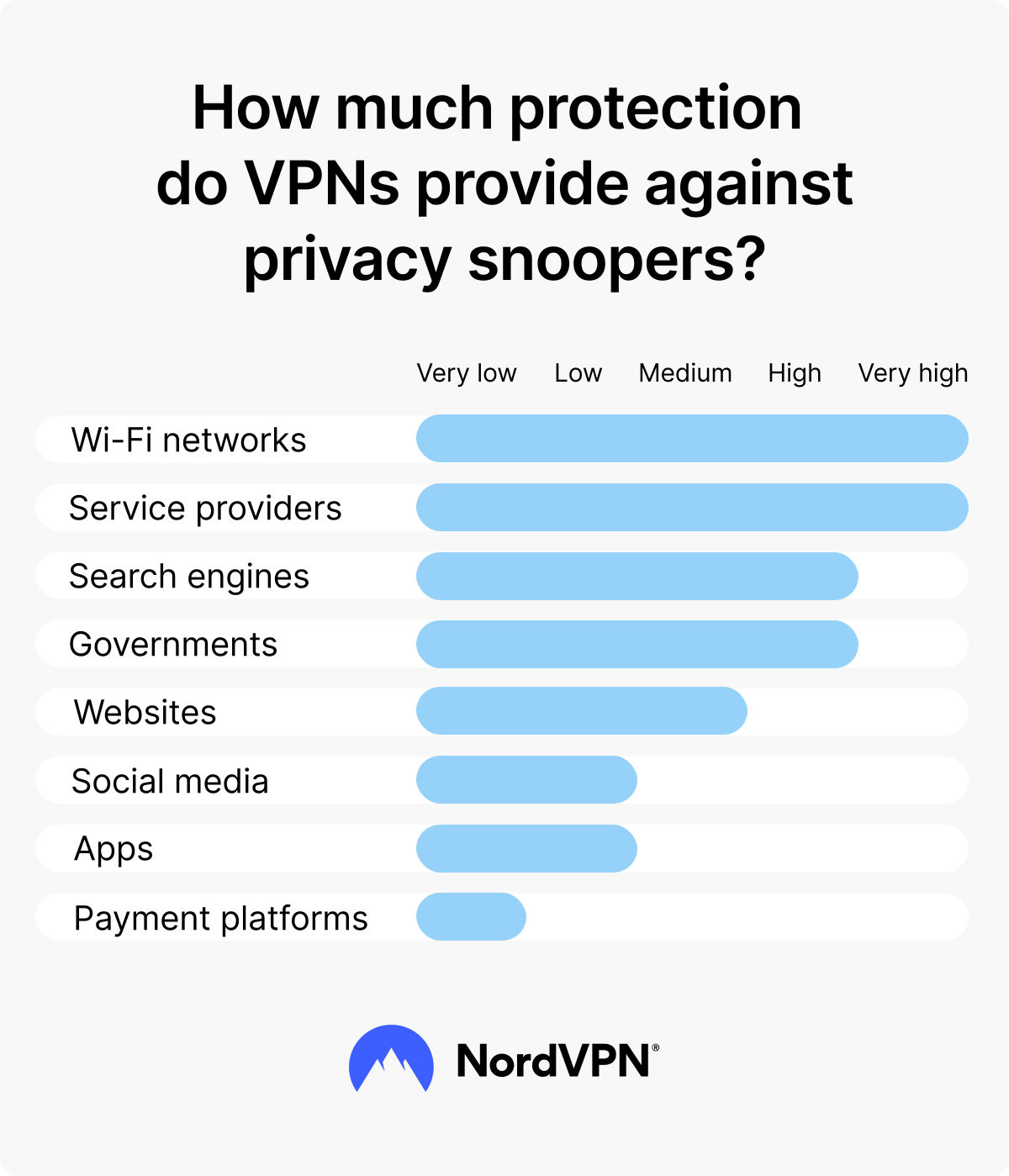
When you connect to a Wi-Fi network, especially a public one, you place a lot of trust in whoever controls it. The network owner can potentially monitor your online activity, including the websites you visit, the apps you use, how long you stay on them, and what types of data you're sending or receiving. It’s particularly true if you're visiting sites that don't use HTTPS encryption.
It gets even riskier on unsecured public Wi-Fi networks, which don’t require a password to join. These open networks are easy targets for hackers. With basic tools and some technical skill, an attacker can intercept your connection, view your browsing activity, and even steal personal information like login credentials or payment details.
To stay safer on public Wi-Fi, avoid logging in to sensitive accounts (like banking or email) unless you use a secure connection. Better yet, use a trusted online VPN service to encrypt all your internet traffic and protect your privacy, no matter who controls the network.
2. Internet service provider (ISP)
Because your ISP processes all of your traffic, it has extraordinary access to everything you do online. In most countries, ISPs are given broad rights to profit from their internet data or to share it with government surveillance agencies.
If you aren’t using a VPN, your ISP can see what websites you visit (via your registered IP address) and how much time you spend there. Your ISP knows who you are and your original IP, so without a VPN, it can trace information back to you. In the US, ISPs don’t even need your permission to record, share, or sell your browsing history.
With VPN software enabled, your ISP can no longer see what you do online. However, your ISP will always know your real IP address because it’s been assigned to your user profile. You pay for the service, so the ISP keeps a record of your personal and payment details. The only way to cut your ISP out of the loop is to use someone else’s internet (like public Wi-Fi), but you’ll still need a VPN so you can’t be spied on.
3. Government surveillance
The anonymity a VPN provides against government surveillance will depend largely on the surveillance methods your government uses. The tools a government has at its disposal far exceed the scope of protection a VPN provides. As far as just your internet connection is concerned, however, a VPN can go a long way to increase your privacy.
Keep in mind, though, that VPNs are blocked or considered illegal in some countries. In oppressive regimes with strict online censorship laws, governments want to have full control of their citizens' cyberspace. As a result, they find ways to track them and invade their privacy. In some cases, only government-approved VPNs are allowed. This approval usually means letting the government monitor those VPN users.
4. Websites
Even with a VPN, websites can see what operating system and browser you are using, the plugins you have installed, and even whether you are currently logged in to any social media platforms.
Most websites use trackers and cookies, too. Cookies can be helpful because they can save login sessions or shopping baskets. However, they also play a huge role in creating your “user profile.” This personal information about who you are and what products or ads you’ve engaged with can then be sold to third parties.
A VPN won’t stop websites from storing cookies on your browser – only your browser can do that. To manage cookies, you can delete them manually after each browsing session or install a browser plugin that’ll block or limit them. A VPN, however, does help by masking your real IP address, so websites and their cookies can’t link your activity back to your actual location.
Any website you upload any files to, including but not limited to social media, will be able to see your metadata as well, if the files have it. Metadata is information embedded in your digital documents and photos that can reveal who created the file, which organization they’re a part of, when it was edited, and even the device used to create it.
5. Social media platforms
Your level of anonymity on social media depends on how much personal data you give up. Even if you use a VPN, the data you willingly post or make public can still be seen and collected by the platform and other users. Simply put, a VPN won’t protect your privacy if your profiles are public or if you openly share sensitive information.
A big privacy risk comes from location settings on your social media profile. If you don’t disable location tracking, social media platforms, and potentially anyone who views your posts, can see your real-time whereabouts every time you share something online. To protect your privacy, review your privacy settings regularly and make sure your social media profiles are as private as possible.
6. Google and other search engines
Like many social media platforms, Google built its business on trackers and advertising. However, what makes the situation especially concerning is the sheer number of services this tech giant owns — Gmail, Google Maps, YouTube, and Chrome, to name a few. The more of these platforms you use, the more information Google gathers about you, building a detailed user profile that includes a lot of personally identifiable information like your location, age, gender, search history, and even the videos you watched on YouTube.
Disabling location history in your account settings doesn’t necessarily stop the tracking. Google may still track your whereabouts through other means, such as app activity or Wi-Fi connections.
Google’s reach goes beyond just tracking where you go. It uses facial recognition technology to scan your photos, its robots crawl through your Gmail and Google Drive documents, and Chrome tracks all the websites you visit and the ads you engage with. This information is used to feed you more ads. If that feels invasive, explore what Google knows about you and consider switching to privacy-oriented search engines.
7. Payment providers
Your credit card and digital payment activity leaves a trail that can easily be linked back to you. Payment records can reveal where and when you shopped, where you boarded the train, and where you got off, even the cities or countries you've visited. And since most financial systems require some form of identity verification, staying anonymous is not possible unless you use cash or cryptocurrency. This difficulty is why privacy-focused companies like NordVPN also accept payments in cryptocurrency.
8. Apps
We place a great deal of trust in apps from the moment we download them onto our devices. Almost every app will ask permission to access certain parts of your device, like your camera, microphone, contacts, or location, and you’ll need to grant that access just to use the app at all. However, what the app does with that access depends entirely on its creators' intentions and policies.
Then we have the apps we share our private data with, like messaging and image editing apps. Even if you're using tools like a VPN to stay more private while browsing the web, apps installed on your device can still collect and transmit data in the background, often directly to their developers or third parties.
Before you download an app, research the developer. Look for apps made by reputable companies with clear privacy policies, good user reviews, and a history of regular security updates. For example, you can choose a private and encrypted messaging app. Unlike some of the more popular messaging apps, which may store your messages on their servers or collect metadata about who you're talking to and when, encrypted apps are built to limit data collection and ensure that only the intended recipient can read your messages.
What are the factors affecting VPN anonymity?
VPN anonymity isn’t just about technical features. Several key factors determine how anonymous a VPN service truly is.
First, server location matters. A VPN with servers in privacy-friendly countries with no data retention laws that could compromise your anonymity helps keep your information safer. But beyond where servers are located, it matters who controls the VPN infrastructure — providers that own and operate their own servers generally offer stronger privacy guarantees. Legal and geographic regulations can also affect how VPN service providers operate and what information they might be required to collect or share.
VPN encryption protocols and IP masking are important technical elements that shield your data and virtual location from prying eyes. However, some risks may still be present even with strong encryption and no-log VPN policies. For example, DNS leaks can reveal your browsing activity to your internet service provider or other observers, even when using a VPN. Other security flaws or poor implementation of security features can also put your privacy at risk.
However, anonymity also depends heavily on the user's behavior. Logging in to personal accounts, sharing personally identifiable information, or using browsers that allow fingerprinting can reveal who you are, no matter how secure your VPN connection is. The way you pay for your VPN service matters, too. Anonymous payment options help prevent your identity from being linked to your account.
How do VPNs compare with other anonymity tools?
VPNs, Tor, and proxy servers are popular tools for online privacy, but they work differently in terms of anonymity, speed, and ease of use. It’s important to remember that nothing on the internet is truly anonymous — each tool helps protect your privacy to varying degrees, but cannot guarantee complete invisibility.
VPNs create a secure, encrypted tunnel between your device and the internet, changing your IP address and encrypting your traffic. This process makes them fast and user friendly for everyday browsing and streaming.
Tor, also known as the Tor browser, routes your traffic through multiple volunteer-run nodes worldwide, making it very hard to trace your activity. Comparing Tor vs. VPN, Tor offers stronger anonymity but at the cost of speed and convenience, which can be frustrating for heavy internet users, while VPNs strike a balance between privacy and performance.
A proxy server acts as an intermediary between you and the internet, changing your IP address but often without encryption. If we were to compare a proxy vs. a VPN, web proxies are a simpler, browser-based option but lack the encryption and security features that make VPNs a safer choice.
In some cases, combining tools can boost privacy. For example, using a VPN with Tor adds an extra encryption layer before your traffic enters the Tor network, improving security without sacrificing anonymity. Knowing when and how to combine these tools depends on your privacy needs and internet habits. But as we said before, no tool can provide complete anonymity online.
Is NordVPN an anonymous VPN service?
While finding an anonymous VPN is an impossible feat, you can get the next closest thing. NordVPN does everything it can to provide fast and reliable security and privacy. It has an industry-leading list of powerful features to help you stay more private, but even so, you’ll need to take other precautions to increase your anonymity.
With that being said, here are just a few of the features that help NordVPN keep your information as private as possible:
- A strict no-logs policy. We only collect the data needed to provide our service. We are a zero-logs VPN. We believe that our most recent no-logs audit shows that we won’t share your information with government agencies because we simply don’t have it.
- Next-generation encryption. We offer some of the best VPN protocols available, including our proprietary high-speed NordLynx protocol. Your browsing is private and cannot be seen by hackers or your ISP.
- DNS leak protection. Your traffic is routed through NordVPN’s dedicated DNS servers, so it will never leak your IP to a third party.
- Obfuscated servers. These special servers mask the fact that you’re using a VPN connection at all. This feature makes it easier to gain unfettered internet access in authoritarian countries and other environments where VPN access may be blocked.
- Kill Switch. Your IP shouldn’t leak even if your VPN connection drops.
- Cryptocurrency payments. Anonymous payments take you one step closer to total anonymity.
- High speeds. The faster your VPN is, the more often you’ll use it and the better your privacy protection will be.
- Threat Protection Pro™. NordVPN’s Threat Protection Pro™ feature neutralizes cyber threats before they can do any real damage to your device. It helps you identify malware-ridden files, stops you from landing on malicious websites, and blocks trackers and intrusive ads on the spot.
How close can a VPN get you to true online anonymity?
Total online anonymity is simply impossible, but a VPN can bring you closer to that goal by reducing your digital footprint. A VPN can change your IP address, encrypt your internet traffic, and limit how much third parties, like ISPs, advertisers, or hackers, can learn about you. By masking your real IP, a VPN also helps prevent others from tracking your location or exploiting what someone can do with your IP address, like linking your activity to your identity or launching targeted attacks.
However, you won’t become fully anonymous online, regardless of how safe a VPN is. Cookies, browser fingerprints, login behaviors, and even social media activity can all link back to your identity. To come as close to true online anonymity as possible, you’d need to combine a VPN with other privacy-focused tools like Tor, private browsers, and strict personal habits.
Can I be tracked with a VPN?
A private VPN will make it very difficult to track your online activity. It all depends on what sort of tracking you might be subject to and what you’re doing. If you’re using Chrome connected to your Google account, it doesn’t matter that your traffic is encrypted. Google will know what sites you visited and the content you interacted with. Reputable VPNs such as NordVPN will prevent your ISP from seeing your browsing activity after you connect to the VPN server, making it much harder for government entities to gain insight into that activity. However, tracking tied to your logged-in services, cookies, or browser fingerprinting can still occur.
If you live under a totalitarian regime with highly restrictive internet rules, the authorities can instruct your ISP to hand over connection logs and data so that they can tell that you connected to a VPN, but not what you did afterwards. NordVPN has a feature called obfuscated servers that will help make your VPN-secured connection harder to detect. Even then, having a truly untraceable VPN is next to impossible, but you can make tracking attempts significantly more difficult by combining a reliable VPN with good online habits and basic cybersecurity hygiene.
If you’re curious how ISPs know if people use VPNs, read our blog post on how to detect a VPN.
Keep prying eyes away from your online activity.
Boost your privacy with the world’s leading VPN