What is government surveillance?
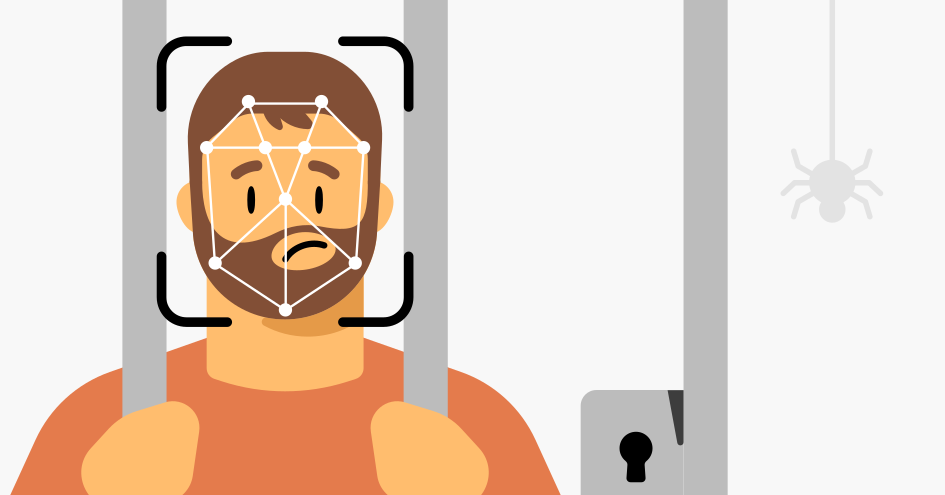
Government surveillance is the practice of government entities, such as the CIA and FBI, monitoring and analyzing information from individuals or groups. It can involve intercepting and monitoring communications like phone calls, emails, and text messages. The government can also access personal data from smartphones, computers, and online platforms. While surveillance practices vary around the world, this article focuses on how they operate in a U.S. context.
Why are the CIA and the government watching you?
According to the government, its primary objective in using surveillance is to prevent crime and terrorism. If the CIA and FBI can monitor communications and analyze data, they can identify potential threats and avert crimes and acts of terrorism before they occur.
While this is a worthwhile goal, it involves storing and analyzing large amounts of data from different sources. Most of this data is collected for various reasons and can sometimes include information about everyday citizens, often without their full awareness.
How do the CIA and the government spy on you?
Federal agencies like the CIA can use many ways to watch you:
- Intercepting communications. Under section 702 of the Foreign Intelligence Surveillance Act, federal agencies can collect data on phone calls, emails, text messages, and internet browsing of non-U.S. citizens outside the U.S without a warrant.
- Backdoor searches. Section 702 also enables government entities to conduct warrantless “backdoor searches” of U.S. citizens’ data that they “incidentally” gained access to in the course of conducting foreign surveillance.
- Hacking. The government can use hacking tactics and malware to gain access to devices and systems to learn information.
Real examples of government and CIA surveillance
Government surveillance programs have a long and complex history, with some operations becoming public only years after they began. These examples show how intelligence agencies have collected data to support national security efforts, sometimes raising questions about privacy along the way:
- Project SHAMROCK. In 1945, the Armed Forces Security Agency (AFSA) and its successor, the National Security Agency (NSA), received access to daily copies of all Western Union telegrams. This was done without warrants until 1975, when Congressional critics launched an investigation into the program.
- PRISM. In 2013, documents leaked by NSA contractor Edward Snowden revealed the NSA’s PRISM program that collects internet communications from several different U.S. internet companies such as Google and Apple. These NSA leaks revealed operational details of a global surveillance apparatus run by the NSA, members of the Five Eyes alliance, and other commercial and international partners.
- The CIA’s bulk data collection program. In 2022, a declassified report from the Privacy and Civil Liberties Oversight Board revealed that the CIA had been collecting vast amounts of data, often on American citizens, with limited oversight. However, the CIA did not publicly disclose the full scope or the specific tools involved, leaving much of the program shrouded in opacity.
What increases the risk of the government spying on you?
Even if you’re not doing anything suspicious, it’s good to stay aware of what can slightly increase your chances of being monitored. Most people aren’t specifically targeted, and owning certain devices alone doesn’t put a big spotlight on you. That said, some factors can contribute to increased attention from surveillance systems:
1. Your profession or activities
Jobs or roles that involve sensitive information or public influence — like journalists, activists, or political organizers — can draw more government scrutiny. These professions often require handling information that some agencies consider sensitive, which can increase the likelihood of being monitored. Additionally, association with individuals or groups under surveillance can extend that attention to you.
2. Your online behavior
Repeatedly visiting or sharing content flagged by monitoring programs or engaging in discussions around sensitive or controversial topics can increase your exposure. While casual browsing and normal social media use are unlikely to raise alarms, consistent patterns of certain online behavior may catch the attention of monitoring systems. Being aware of your digital footprint is an important step in managing privacy.
3. Travel to high-surveillance regions
Visiting countries known for intensive surveillance or geopolitical tension can put your devices and communications under closer observation. In such regions, local authorities or intelligence agencies may actively monitor travelers’ digital activity or intercept communications, increasing the risk that your data will be collected and analyzed.
4. Device vulnerabilities exploited in targeted attacks
Although simply owning devices like smart TVs or webcams doesn’t inherently increase your risk, targeted attackers — including some government agencies — may use advanced hacking techniques to compromise these devices. This can include the ability to hack into a webcam or exploit zero-day vulnerabilities to monitor activity, but such attacks usually focus on specific individuals rather than the general public.
5. Being connected to compromised networks or accounts
If your personal accounts, email, or network have been breached, attackers or surveillance entities may leverage that access to gather information or monitor your activities more closely. Maintaining strong security hygiene, for example by using unique passwords and two-factor authentication, helps reduce this risk.
What can the government do with metadata?
Metadata is data about data. It includes information like your IP address, location, timestamps, and email subjects. While it doesn't reveal the content of your communications, over time, this can provide details to the government about different locations you regularly frequent, people you call, how often you call them, and the apps you use to communicate. Agencies like the CIA may use metadata to investigate or map communication networks. In many cases, this step can be done without accessing the actual content of your messages.
Is the government watching me through my phone?
Intelligence agencies like the CIA have the technical ability to access your phone’s microphone and camera in certain cases, but it’s not likely without a warrant or national security justification. Still, agencies are capable of using hacking and third-party data bought from data brokers to spy on you.
The government could also use Stingrays to spy on people. They are cell site simulators that mimic cell towers and can force phones in the area to connect to them. This technology allows data and location tracking. The FBI has required local police to sign NDAs regarding the use of Stingrays so it can watch people in secret.
How to protect your privacy and limit government surveillance
Now that you know how online activity can be monitored, it’s normal to want to protect your privacy. Being mindful about your privacy isn’t just about avoiding unwanted attention — it’s about keeping your personal info safe in all kinds of situations. Try these simple tips to take control of your digital footprint every day:
- Don’t overshare on social media. Keeping your personal information private helps protect you from unwanted attention and reduces the chances of your data being accessed by any party without your consent.
- Cover up your webcam. Even if someone were to hack your device, covering up your webcam when it's not in use can help to keep them from spying on you. You can simply use a piece of opaque tape or a webcam cover designed for this purpose.
- Use a password manager. You can better secure your accounts by using strong passwords without having to worry about remembering them.
- Don’t open suspicious emails or click suspicious links. Phishing emails can compromise your privacy and could leave you open to surveillance. These emails are geared towards getting you to reveal personal information or download malware. Never click a link in an unsolicited email, and be wary of grammatical errors or a sense of urgency. If you’d like to learn more, you can take a look at our guide on how to avoid phishing.
- Avoid IoT devices. These devices are convenient but might leave you vulnerable. The government can use smart TVs as bugs to collect data about your behavior and daily life. If you already own such devices and would rather not get rid of them, you can minimize their use and avoid connecting them to the internet if you can.
- Encrypt your communication. Switching to more privacy-oriented messaging apps like Signal can help avoid surveillance. While apps like Messenger and WhatsApp use end-to-end encryption, they still collect metadata about their users.
- Use a VPN. A VPN encrypts your internet traffic and changes your IP address. NordVPN’s Threat Protection Pro™ will also protect your device from malware and spyware.
Online security starts with a click.
Enhance your privacy with a VPN