
What is PPTP?
The Point-to-Point Tunneling Protocol is the first networking protocol used for creating virtual private networks. At a glance, the PPTP offers everything most VPN protocols have, including authentication, VPN tunnel establishment, and data encryption.
However, despite being widely used in the nineties, the PPTP VPN protocol doesn’t live up to modern-day VPN technologies. It has significant security issues, making it vulnerable to certain types of attacks (e.g., bit-flipping). Let’s look at how it works to better understand where the security issues lie.
How PPTP works
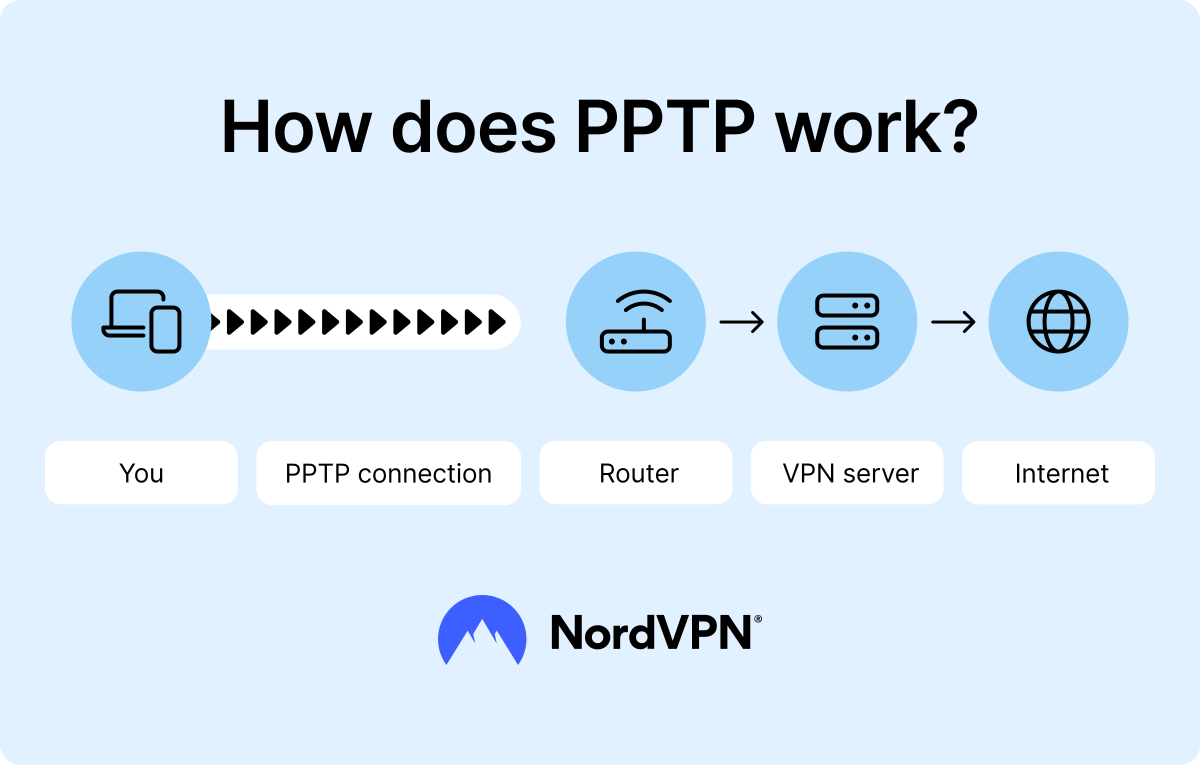
As with all tunneling protocols, PPTP specifically builds a tunnel between two points. Once the PPTP connection is established, all data packets passed through are wrapped in an IP envelope and then sent to another router or machine, which will treat the data like an IP packet. It’s then decrypted and made accessible to the receiving party.
PPTP can handle two types of data flow: data packets and control messages. The control messages are made for managing the start and end of the encrypted connection. It’s a simple process that has been expanded upon and improved by every VPN protocol created since.
What are the advantages and disadvantages of the PPTP?
The PPTP doesn’t offer the strongest security, but it is relatively fast and easy to set up. Let’s look at the pros and cons of PPTP in more detail.
PPTP advantages
The PPTP VPN protocol is a simple and fast solution, making it a good choice for those prioritizing speed and efficiency. Here are the main pros of the Point-to-Point Tunneling Protocol.
- Easy to set up. Setting up a PPTP VPN is quick and simple, making it accessible to people without technical knowledge.
- Compatible with various operating systems. Because the Point-to-Point Tunneling Protocol is one of the oldest VPN protocols, it is widely supported by most operating systems (including Windows, macOS, and Linux)
- Speed and performance. The PPTP doesn’t have complex encryption processes, which is a security issue. However, because of the lack of complicated encryption and authentication processes, the PPTP delivers faster connection speeds and better performance.
PPTP disadvantages
Despite the ease of setting up and the fast speeds, point-to-point tunneling fails to deliver in the most important area — VPN security. Let’s review its main disadvantages.
- Weak security. The PPTP is no longer considered a secure VPN protocol. It doesn’t have adequate security measures, particularly when it comes to encryption. The PPTP uses Microsoft Point-to-Point Encryption (MPPE) with outdated algorithms vulnerable to cyberattacks. The most significant security vulnerability of the PPTP is that it relies on short encryption keys. The shorter the keys, the more susceptible the encryption to brute-force attacks.
- Poor authentication. The PPTP has countless authentication vulnerabilities. It uses a method called the Microsoft Challenge Handshake Authentication Protocol (MS-CHAP) for user authentication, which has many weaknesses and can be exploited in many ways.
- Firewall restrictions. Firewalls are security mechanisms that control and filter network traffic based on predefined rules. Because the PPTP lacks standardized VPN port numbers, it can easily get blocked by firewalls, leading to connectivity issues.
What is PPTP passthrough?
A PPTP passthrough (also known as a VPN passthrough) is a built-in router feature that allows VPN traffic to pass through and reach the VPN server. It helps connections like the PPTP and IPsec to travel through routers and firewalls without restrictions.
Many modern-day routers use NAT (network address translation) — a technique that translates private IP addresses into a single public IP address for privacy.
However, older protocols like the PPTP are not compatible with NAT, which may block PPTP connections. A PPTP passthrough solves this problem by adding a unique ID to PPTP traffic, which acts as a substitute for NAT.
As a result, PPTP traffic, which uses VPN ports that aren’t typically compatible with NAT, can travel through the router without being blocked.
The passthrough feature is only needed for outdated routers and protocols like the PPTP. Modern, more secure VPN protocols like OpenVPN, IKEv2, and WireGuard work with NAT with no issues.
How does a PPTP connection compare to other protocols?
Let’s compare the PPTP with the most common VPN protocols VPN providers use today.
Is PPTP secure to use?
To summarize, a PPTP VPN doesn’t offer reliable online privacy and security. The protocol has many known security flaws and doesn’t provide robust encryption. Your VPN connection won’t be as safe and secure as with a different VPN protocol.
NordVPN discontinued the PPTP and L2TP in 2018 because these protocols weren’t meeting the company’s security and privacy standards. NordVPN uses next-generation VPN encryption and industry-recognized protocols like OpenVPN and IKEv2/IPsec. Additionally, NordVPN has developed its own WireGuard-based NordLynx protocol that offers ultra-fast speeds without compromising your security and privacy.
Online security starts with a click.
Stay safe with the world’s leading VPN