The UK — a premier league for football scams
While not the most popular type of online fraud in the UK, football scams are the most common type of fraud among football, travel, and entertainment scams. According to the survey, 16% of respondents have dealt with football scammers over the course of the last two years. In addition, almost a third of the respondents (29%) have reported encountering a football, entertainment, or travel-related online scam in 2024 and 2025.
These numbers seem relatively small compared to the instances of calls or messages from fake customer support centers or banks — the most encountered type of scam by the UK respondents (39%). However, with the upcoming World Cup, cybersecurity experts predict a significant increase in football scams, particularly in the betting sector.
Gambling against the scam odds
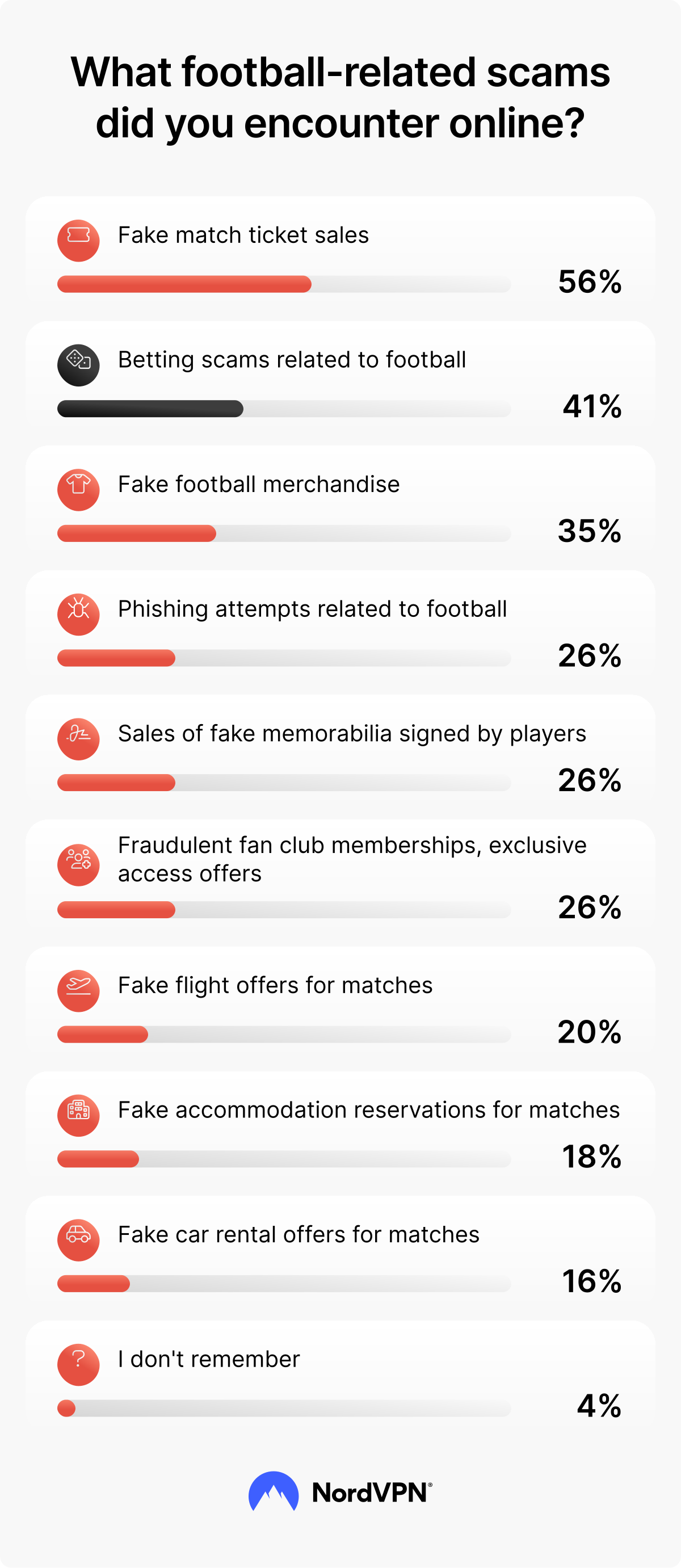
Out of 16% who have encountered football scams in 2024 and 2025, 56% claim to have dealt with fake match ticket sales. Betting scams, fake football merchandise, and phishing attempts related to football are also high on the list with 41%, 35%, and 26%, respectively. The numbers also suggest that some of the respondents have encountered multiple football scams (for example, both betting scams and fake match ticket sales) while browsing the web.
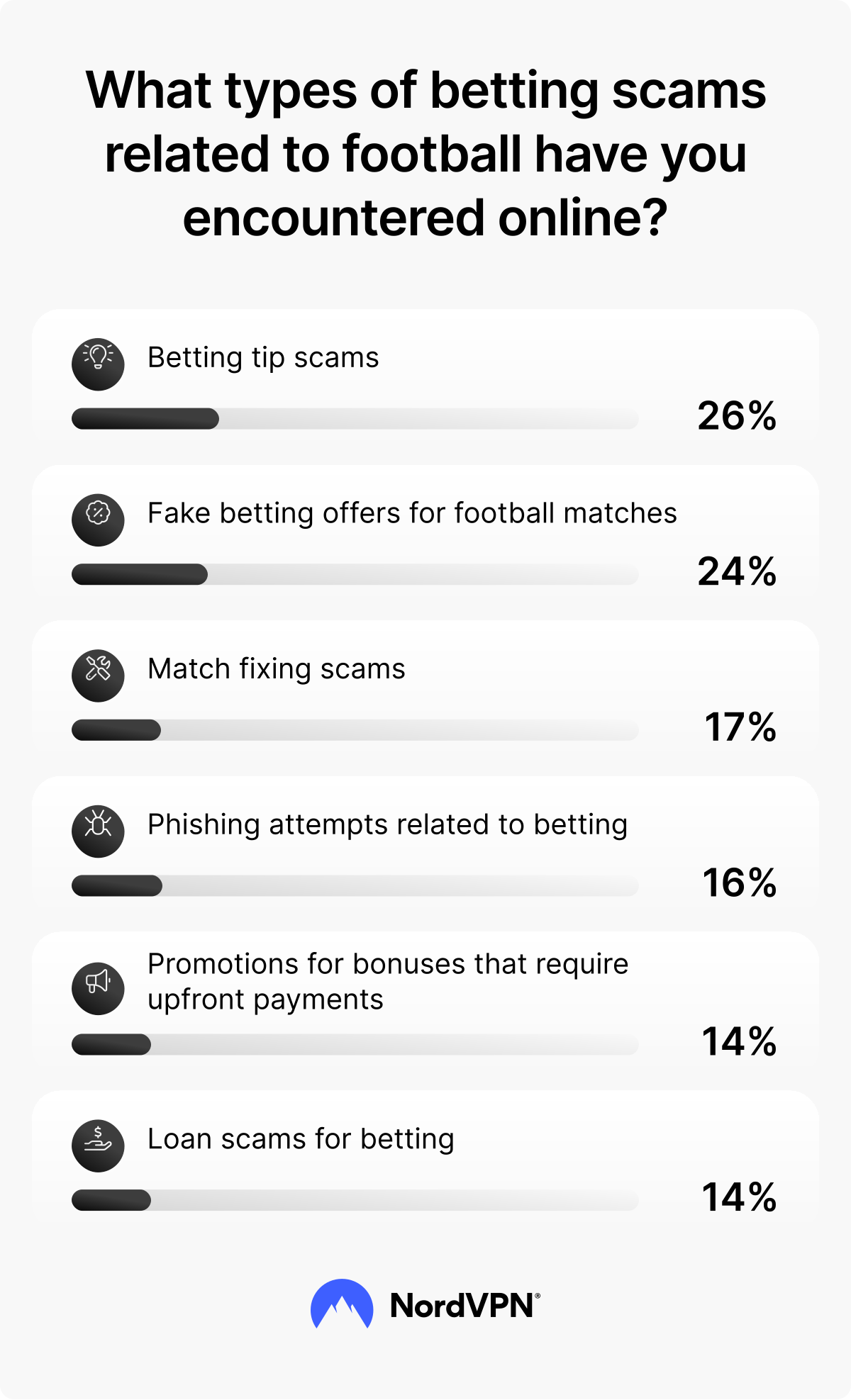
The most popular scam scenarios in betting scams revolve around fraudulent betting tips (26%), fake betting offers for football matches (24%), and match fixing scams (17%). Phishing scams related to betting are also on the list, with 16% of betting scam targets reporting encounters of this particular type of scam.
Social media — the pitch for football scams
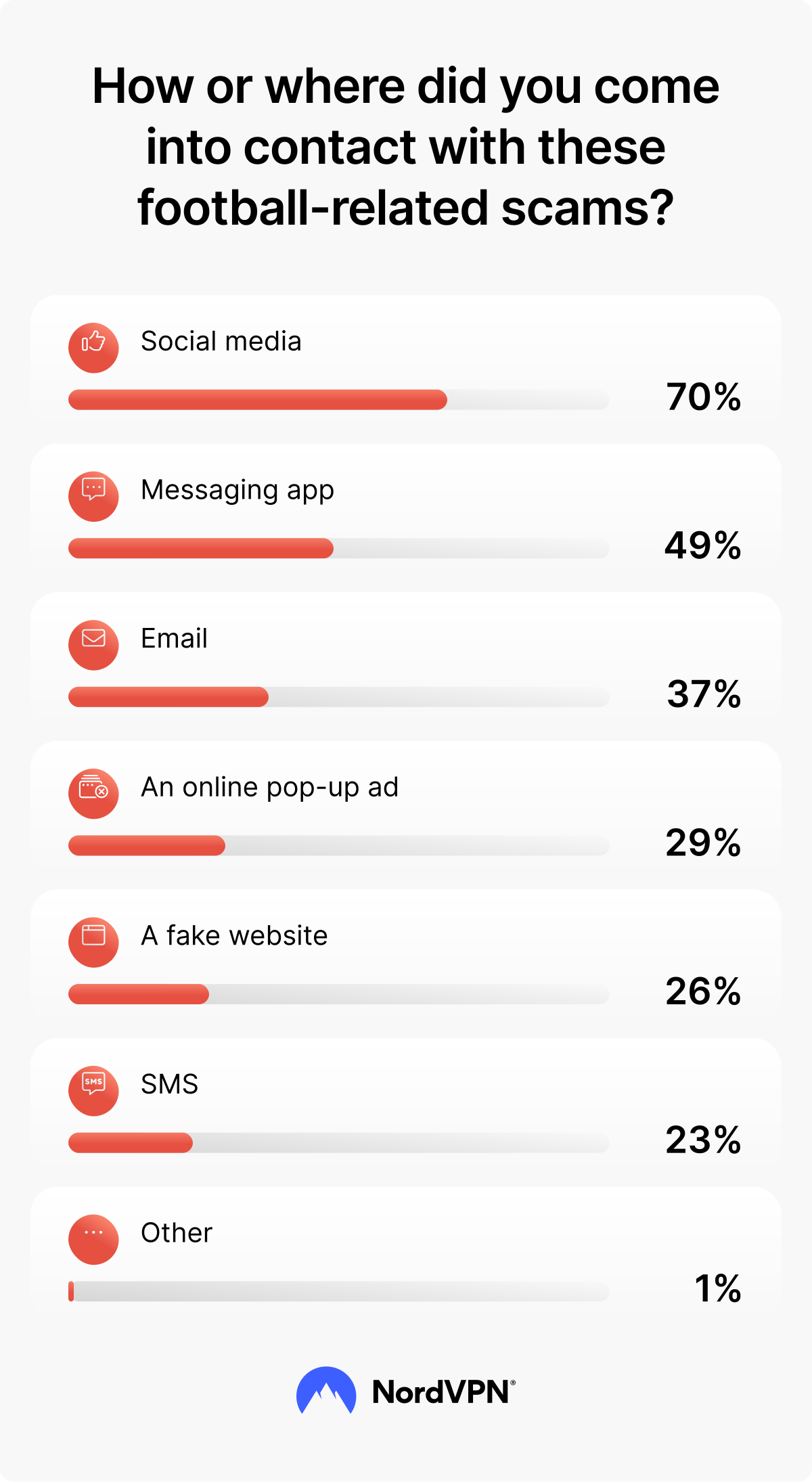
According to the survey, 70% of respondents encountered football scams through social media apps (46% — Facebook, 30% — Instagram, 25% — X/Twitter, 24% — TikTok). Other means included messaging apps (49%), email (37%), online pop-up ads (29%), and even fake websites (26%). Overall, 5% of respondents reported losing money due to football-related scams, with 27% losing between £51 and £100 and 24% losing between £101 and £150.
The number of UK fans who plan to follow the 2026 World Cup is almost two-thirds of the population (62%). It’s also undeniable that the social media spotlight will be massive. Knowing that scammers mainly target social media users, it’s likely that the scam numbers (and financial losses) will rise even more.
Are you not entertained?
According to the survey, entertainment scams are almost as popular as football scams. The number of respondents who encountered them throughout the last two years amounts to 15%. The top three scam scenarios in this category include fake ticket sales (54%), sales of fake merchandise (36%), and phishing attempts related to concerts or events (30%).
Like with football scams, social media seems to be the most popular way for scammers to deploy entertainment scams. In total, 71% of respondents claim to have come across these scams on sites such as Facebook, Instagram, TikTok, or X (Twitter), with 48% encountering them on messaging apps. Out of the 15% who have encountered entertainment scams, 5% admit to having lost money, with losses ranging between £51 and £100.
Destination: Fraud
Based on our survey, traveling-related scams account for 10% of the total number of participants in the UK. Out of these, misleading travel packages (37%), phishing schemes (37%), and fake offers regarding tickets to tours or sightseeing (35%) appear to be more common than other travel scams. Identical to football and entertainment scams, social media (68%), email (36%), and messaging apps (35%) are the top three mediums scammers use to launch travel-related scams.
What’s concerning is that out of the 3% of respondents who’ve lost money to travel-related scams, more than half (54%) have encountered this type of fraud two or three times in the last two years. As many as 11% of respondents admit to having dealt with traveling scams four or more times, while 29% say they’ve seen them once during the 2024-2025 period. While the amounts lost range between £151 and £200, these numbers suggest that scammers are seeing a particularly successful return on “investment” in this scam category.
How to (not) see it coming
In total, 9% of respondents reported suffering financial losses due to scams related to football, entertainment, or travel. When asked about the circumstances of falling for these scams, 48% of those who lost money claim they were frustrated at the moment they received scam offers, 36% also note stress, while “happy” finishes the top three with 27%.
Surveying further, we’ve also discovered that the majority of respondents (58%) were either vacationing (21%) or on their time off (37%) when scammers made their approach. A third received scam offers while working or studying (33%). The overall results suggested that the most common context for falling victim to scammers is being frustrated or stressed during weekday evenings or during their time off.
While not exactly the blueprint for scams, we can draw a hypothesis that scammers approach targets during evenings to catch them off-guard when they are tired after a day of work or leisure. Even if the target’s on vacation, it’s plausible they might be too relaxed to keep their guard up, making them more susceptible to potential scam attempts.
Scammers also choose social media as their primary method of approach, suggesting that their target audience consists of Facebook, Instagram, TikTok, or X (Twitter) users. With billions of active accounts and various forms of content, this medium is a perfect hunting ground that allows scammers to launch their attacks in huge volumes.
Safeguarding against online scams
Scammers are not going anywhere, which is why users have to know how to safeguard their online presence. Some of the security methods are simple and already in use by some of the respondents of the survey. Other measures may be less well-known and worth looking into. Here are the easiest ways to mitigate the risk of an online scam:
- Avoid clicking on suspicious links. Almost two-thirds (65%) of survey respondents claim they avoid clicking on suspicious links. It’s a great online habit that helps steer clear of phishing sites.
- Avoid messages or calls from unknown numbers or senders. Similar to suspicious links, engaging in text messages and calls from unknown individuals can result in financial loss. While 58% of respondents claim they avoid responding to these texts and calls, this number could (and should) be significantly higher.
- Avoid deals that sound too good to be true. More than half of the survey participants (55%) admit they avoid these types of deals. It’s always worth remembering that if something sounds too good to be true, it most likely is.
- Be cautious of requests for personal information, money, and passwords. A habit for 52% of respondents, this tip is a crucial one. Legitimate businesses never ask for personal information via email, text message, or phone call. If you notice someone asking for your passwords, credit card information, or address, immediately treat these requests with suspicion.
- Use secure payment methods. More than half (55%) of survey responders use secure payment methods when making purchases online. That is one of the simplest ways to reduce the risk of dealing with scammers. Malicious actors may ask targets to do wire transfers, use unknown payment websites, or even engage in crypto transactions for untraceable (or hardly traceable) payments. If you receive such requests, treat them as a red flag.
- Use two-factor authentication (2FA). 2FA is one of the most effective tools against online scams. However, 55% of survey responders have yet to use it. 2FA significantly limits the risk of losing your online accounts to scammers, so be sure to enable it on all your online platforms (including social media, e-commerce, and email) and never approve surprise login requests.
- Use a password manager. Using different passwords for different online accounts is the best way to keep them secure. However, no one wants to memorize dozens of difficult letter, number, and symbol combinations. Password managers solve this problem by safely securing all your passwords in one place. Some of them come equipped with password generators, too, saving you the headache of having to think of strong passwords.
- Use a VPN. While VPN can’t protect from all scammers and online threats, it can significantly reduce your exposure to some cyber risks. A typical VPN will encrypt your online traffic and hide your IP from malicious actors, which is particularly useful when connected to public Wi-Fi networks. But if you use a premium service like NordVPN, you will additionally get features like Threat Protection Pro™, which comes with ad, tracker, malicious link, and malicious download blockers, significantly reducing the risk of falling for the majority of common phishing attacks.
Online security starts with a click.
Stay safe with the world’s leading VPN
Methodology
The survey was ordered by NordVPN and conducted on February 2-10, 2026, by Syno International. Using a national representative sample among internet users, 1,001 residents of the UK, ranging from 18 to 64, were surveyed. The questions in the survey aimed to evaluate the respondents’ exposure to various types of online scams, usage of behavioral and technological protection measures, and losses due to scams experienced in 2024-2025. Researchers used quotas on age, gender, and place of residence to provide results that would be as accurate as possible.
Complete research materials for this study can be found here.
