·
Cybersecurity Research Lab by NordVPN
NordVPN’s Cybersecurity Research Lab provides cybersecurity research you can rely on for reporting, analysis, or decision-making. Our studies cover dark-web leaks, attack trends, and device security tests, with transparent methods and results designed for practical use.
What does the Cybersecurity Research Lab do?
The NordVPN Research Lab produces cybersecurity research that makes complex risks understandable and practical. We investigate the dark web, emerging attack trends, consumer behavior, device and app security, and policy issues. Each study is designed to educate and equip people with clear facts about cybersecurity and the choices that improve safety online.
The latest cybersecurity research from NordVPN
Explore NordVPN’s newest analysis and insights from our cybersecurity research, covering leaked-credential totals, attack trends, device and app test results, and more.
Not-so-sweet treats: 93.7B stolen web cookies
NordStellar research uncovers 93.7 billion stolen cookies traded on the dark web. Many remain active, letting attacks hijack sessions and take over accounts.
Americans overestimate their online safety
The 2025 survey highlights a gap between confidence and reality: While most Americans already believe their data has been exposed, few check for leaks.
Up for grabs: The cost of stolen card data
Cybercrime can feel invisible. Yet its impact is very real. NordStellar’s researchers explored the stolen payment card markets on the dark web and the reasons behind the soaring data prices.

Would you remove yourself from the internet?
A global survey measures how many people would wipe their online presence if they could and why. Results compare attitudes by country and demographic.
Malware shakes up the payment card market
Researchers analyzed malware logs tied to stolen card data to show how infostealers are reshaping the carding economy.
Everyday online threats in numbers
Aggregated Threat Protection Pro™ data quantifies how often users encounter malware, phishing, scam sites, trackers, and intrusive ads.

Misfortune cookie? Billions of stolen cookies exposed
Analysis of stolen browser cookies shows how attackers hijack sessions without passwords. The study explains common theft paths and practical steps to protect accounts.
Mobile privacy: What do your apps want to know?
Permission audits of top Android and iOS apps across 18 categories reveal frequent requests for unnecessary access.

Healing or hacking? The hidden cost of health apps
A survey involving 12,726 people from 13 countries looks at how people use health and mental-health apps and what data they trade for “free” features.
Tip of the iceberg: 6M stolen cards analyzed
Researchers reviewed 6M dark-web card records to identify hotspots, average prices, and risk rankings. The report shows which countries are hit hardest.
How hackers sell your online identity
Researchers investigated “bot markets” selling bundled browser profiles: logins, cookies, and fingerprints. The report shows bundle contents, pricing, and the takeover risks.
How hackers can earn 17.3M from your data
Experts have analyzed a dark web marketplace to reveal what it can tell us about online cybersecurity risks.

How 4M card details reached the the dark web
Analysis of 4M leaked card records maps affected regions, common sources, and average dark-web prices. The study quantifies scale and highlights the most exposed countries.

Smartphone use on the toilet
Have you ever got to the bathroom, only to realize that you don’t have your phone? You’re not the only one who needs distraction in the bathroom.
How am I being tracked?
A multi-country survey explores who people think tracks them (criminals, companies, governments) and which behaviors increase exposure.

Major cookie risks that internet users face online
Tests on popular sites reveal how cookies and trackers follow people across the web. The study details what data is collected and how it’s used.
IoT users don’t care about their devices’ security
A seven-country survey finds widespread smart-device ownership but low adoption of safeguards. The report covers responsibility perceptions and rising risks.
Laws on encryption backdoors
Many democratic governments call for encryption backdoors, claiming criminals use encryption to evade law enforcement. However, no backdoor is truly secure.
No such thing as a personal device?
Multi-country surveys show how often people share phones and laptops with family or partners.
National Privacy Test 2025
A global survey of 30,000+ participants measures privacy awareness, cybersecurity knowledge, and daily digital habits.

Cyber Risk Index
An expert analysis ranks 50 countries by their vulnerability to cybercrime using a 0–1 index.
Dark web market case study
A deep dive into a major marketplace outlines what’s sold, how listings work, and what the typical buyer–seller mechanics are.
A lifetime online: How the hours add up
This analysis estimates daily and lifetime hours spent online across activities and countries. It shows how routine habits compound into years of screen time.
Scams and tech trust in the US
In 2025, NordVPN surveyed 1,000 US adults about scams and new technologies. Results show how different age groups perceive risk and which groups are most vulnerable.
Online price differences across the US
The study reveals how location and browsing data can affect what users are charged online.
Stolen travel documents on the dark web
Researchers analyzed black-market listings of passports and IDs. The study shows which countries’ documents are targeted the most.
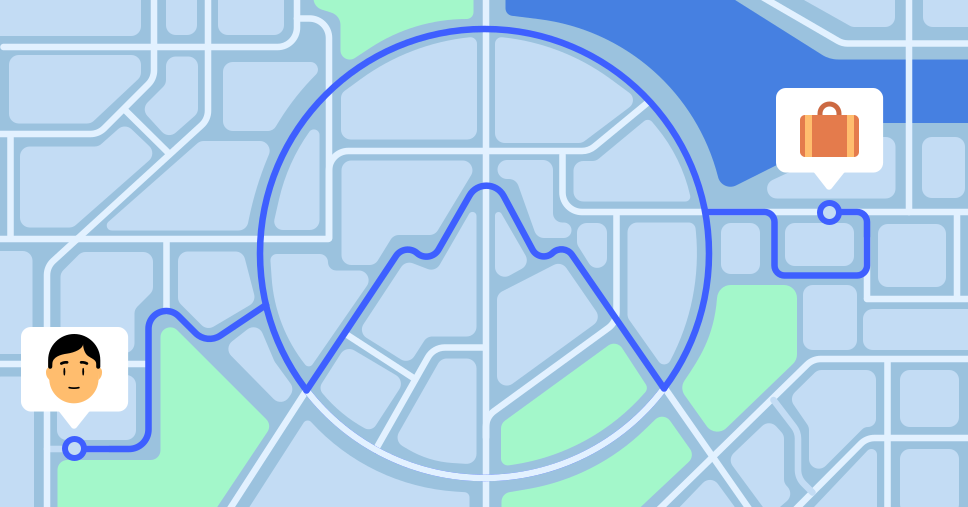
UK commuters’ smartphone safety habits
A 2025 survey of UK commuters explored smartphone use on public transport. Results reveal how many people secure their devices and what risks they face.

Do Americans use gadgets in bed?
NordVPN surveyed US adults about device use before sleep. The findings show how widespread the habit is.
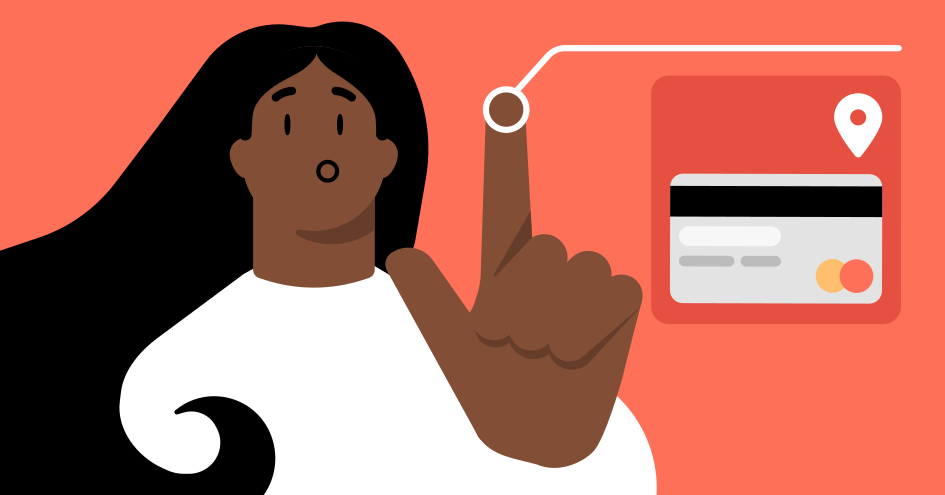
Americans’ views on biometric security
A survey of US adults explored trust in biometric technologies like fingerprint and face recognition.
Airline loyalty accounts on the dark web
A NordVPN and Saily study examined dark web marketplaces to assess the scale of stolen airline and hotel loyalty accounts.
Black Friday scams
Based on an in-depth review of seasonal cybercrime trends, this analysis maps out the most common Black Friday scams, the tactics behind them, and the key warning signs shoppers.
Free vs. paid VPN use
Survey results from multiple countries reveal that privacy is the leading reason people use VPNs, yet a significant share of users still rely on free services.

Online scam victimization
Based on a survey of active users, this research examines how frequently people encounter online scams, which fraud types are most common, and what worries victims the most.
Social media deletion trends
Using search volume data from several English-speaking countries, this analysis identifies seasonal patterns in how often people look for ways to delete popular social media apps.

Privacy policy readability
By reviewing privacy policies from the most visited websites across the UK, this study measures how long they take to read and how easy they are to understand.
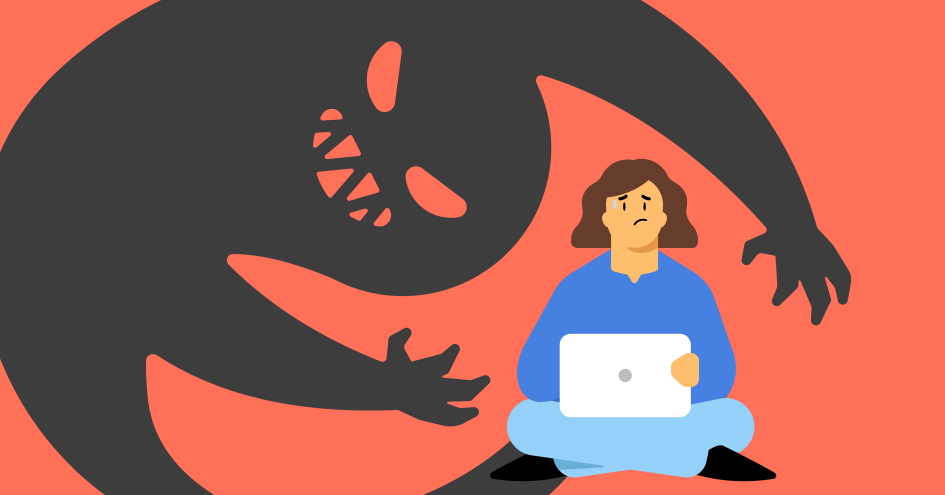
Americans’ cybersecurity fears
This nationally representative survey explores which cyber threats Americans find most alarming and how these fears differ across generations.

Americans’ trust in ChatGPT
This survey explores how familiar Americans are with ChatGPT, how often they use the chatbot, and how much they trust it with personal data and factual accuracy.
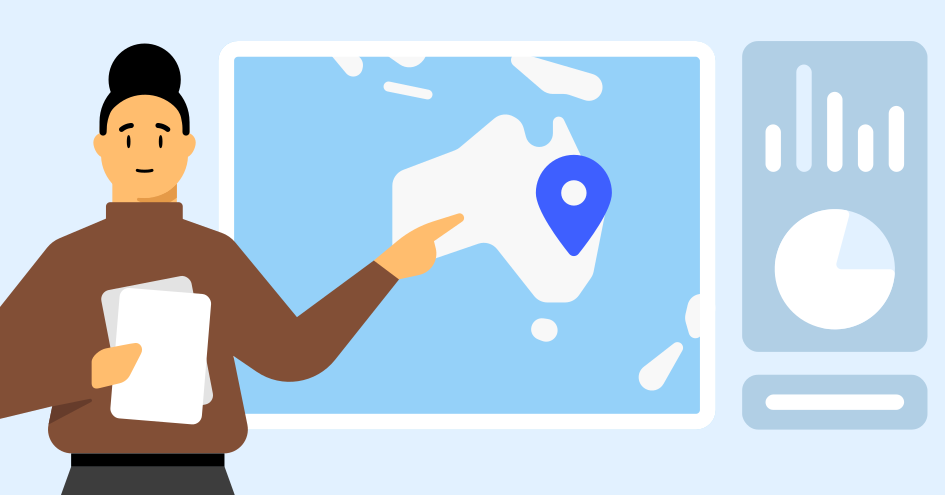
VPN usage in Australia
Looking at responses from Australia, this international survey maps current VPN awareness, adoption rates, and preferred service types.
Cross-device ad tracking
Responses collected across multiple countries shed light on how often users notice ads appearing on several devices after seeing or discussing a product.
This month in data
Every month, our Research Lab spotlights a key finding in cybersecurity or digital privacy.
March 5, 2026
Americans lost over a billion dollars to romance scams in 2025
As the world celebrates Valentine’s Day, love is in the air — and criminals are once again getting ready to tug at your heartstrings with romance scams.
March 5, 2026
Americans lost over a billion dollars to romance scams in 2025
As the world celebrates Valentine’s Day, love is in the air — and criminals are once again getting ready to tug at your heartstrings with romance scams.
March 5, 2026
Americans lost over a billion dollars to romance scams in 2025
As the world celebrates Valentine’s Day, love is in the air — and criminals are once again getting ready to tug at your heartstrings with romance scams.
What research methodologies do we use?
People behind Cybersecurity Research
NordVPN’s Cybersecurity Research Lab comprises professionals in research and data analysis:
Jurga Verikienė
Head of Research Department
Lina Juodkienė
Senior Researcher
Mantas Sabeckis
Senior Threat Intelligence Researcher
Artur Lagutin
Cyber Threat Intelligence Researcher at Threat Protection Pro™
Karolis Jodikaitis
Dark Web Intelligence Researcher at NordStellar
NordVPN’s cybersecurity experts
Our experts provide cybersecurity insights trusted by global media.
Marijus Briedis
Chief Technology Officer
Adrianus Warmenhoven
Cybersecurity Expert
Cybersecurity knowledge hub
A curated collection of expert insights, definitions, and visual resources to help you navigate today’s digital threat landscape with confidence.
Mentioned by the world's leading media






Get in touch with us
Interested in learning more? Are you a researcher looking to collaborate? Contact us today.
Get updates on the latest cybersecurity research
Be the first to hear about new NordVPN cybersecurity research.
Get updates on the latest cybersecurity research
Be the first to hear about new NordVPN cybersecurity research.