Lifetime Online Research
Most people spend
a third of their lives looking at devices
How much of people’s lives is spent on a screen, and what do they actually do there? NordVPN’s latest research reveals their favorite online activities, how much time they spend online, the devices they use the most, and many more details behind the average user’s digital life.

What does the average person’s online life look like?
After surveying 20,000+ people in 20 countries, NordVPN mapped out just how much of people’s lives are spent behind a screen – and how those hours measure up against a lifetime. Scroll and explore the results listed below.
How much time do people spend online?
We calculated how many years people in each country spend online on average and compared the results with that country’s life expectancy.
Years spent online
Life expectancy
Key findings

Brazilians, Mexicans, and Lithuanians spend the most time online
On average, Brazilians spend 52 years, 9 months, and 16 days of their life on the web. Mexicans take second place at nearly 43 years, while Lithuanians follow with over 31 years.

The Japanese spend the least amount of time online
They spend 19 years, 6 months, and 29 days online — the least out of the countries surveyed.

South Koreans live online
Nearly half of respondents in South Korea admitted they couldn’t go a day without using the internet. In total, South Koreans spend more than two full days each week online.

Brazilians work the most
Out of the countries surveyed, people in Brazil dedicate most of their digital time to work. Out of the 116 hours and 7 minutes they spend online per week, 18 hours and 27 minutes are spent working.


How much has changed in four years?
We compared the 2026 findings side by side with the results of our 2022 survey to understand how people’s digital habits have evolved over the past four years. The data clearly shows that people are spending significantly more time online today than they were in 2022.
2026 data
2022 data
Brazil still holds the top spot for the most time spent online globally.
Brazil, Lithuania, Sweden, and Japan saw the biggest increases in time spent online.
South Korea, Italy, Germany, and France are spending less time online than they did four years ago.
Please compare the 2026 results with the 2021-2022 results with caution, as several updates were made to the questionnaire to reflect changes in online behavior and current trends.
In 2021-2022, time spent online was measured across 11 activities, while in 2026 the survey covered 15 activities. New activities added in 2026 included chatting with AI chatbots, using work-related apps, using health and fitness apps, and reading or listening to the news. “Looking up or using recipes” was removed from the list.
Some categories were also updated or expanded. “Using social media” was split into “Using social media for communication” and “Using social media for scrolling,” while “Life admin (e.g. online banking)” was reworded to “Personal errands.”
Please also note that the 2021-2022 survey included residents aged 18 and over, whereas the 2026 survey included respondents aged 18–74.
An honest look at digital habits
We asked people how much they relate to a series of everyday online behaviors — from scrolling social media while watching Netflix to relying on AI tools throughout the day. The answers show a very real picture of what life online looks like in 2026.

I check social media while watching shows or movies.
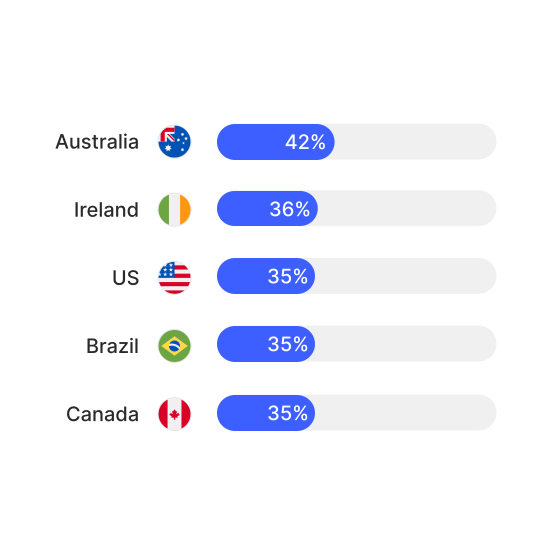
I worry that my personal data is already available online without my knowledge.
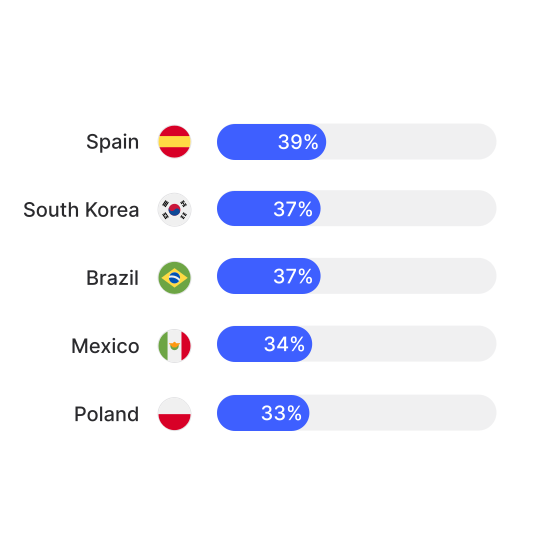
I feel guilty about how much time I spend online instead of doing important tasks.
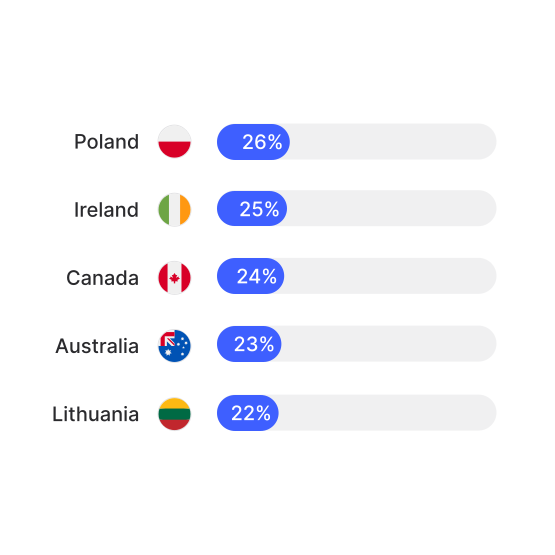
I often split my attention between multiple screens at the same time.
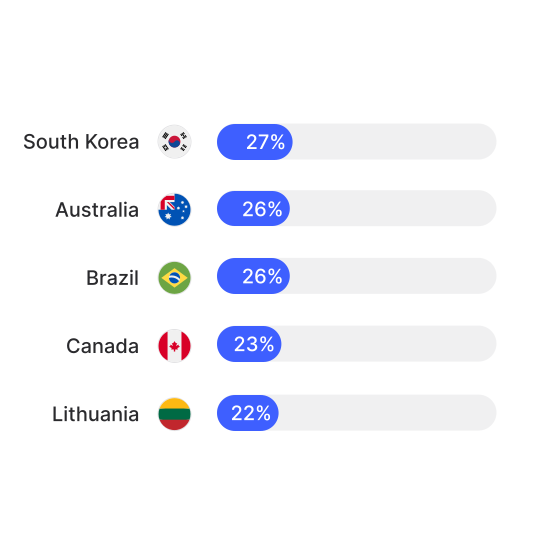
Chatbots and AI have become an essential part of my daily routine.
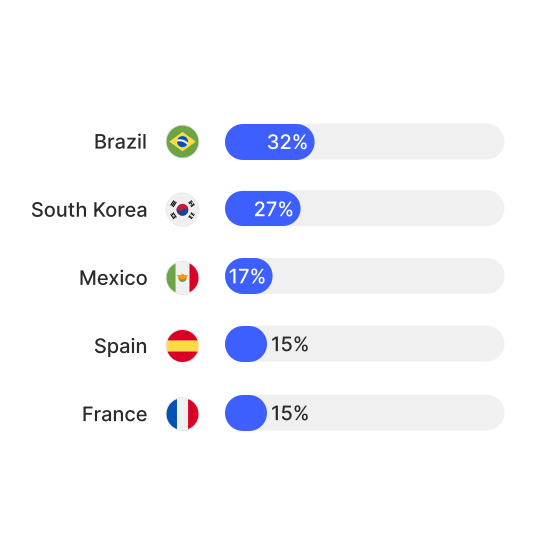
I have shared personal information online and later regretted it.
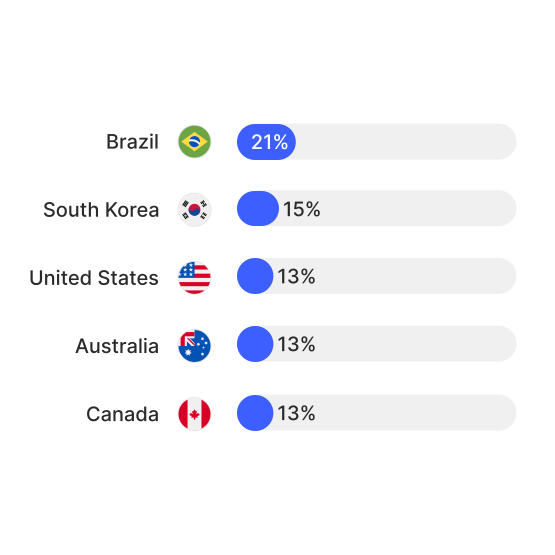
What people reveal online
Since so much of daily life now happens online, personal boundaries and digital footprints often blur. We looked at what kinds of information people share online — the percentage represents the share of respondents who have shared specific types of data on the web.
Has AI made life online better?
We asked people around the world if AI is improving their digital experience. Here is the percentage of respondents in different countries who believe AI has made their lives better:
Low (Below 15%)
Average (16-18%)
High (Above 19%)
The devices people use
Digital life now fits in the palm of your hand. Our findings show that the smartphone is still the main device most people rely on day to day.
Mobile device
Most people (76%) prefer mobile phones over other devices, with Brazil leading at 91%, while Japan stands out on the low end at 53%.
Brazil also leads in work mobile phone use at 29%, while Japan trails at just 7%.
PC/laptop
PC and laptop use is highest in Poland at 68%, while Ireland is at the lower end with 38%.
Brazil comes out on top for work PC/laptop use at 38%, while Germany and Austria are at the lower end, both at 16%.
Smart TV
Smart TV usage is highest in Brazil (69%) and Mexico (62%), which reflects strong streaming cultures, while Japan sits at the bottom with just 13%.
Tablet
Tablet use peaks in the UK (33%), closely followed by Australia and Switzerland (both 32%), while Lithuania records the lowest share at just 8%.
Smart watch
Smartwatch use is highest in Spain (27%), Australia (26%), and South Korea (26%), while Japan lags far behind at just 10%.
Gaming console
Mexico (33%) and Brazil (31%) are the strongest markets for gaming console use, while Lithuania is at the very low end at just 5%.

A single app for all your cybersecurity needs
The most advanced VPN and a next-gen antivirus — one app, one subscription, zero hassle.
Methodology
NordVPN commissioned the survey, and Cint conducted it in most countries studied. Quotas were placed on age, gender, and place of residence to achieve a nationally representative sample among internet users. The amount of average time online per lifetime was calculated based on the average lifespan of each country.
Each online activity was measured separately. So if, for example, someone listens to music and scrolls through social media simultaneously, both are counted as separate activities despite them happening at the same time.
Press materials
Get assets and infographics from our study.
For more information or interview requests, contact us at press@nordsec.com.