NordProtect, Coveron, and what’s changing
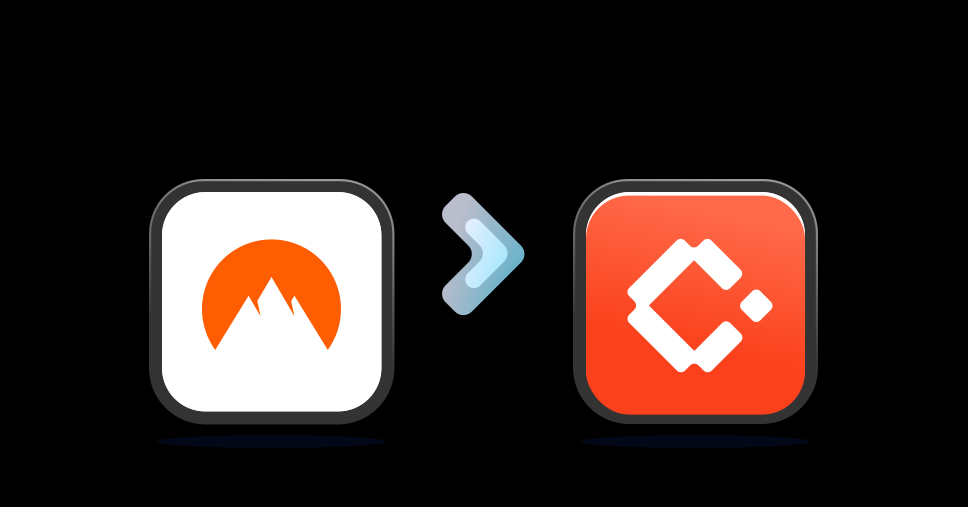
Change is a natural part of the product cycle, and NordProtect is moving into its next iteration. The identity theft protection service created by Nord Security has been called NordProtect since its launch (Nord Security, as you may know, is the same company behind NordVPN). Over the years, NordProtect has grown and improved, and now it debuts a new name and a new logo. As of May 26, that name is Coveron opens in a new tab.
And that’s the extent of the change. The product, the team running it, and every feature NordProtect users have come to rely on will stay just as they are.
If you’re already a NordProtect user
If you’re already a user of NordProtect, there is not a thing you need to do on your end. Your NordProtect account and subscription have transferred over automatically. The service name, your plan name, and the name appearing on your billing statements are the only details that have changed, all reflecting the Coveron rebrand going forward.
So, what is Coveron?
Coveron, or NordProtect as it’s been called up until this rebrand, is a comprehensive identity theft and cyber protection service developed by the creators of NordVPN. It combines active monitoring of sensitive personal information with insurance-backed recovery coverage that goes beyond identity theft to cover the detection and aftermath of online fraud, cyber extortion, and cyberattacks as well.
The monitoring component tracks dark web exposure, credit activity, and security threats across the personal identifiers you register with the service. When suspicious activity is detected, Coveron sends you an alert with enough detail to know what you are dealing with and what to do next.
The recovery component provides financial protection in the event of identity theft (up to $1,000,000), cyber extortion (up to $50,000), online fraud (up to $10,000), or cyberattack (up to $10,000). Coveron has partnered with HSB to provide the coverage, which is a global specialty insurance company and one of the largest cyber insurance underwriters in the U.S.
Who needs identity theft protection?
Identity theft protection is relevant to most adults. Anyone with a credit history, active financial accounts, or data tied to online services is a potential target, and that includes people who consider themselves security conscious.
The numbers alone tell you everything you need to know about the scale of the threat. The Federal Trade Commission (FTC) received more than 1.1 million identity theft reports back in 2024 — and by the end of 2025, that number had climbed to over 1.3 million, with credit card fraud and loan or lease fraud being two of the most reported identity theft types recorded that year.
And when identity theft does occur, the aftermath has a tendency to drag on, and the financial hit that comes with it is rarely something people see coming. It is this kind of fallout that identity theft protection services like Coveron are designed to get ahead of. They are built for people who want their sensitive personal information monitored continuously for signs of exposure or misuse — and who want financial protection in place should it ever come to that.
Identity protection and a VPN: A case for having both
Personal digital security looks much different today than it did 10 or so years ago. Cyber threats have multiplied and diversified, and with this variety and scale came the push for more specialized security tools and services to meet them.
A VPN is one of those tools, and products like NordVPN have become one of the first layers many people include in their digital security setup because they help make online activity more private and more secure. For a lot of people, going online without a VPN feels a little like leaving the front door standing open.
Now, having identity theft protection as a security blanket is a more personal calculation. It is more niche, and whether this kind of protection is worth it is a question only you can answer when you examine your own situation. Take Coveron as an example. It monitors your credit activity, scans the dark web for exposed personal data, and provides financial coverage not just in cases of identity theft, but also if you’re hit by online fraud, cyber extortion, or a cyberattack.
So if you are active online in any capacity (and these days, who isn’t?), identity theft protection is a layer of coverage worth having in place. And a VPN, at this point, is about as close to a digital security essential as it gets. Which is exactly why there is a case for having both.
Get alerts about information leaks and suspicious activity.
Protect your identity and finances
Get alerts about information leaks and suspicious activity.
Protect your identity and finances
Sources
- 1. Federal Trade Commission (FTC): https://www.ftc.gov/news-events/news/press-releases/2025/03/new-ftc-data-show-big-jump-reported-losses-fraud-125-billion-2024 opens in a new tab
- 2. Federal Trade Commission (FTC): https://public.tableau.com/app/profile/federal.trade.commission/viz/TheBigViewAllSentinelReports/TopReport opens in a new tab